Your Guide to a Fall Cleanup Service in PA
A Lehigh Valley fall cleanup service matters most when your property has more at stake than fallen leaves. Done properly, it clears debris, helps key lawn areas head into winter in better shape, protects drainage, and gives you a clean read on patios, plantings, lighting, and other outdoor investments before cold weather settles in.
Quick Answer
A fall cleanup service is a seasonal property reset before winter. It usually includes leaf and debris removal, bed cleanup, selective pruning, drainage checks, and lawn prep. On homes with patios, outdoor kitchens, lighting, or pool areas, its main value is protection. A proper cleanup helps prevent winter issues and prepares the site for future upgrades. If you're thinking beyond upkeep, it's worth reviewing related outdoor living services at Kennedy Design + Build.
Preparing Your Lehigh Valley Home for Winter
By mid-fall in Center Valley, Coopersburg, and the rest of the Lehigh Valley, a yard can change fast. One week the property looks crisp and usable. The next, leaves are packed into beds, gutters are filling, and the patio starts looking tired around the edges.
That’s where a fall cleanup service becomes more than a weekend chore. On a simple property, it’s basic seasonal work. On a property with stonework, lighting, drainage features, or a larger outdoor living layout, it’s part of protecting what you’ve already built and spotting what needs attention before freeze-thaw weather arrives.
What usually belongs in a proper cleanup
A solid cleanup typically covers the lawn surface, planting beds, exposed hardscape areas, and drainage paths. The point isn’t perfection for one afternoon. The point is making sure organic debris, trapped moisture, and blocked runoff don’t sit on the property all winter.
For homes with outdoor lighting, this is also a good time to make sure fixtures aren’t buried, tilted, or blocked by debris. If you’re planning future improvements, outdoor systems like landscape lighting and audio should be looked at as part of the whole site, not as an afterthought.
Cost and scope depend on how much the site asks for
In Pennsylvania, the average cost for a fall cleanup service is around $340, with typical jobs ranging from $185 to $500. It’s often about twice the cost of spring cleanup because wet, matted leaves can weigh up to 20% more, which increases labor and disposal demands (LawnStarter, 2023).
If water management is part of your concern, it also helps to understand how to clean downspouts and gutters correctly, because blocked drainage is one of the easiest ways a small fall issue turns into a winter repair.
Practical rule: If leaves are sitting against stone edges, in planting pockets, or around drains, the cleanup is no longer cosmetic. It’s protective work.
What a Professional Fall Cleanup Service Includes
Most homeowners hear the phrase and think “leaf removal.” That’s part of it, but it’s not the whole job. A professional fall cleanup service should move through the property by system, not by pile.
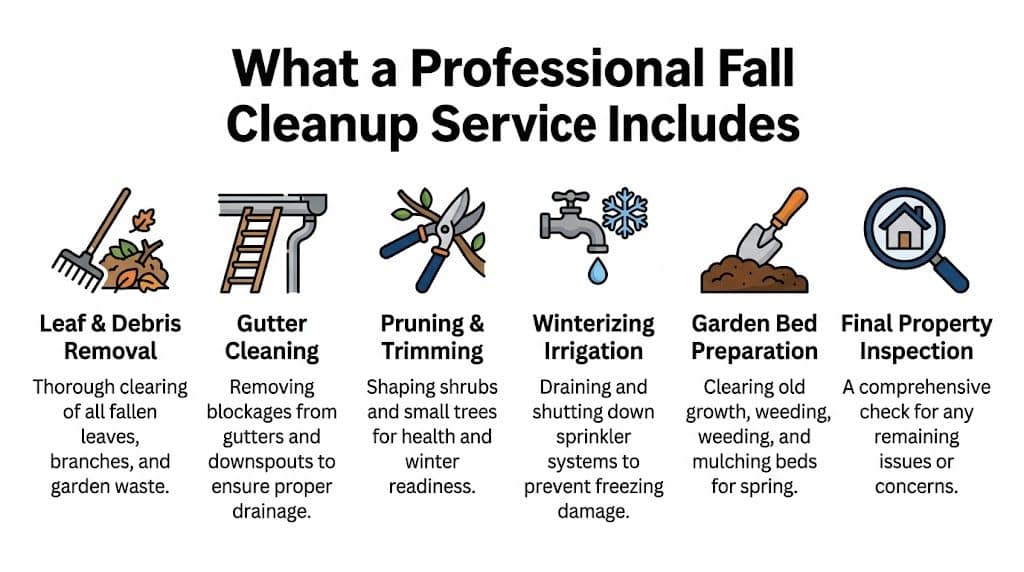
Leaf and debris removal
The first layer is obvious. Leaves, twigs, seed pods, and storm debris need to come off lawn areas, out of beds, and away from hard surfaces.
What matters is where that debris collects. Corners of patios, joints between pavers, stair treads, grill islands, retaining wall bases, and planting pockets around structures hold moisture longer than open lawn. If those areas are left packed with debris, you can end up with staining, blocked drainage, and slippery surfaces.
Lawn and bed preparation
The distinction in work quality becomes evident. A careful cleanup removes spent annuals, clears out dead top growth where appropriate, and keeps beds from going into winter with a thick wet blanket of debris.
Some properties also benefit from aeration or overseeding, but that depends on the lawn’s condition and the owner’s goals. Kennedy Design + Build doesn’t provide lawn maintenance services, but from a site-planning standpoint, fall is the right time to decide which areas are just lawn and which might be better used for expanded planting, a walk, a sitting area, or a future entertaining zone.
Pruning and trimming with restraint
Fall is not the time for aggressive cutting just because everything looks overgrown. Dead, damaged, or clearly problematic material should be handled. Broad shaping cuts on the wrong plant at the wrong time can create spring problems.
That’s one of the trade-offs homeowners don’t always see. A rushed cleanup can make a property look neater for a week while setting back structure, bloom, or screening value later.
Drainage and gutter attention
A professional crew should also be thinking about water. Gutters, downspout discharge, splash zones, trench drains, area drains, and low spots all deserve a look before winter.
If runoff crosses a walkway, pools near a patio edge, or dumps into a bed that already stays wet, cleanup alone won’t solve it. It does, however, reveal the issue clearly.
Hardscape review
This is the part basic lawn care articles usually skip. On homes with paver patios, seat walls, outdoor kitchens, fire features, steps, and accent lighting, cleanup should include a visual review of movement, open joints, drainage behavior, debris traps, and surface condition.
For a homeowner thinking about upgrades, this season is also a good time to look closely at patios and decks and ask whether the current layout still fits how the family uses the space.
Clean surfaces tell the truth. Once the leaves are gone, you can see whether you have a cleanup issue, a drainage issue, or a design issue.
Your DIY Fall Cleanup Checklist
Some homeowners want to handle the work themselves, at least on smaller properties. That can make sense if the site is manageable and you’re realistic about time, equipment, and what you can safely reach.

Start with the lawn
Walk the lawn before you touch a rake or blower. Look for matted areas, hidden sticks, soft spots, and places where leaves are sealing off the grass.
Then work in passes instead of jumping around.
- Clear the surface fully so heavy leaf cover doesn’t stay wet against turf.
- Open up edges along walks, curbs, and beds where leaves pile up first.
- Check for soil compaction in high-traffic areas if the lawn struggled through summer.
- Notice patterns. If the same part of the lawn is always thin, that may be a drainage or use problem, not just a seasonal one.
Move into the garden beds
Beds need a lighter touch than many DIY cleanups give them. Don’t treat every stem or seed head as something that has to disappear.
Focus on order and airflow. Remove obvious debris, clean out plants that are finished, and keep material from pressing against stone, siding, posts, or fixture bases.
A few practical checks help:
- Pull debris away from crowns and trunks so moisture isn’t held where it shouldn’t be.
- Remove weeds before winter while roots are still easier to access.
- Keep mulch levels sensible rather than burying plant bases.
- Protect bed edges so winter runoff doesn’t wash material onto walks and patios.
Clean hardscapes like assets, not like sidewalks
At this stage, homeowners often rush. They blow everything off the patio, call it done, and miss the details that matter.
Look at the joints, step edges, drainage points, and transitions between planting and paving. If leaves are trapped in those areas, moisture usually is too. Outdoor kitchens, fire features, seating walls, and pergola posts all deserve a close inspection.
If a patio only looks clean from the middle, it isn’t really clean. The trouble usually starts at edges, seams, and corners.
A few useful habits:
- Sweep or blow debris out of joints and corners instead of just moving it around.
- Check drains and outlets so winter water has somewhere to go.
- Inspect lighting fixtures for lens blockage, tilt, or buried wire exposure.
- Put away or protect movable items such as planters, cushions, and accessories.
For homeowners who want more seasonal home-side guidance, this roundup of 8 Critical Gutter Maintenance Tips is worth reading before freeze-ups begin.
If you enjoy doing this work yourself, keep a written list and update it each year. A simple seasonal record can be more useful than memory, especially when you start noticing recurring issues worth solving in a future project. For broader outdoor planning ideas, Kennedy keeps an active design-build blog with examples that help homeowners think beyond maintenance.
Hiring a Pro vs DIY When to Make the Call
The question isn’t whether you can do fall cleanup yourself. It’s whether doing it yourself gives you the result your property needs.
DIY works when the job is straightforward
If the property is modest, the beds are simple, the gutters are safely reachable, and your hardscape is limited, a DIY cleanup can be perfectly reasonable. You control the pace, you see the site closely, and you can spread the work across several weekends.
DIY usually starts to break down when the yard is heavily wooded, the lot has grade changes, or the property includes multiple outdoor living elements that need a more technical eye.
A pro earns the fee on technical tasks
Aeration is a good example. Professional core aeration can improve water infiltration by 40% to 60%, and lawns aerated in fall show up to 25% more resilience to winter damage and often 15% to 20% higher turf density the following spring (Q&A Landscaping, 2024).
That doesn’t mean every property needs every service. It does mean some fall tasks are more than cleanup. They’re corrective work, and the equipment and timing matter.
What hiring out does better
A good professional crew is usually stronger in three areas:
| Decision factor | DIY approach | Professional approach |
|---|---|---|
| Time | Often spread across multiple days | Typically handled in a defined visit |
| Equipment | Limited to what you own or rent | Commercial tools for volume and access |
| Site reading | Focus stays on visible mess | Better chance of spotting drainage, grade, and wear issues |
That last point matters most on higher-end properties. Once leaves are removed and surfaces are exposed, someone with site experience can often see the early signs of problems that a rake won’t fix.
How Fall Cleanup Sets the Stage for Future Projects
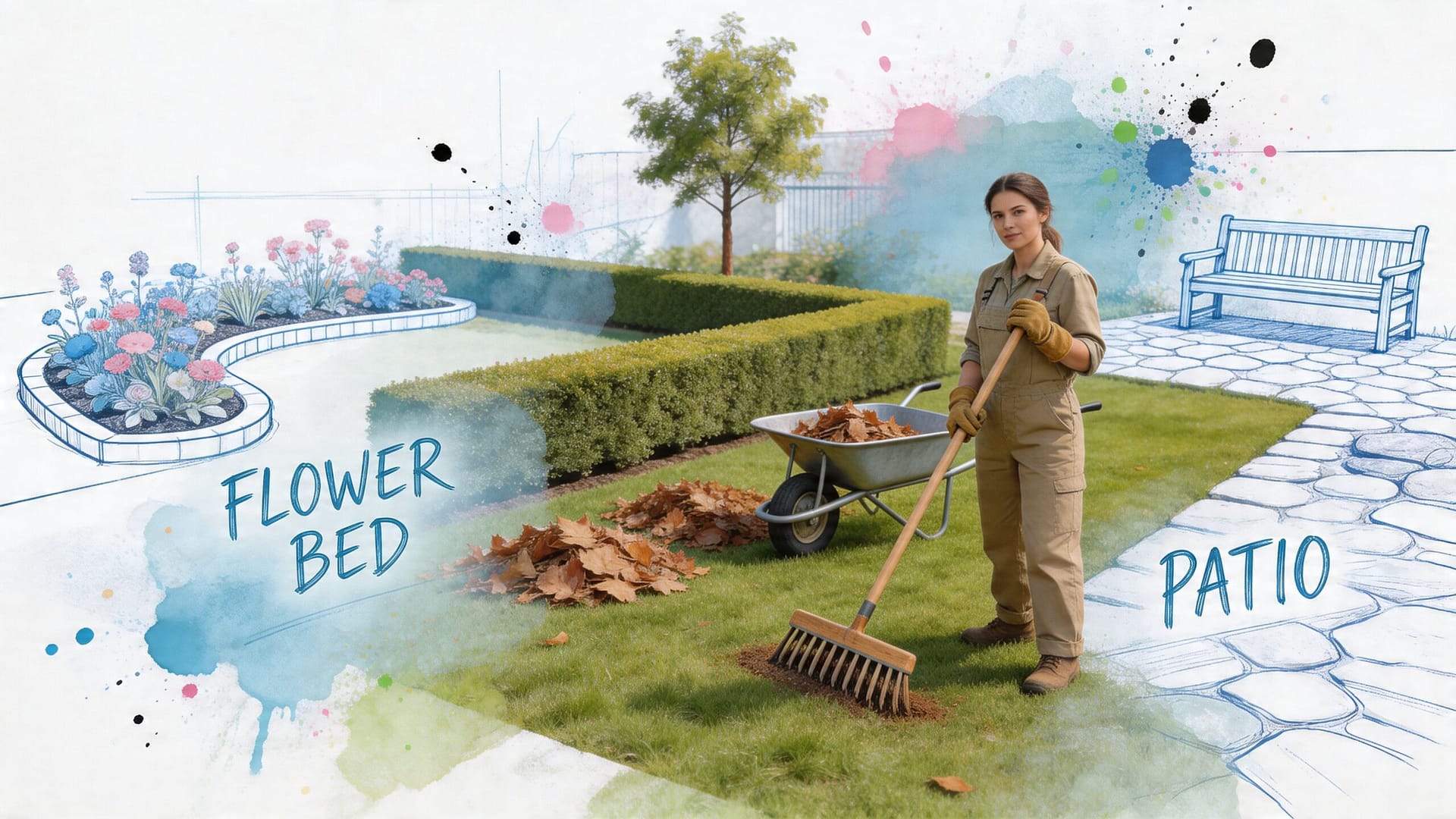
A thorough fall cleanup does something useful for homeowners planning improvements. It strips away the seasonal clutter and lets you see the property clearly.
You can finally read the site
In summer, full growth hides a lot. Beds blur into lawn, drainage paths disappear, and circulation problems around a patio or pool area are easy to ignore.
In fall, the property shows its structure. You can see where water moves, where the grade feels awkward, where a walk should be wider, or where an outdoor kitchen would work better than a loose grill setup.
That’s one reason many design conversations start after a cleanup rather than during peak growing season. The site is easier to measure, easier to photograph, and easier to discuss clearly.
Existing hardscape needs protection, not just tidying
For homeowners with larger outdoor living spaces, seasonal prep matters because hardscape usually represents a significant share of the total investment. Industry reporting cited by Divine Design Lawn Care notes that hardscape elements can make up 40% to 60% of a luxury project’s budget, and they face a 20% to 30% higher risk of damage from improper winterization and fall prep (Divine Design Lawn Care, 2024).
That shows up in practical ways:
- Patios and steps need clean joints, clear edges, and drainage that stays open.
- Outdoor kitchens should be reviewed for debris traps, water exposure points, and seasonal shutdown needs.
- Lighting systems benefit from fixture checks once beds and leaf cover are cleared.
- Transitions between lawn, bed, and paving often reveal where the original layout isn’t serving the property well.
Cleanup can uncover the next right project
Sometimes the answer is repair. Sometimes it’s redesign. A narrow landing may need rebuilding. A poorly placed bed may be trapping runoff. An underused corner may be the right location for a pavilion, fire feature, or expanded seating area.
If you want to see how a full-property rethink can change the way a site works, this Breinigsville complete exterior makeover is a useful example of what happens when design, grading, hardscape, and outdoor living are considered together.
A clean property isn’t just easier to maintain. It’s easier to improve well.
Frequently Asked Questions About Fall Cleanup
When should I schedule a fall cleanup service in Pennsylvania
Most homeowners want the work done after the bulk of leaf drop but before winter weather starts locking everything in place. The right timing depends on tree cover, exposure, and whether the property includes drains, patios, or outdoor features that shouldn’t sit buried under wet debris.
Is a fall cleanup service worth it if I already have a patio or outdoor kitchen
Yes, especially if those spaces see regular use or represent a major investment. Leaves and moisture collect around edges, joints, cabinet bases, posts, and drains. Cleanup helps protect the space and makes it easier to catch small problems before winter makes them worse.
What should I ask before hiring someone for fall cleanup
Ask exactly what areas are included, how debris is handled, whether gutters or drains are part of the work, and what isn’t covered. If your property has lighting, paving, retaining walls, or other built features, ask whether they’ll clear around them or inspect visible trouble spots.
Will a fall cleanup service include tree work
Usually, it includes light pruning or removal of small fallen branches, not major tree work. If larger limbs, canopy issues, or storm damage are involved, that’s a separate scope and should be handled by the right specialist.
Can fall cleanup help me plan a project for next year
Absolutely. Once beds are cleared and hardscape surfaces are visible, the layout is easier to evaluate. You can look at circulation, drainage, worn-out spaces, and underused areas with a much clearer eye than you can in midsummer.
Start Planning Your Outdoor Vision
A fall cleanup service can get a property ready for winter, but it can also do something more useful. It can show you what the site needs next. If you’re noticing drainage issues, awkward traffic flow, a tired patio, or an outdoor space that no longer fits how you live, that’s worth discussing before the next season starts.
Kennedy Design + Build focuses on design and installation, not recurring maintenance. If your cleanup has you thinking about a new patio, pool area, outdoor kitchen, lighting plan, or a more complete outdoor living layout in the Lehigh Valley, this is a good time to start the conversation.
Sources
LawnStarter. "Yard Cleanup Cost." 2023. https://www.lawnstarter.com/blog/cost/yard-cleanup-price/
Q&A Landscaping. "Fall Checklist." 2024. https://qalandscaping.com/fall-checklist
Divine Design Lawn Care. "Fall Cleanups." 2024. https://www.divinedesignlawncare.com/fall-cleanups/
If you’re ready to turn a seasonal reset into a longer-term plan, talk with Kennedy Outdoor Living. You can start with a design conversation about your property, your priorities, and the outdoor improvements you’d like to make. Call (610) 854-9993, visit Center Valley, PA 18036, or explore project ideas at kennedydb.com.