Over Fertilize Lawn? Fix Burn & Prevent Damage
Quick Answer
If you over fertilize lawn areas, act fast. Water deeply right away to flush excess salts below the root zone, avoid adding any more products, and hold off on aggressive mowing or repair work until the turf stabilizes. If this keeps happening, the problem usually goes deeper than the grass. More landscape insights are available on the Kennedy Design + Build blog.
You were probably trying to help the lawn. Then a few days later, the grass turned streaky, patchy, or oddly dark before fading out. That’s a common pattern when you over fertilize lawn areas, especially on cool-season turf common in Pennsylvania.
The bigger issue isn't just appearance. Residential lawns already receive outsized fertilizer use. Americans apply ten times more fertilizer per acre on lawns than on food crops, according to this review of lawn fertilizer impacts. On a property in the Lehigh Valley, that kind of overcorrection can affect more than turf. It can weaken the soil that supports planting beds, drainage, and future outdoor projects. You can learn more about the firm's design-build approach on the about page.
Signs You've Used Too Much Fertilizer
The first clue is usually visual, but not always in the way people expect. Grass may turn an unusually deep green for a short stretch, then collapse into yellow or brown patches. In other cases, the damage shows up fast as scorched areas that look like someone spilled something hot on the lawn.
This visual guide captures the early warning signs well.
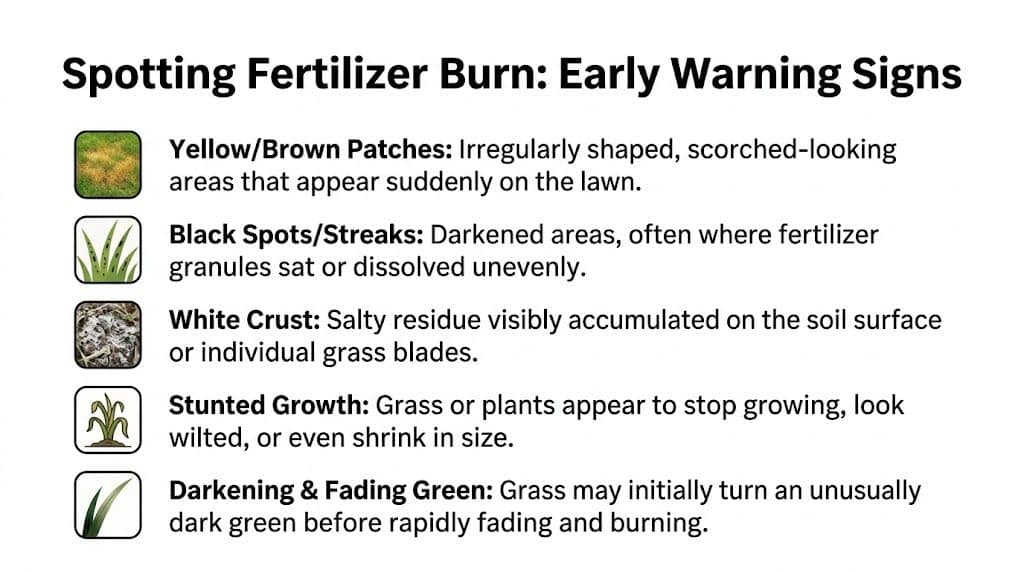
What fertilizer burn usually looks like
A lawn that's been overfed often shows a mix of symptoms rather than one clean pattern.
- Scorched patches that appear suddenly and don't match normal drought stress
- Dark streaks or spots where granules landed heavily or dissolved unevenly
- White crust on soil or blades from salt residue
- Wilted grass in moist soil because the roots can't pull water properly
- Fast top growth followed by thinning when the plant pushes leaf growth and loses balance
If the spreader overlapped passes, the lawn often shows striping. If a hopper leaked, you'll usually see concentrated burn lines.
Field note: Burn from fertilizer often looks too sharp and too sudden to be a disease problem at first. The edges usually tell the story.
Why the grass burns
Over-fertilization creates a salt problem. Excess soluble salts in the soil change how water moves, and the roots can lose water instead of absorbing it. To a homeowner, it looks backwards. The lawn seems thirsty even after watering.
Soil chemistry can also shift out of range. Fertilizer overload can push soil above 7.3 or below 4.5, interfering with nutrient uptake or releasing toxic levels of certain elements, as explained in this discussion of lawn fertilizer overload and pH disruption.
A good comparison is sunburn on skin versus damage to the whole body. The brown blades are the visible part. The stressed root zone is the underlying problem.
When the lawn problem is really a site problem
If the same spots burn repeatedly, don't assume the answer is better timing next time. Compacted soil, poor drainage, and shallow rooting often make fertilizer mistakes worse. That's especially true around heavy-use backyards, sloped grades, and areas near future outdoor living spaces.
You can see how site design and grading affect long-term yard performance in this private Macungie backyard makeover.
How to Fix an Over Fertilized Lawn Immediately
The first step is simple and urgent. Flush the soil.
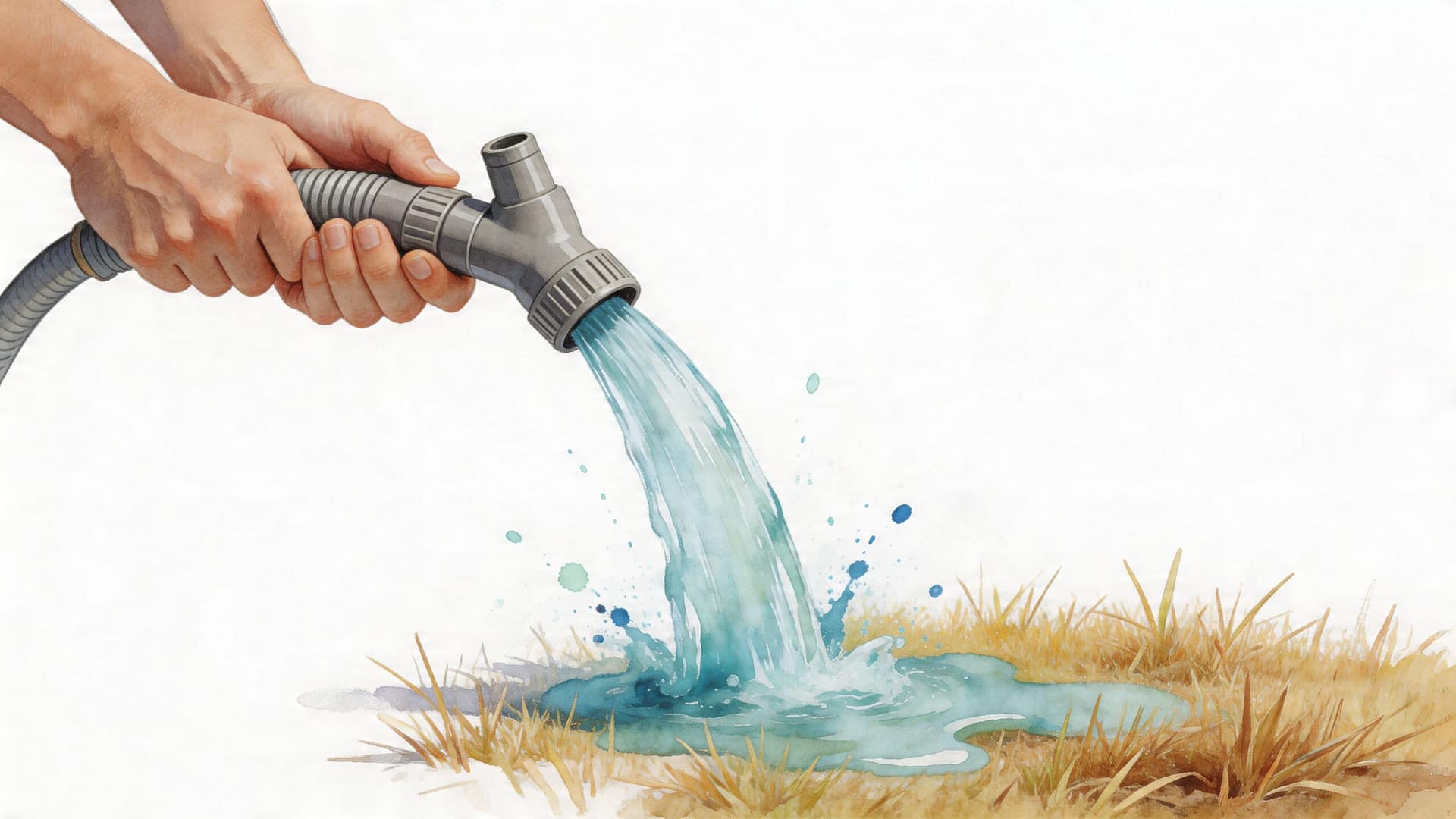
Start with slow, deep watering
Recovery requires immediately drenching the lawn with 1 to 2 inches of water over 24 to 48 hours to move excess salts below the root zone, typically 4 to 6 inches deep for cool-season grasses, according to this lawn recovery guidance on fertilizer burn.
That doesn’t mean blasting the area for ten minutes and hoping for the best. Water slowly enough that it soaks in rather than runs off. If the soil is compacted, cycle the watering in shorter sessions so the surface has time to absorb it.
What to avoid in the first few days
Homeowners often make the damage worse by trying to fix it with another product.
- Don't add more fertilizer. Even a “balancing” product can add more salts.
- Don't apply weed control. Stressed turf doesn't handle additional chemical pressure well.
- Don't scalp the lawn. Short mowing puts more stress on already damaged crowns.
- Don't rush to reseed. Seed won't perform well until the soil conditions settle.
If dry granules are still visible, remove what you can carefully before watering. A broom or light rake can help, but don't dig into soft, stressed turf.
The goal in triage is not to make the lawn pretty this weekend. The goal is to stop root damage from getting worse.
What works after the initial flush
Once the lawn has been watered through, leave it alone long enough to show you what's alive and what's not. Some areas rebound. Some don't. Trying to repair everything at once usually creates a patchwork of half-successful fixes.
A reasonable sequence looks like this:
| Condition | Best next move |
|---|---|
| Light discoloration | Keep watering evenly and wait |
| Heavy crusted residue | Flush thoroughly, then monitor |
| Dead strips from overlap | Plan for later repair after the soil recovers |
| Repeated burn in same area | Look at drainage, compaction, and grade |
If the site problem seems bigger than the turf symptom, it's worth getting professional eyes on the property before making broader changes. A design conversation can help sort out whether you're dealing with lawn chemistry, soil structure, drainage, or all three. The contact page is the right place to start that discussion.
The Hidden Damage to Your Landscape's Foundation
A burned lawn can recover visually and still leave you with weak soil underneath. That matters more than most homeowners realize.
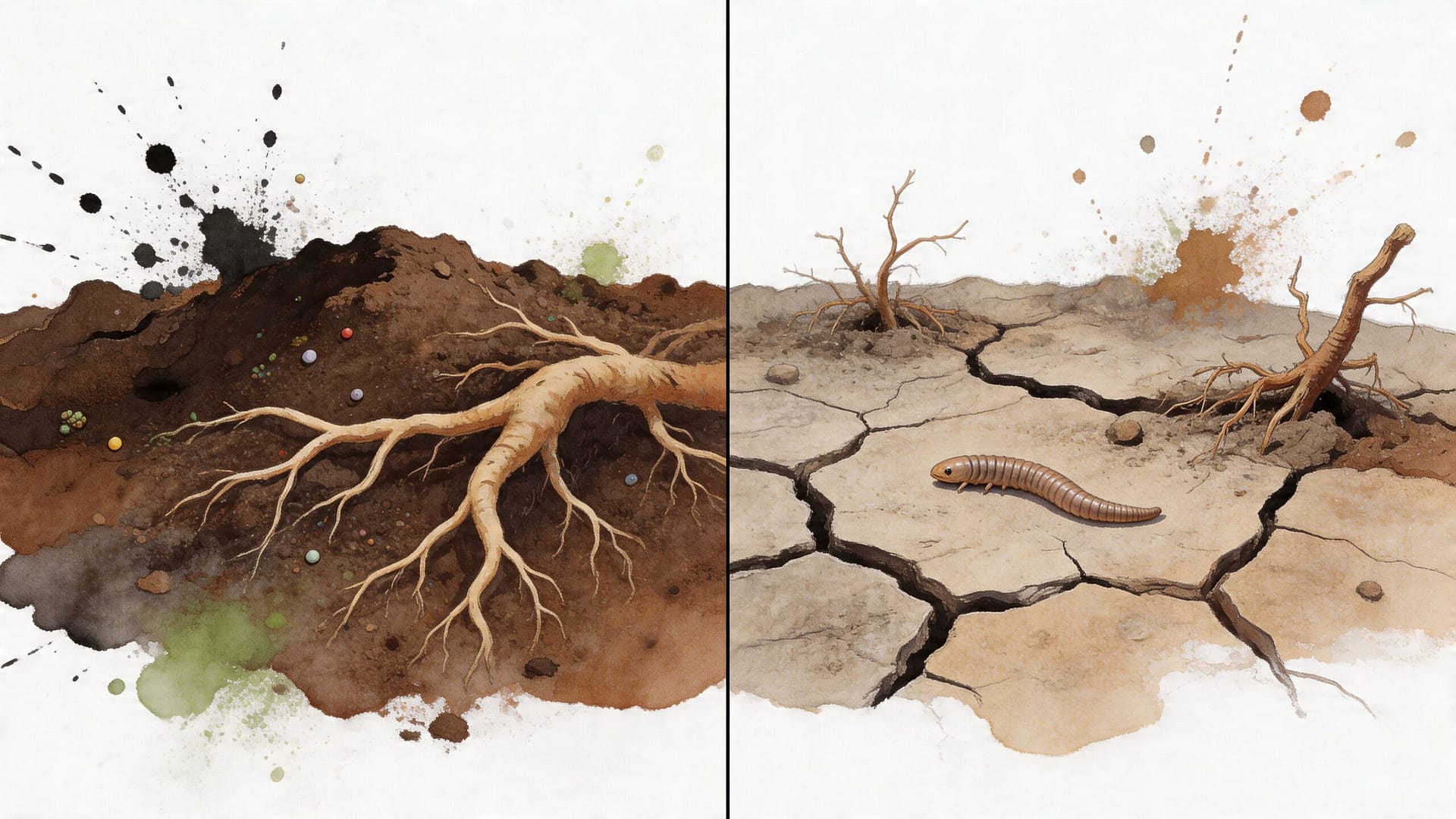
Repeated over-fertilization changes the soil itself
When lawn areas get overloaded year after year, the issue isn't just excess feeding. Soil biology shifts. Organic matter drops. Water infiltration slows. The ground gets less forgiving.
A University of Maryland Extension study found that lawns over-fertilized for 3+ years showed 40% lower soil organic matter and 25% reduced water infiltration, as noted in this article discussing long-term lawn over-fertilization effects. On properties with patios, walls, steps, or pool surroundings, slower infiltration can contribute to water movement where you don't want it.
Why this matters for patios, planting beds, and outdoor living areas
Healthy outdoor spaces depend on more than surface finish. Base prep, drainage, and planting performance all rely on what the soil can support. If the lawn soil around a new hardscape is compacted, salty, and short on organic life, nearby plantings struggle and runoff problems become more likely.
A significant flaw in much DIY lawn advice is that it treats the grass as an isolated problem. On a real property, the lawn, beds, slope, downspouts, and hardscape all affect each other.
Practical rule: If turf problems keep repeating in the same zones, stop thinking product-first and start thinking site-first.
A good outdoor plan often reduces the amount of lawn that needs high-input care in the first place. Thoughtful layouts can shift maintenance pressure away from problem zones and toward more durable uses. That's one reason homeowners planning larger upgrades often explore custom patios and decks instead of trying to force every square foot into perfect turf.
Preventing Future Problems with a Smarter Approach
If you've already watched fertilizer burn spread across a lawn, the lesson usually isn't “be more careful with the spreader.” It's that the whole approach needs more restraint.

Soil testing comes first
Before any future application, test the soil. That tells you whether the lawn needs nutrient input, and it gives you a baseline for pH and overall balance. Guessing from color alone is how many lawns get pushed too far.
For homeowners who want a broader overview of combined weed and fertilizer products, this ultimate guide to weed and feed for lawns is a useful reference point. Read it as background, not as a substitute for site-specific testing.
Growth that looks good can still be weak
A lawn can look lush for a short time and still be heading in the wrong direction. Excess nitrogen triggers luxuriant top growth at the expense of roots and increases thatch buildup by 20 to 30%, which weakens drought tolerance, according to this turf explanation of excessive nitrogen effects.
That’s why some over-fertilized lawns look impressive right before they start struggling. The blades shoot up, mowing demand jumps, and the root system falls behind.
Better habits than reactive feeding
The most reliable prevention is a calmer program built around site conditions.
- Use a soil test as your decision point. Don't feed on schedule alone.
- Favor slow-release products when fertilization is appropriate. They lower the risk of a sharp salt spike.
- Respect seasonal timing for cool-season turf. In the Lehigh Valley, summer applications often create more stress than benefit.
- Keep expectations realistic. A healthy lawn doesn't need to look artificially dark all season.
- Reduce unnecessary lawn area in hard-to-manage zones. Slopes, narrow strips, and edges around entertaining spaces are often better handled through design than repeated treatment.
Some properties need less chemistry and better layout. That might mean expanding bed space, improving drainage transitions, or replacing awkward lawn pockets with usable hardscape. A good site design lasts longer when the design matches how the site behaves.
Frequently Asked Questions About Lawn Over-Fertilization
How long does an over fertilized lawn take to recover?
It depends on how badly the roots were damaged and how quickly you flushed the soil. Mild burn may improve with steady watering and patience. Severe areas may not come back and can need later repair once the soil has stabilized.
Can too much fertilizer kill grass completely?
Yes, it can. If the salt load is high enough, roots dehydrate and turf can die rather than just discolor. That's why quick watering matters so much in the first day or two.
Should I mow after I over fertilize lawn areas?
Usually, not right away. Let the grass recover from stress before mowing, and don't cut it short when you do mow again. A hard cut on damaged turf adds another layer of stress.
Is organic fertilizer always safer?
Not automatically. Overapplication is still overapplication. Even organic manure can lead to salt buildup and leaching if it's applied without soil testing, as noted earlier in the article's discussion of overuse.
When should I reseed burned spots?
Wait until you're confident the excess salts have moved out of the root zone and the area isn't actively declining. Seeding too early wastes time and seed. The soil has to be ready before new grass has a chance.
Can one bad application affect nearby planting beds?
It can, especially if runoff moves fertilizer into adjacent beds or if the same soil condition extends across the site. On tightly designed properties, turf issues rarely stay in a neat boundary.
Is watering more always the answer after fertilizer burn?
Watering is the first answer for immediate salt flush, but endless shallow watering isn't. After the initial response, the goal is balanced moisture, not constant saturation. Too much routine watering can create a different set of problems.
Thinking Beyond the Lawn
If you keep having to rescue the same lawn, the lawn may not be the issue. The site may be asking for a different balance of turf, planting, drainage, and hardscape so the property works with less input and less frustration.
That bigger view matters around foundations and finished outdoor spaces too. If water management is part of the concern, this guide to proper foundation watering techniques is worth reading alongside any lawn recovery plan. A healthier outdoor area usually starts when the whole property is treated as one system, not a collection of separate problems.
If you're planning a more durable outdoor space and want to think beyond recurring lawn problems, Kennedy Outdoor Living can help you talk through a design-led solution. Call (610) 854-9993, visit Center Valley, PA 18036, or explore ideas at kennedydb.com.