7 Stunning Patterns for Concrete Pavers to Elevate Your Lehigh Valley Hardscape
Your outdoor living space is a canvas, and the foundation of any great hardscape design is the paver pattern you select. Whether for a patio, walkway, or driveway, the right layout does more than provide a stable surface; it sets the tone, defines the style, and enhances your home's architectural character. In the Lehigh Valley, where homeowners value both sophisticated design and lasting durability, choosing from the various patterns for concrete pavers is a critical first step.
This decision directly impacts the visual appeal and structural integrity of your investment. An expertly chosen pattern can make a small patio feel larger, add elegant curves to a straight walkway, or create a formal entrance for a grand driveway. At Kennedy Design + Build, we believe exceptional outdoor spaces begin from the ground up. Before our expert crews lay a single stone in Allentown or Center Valley, we help you select a pattern that perfectly aligns with your vision.
This guide will explore the most compelling and popular paver patterns, detailing how each one can transform a simple surface into a work of art. We will provide the practical insights you need to make an informed choice, ensuring your new hardscape is a beautiful and enduring foundation for years of enjoyment.
1. Running Bond Pattern
The running bond is arguably the most recognizable and classic of all patterns for concrete pavers. It features rectangular pavers laid in clean, linear rows, with each row offset by exactly half a paver's length from the one beside it. This simple yet effective layout creates a strong, staggered look that has been a staple in masonry and hardscaping for centuries.
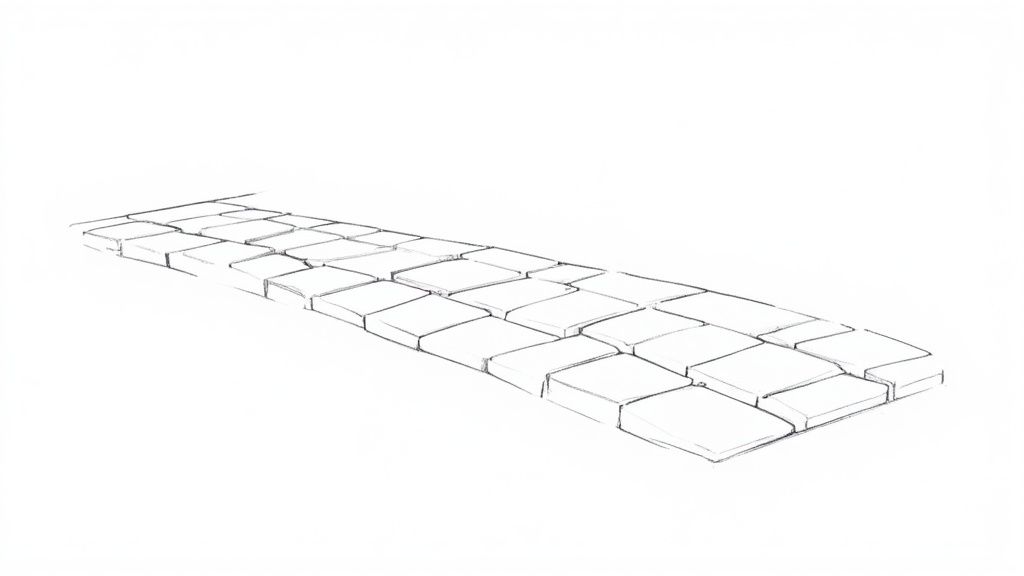
This pattern's enduring popularity comes from its versatility. It provides a sense of order and flow, guiding the eye along its continuous lines. Its straightforward geometry complements both traditional homes in areas like Coopersburg and sleek, modern architectural designs, making it a reliable choice for almost any hardscape installation project.
When to Use a Running Bond Pattern
A running bond is an excellent choice for creating a sense of length or width in an outdoor space. The strong directional lines can make a narrow walkway appear wider or a short patio seem longer, depending on the orientation of the pavers.
This pattern is highly effective for:
- Residential Driveways: Its interlocking nature distributes weight effectively, creating a durable surface for vehicular traffic.
- Walkways and Garden Paths: The clean lines create a clear and inviting path through your landscape.
- Patios and Terraces: It provides a stable and uniform foundation for outdoor furniture and entertaining areas.
Design and Implementation Tips
To elevate a running bond from simple to sophisticated, consider these professional design strategies. The details are what transform a standard paver installation into a high-end feature that enhances your property's value.
- Create Visual Contrast: Frame your running bond patio or walkway with a soldier course border in a contrasting color or texture. This adds a sharp, defined edge that makes the primary pattern pop.
- Consider Viewing Angles: The direction you lay the pattern matters. For a front walkway, running the bond towards the door can create a more welcoming entrance. For a patio, orient the lines to emphasize the best view of your Lehigh Valley property.
- Incorporate Color Blends: Instead of using a single solid color, mix pavers from several different pallets of a similar hue. This creates subtle, natural-looking variation that mimics the look of authentic quarried stone.
2. Herringbone Pattern
The herringbone pattern brings a timeless sense of movement and European elegance to any outdoor space. This sophisticated design features rectangular pavers installed at 90-degree angles to each other, creating a distinctive interlocking "V" or zigzag effect. Its legacy, rooted in Roman road building and classic European courtyards, gives it an air of historic grandeur and proven durability.
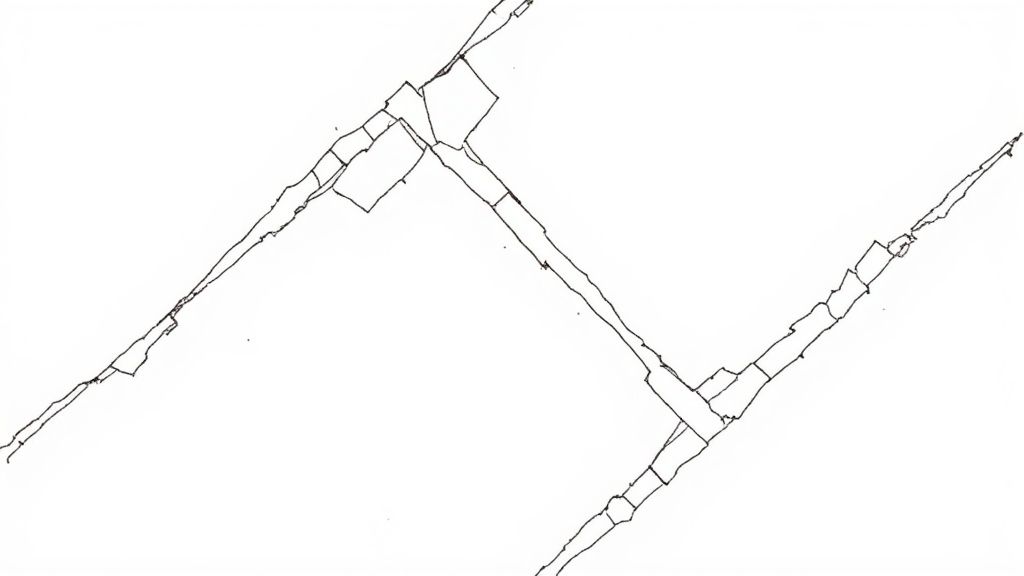
This pattern's true strength lies in its structural integrity. The interlocking arrangement distributes weight and lateral forces exceptionally well, preventing pavers from shifting or separating over time. This makes herringbone one of the most durable and high-performing patterns for concrete pavers, ideal for areas that must withstand significant stress.
When to Use a Herringbone Pattern
A herringbone layout is the perfect choice when you need to combine visual sophistication with superior structural performance. It is particularly effective for high-traffic areas where durability is just as important as aesthetics.
This pattern is highly effective for:
- High-End Driveways: Its interlocking nature provides maximum stability for vehicular traffic, resisting the forces of turning wheels and braking.
- Grand Patios and Courtyards: The dynamic zigzag adds visual interest and a sense of luxury, making it a stunning foundation for outdoor entertaining.
- Formal Walkways: The pattern creates a distinguished and formal path, guiding visitors with a touch of classic style.
Design and Implementation Tips
Executing a herringbone pattern requires precision, but the stunning result is well worth the effort. These professional strategies will ensure your hardscape installation achieves a flawless, high-end finish that elevates your property.
- Establish a Strong Baseline: A successful herringbone installation begins from a perfectly straight edge or a meticulously snapped chalk centerline. This guide is crucial for keeping the "V" shapes consistent and preventing the pattern from drifting.
- Plan for Precision Cuts: Due to the angled layout, you will need to make numerous cuts along the edges. Our design process accounts for this, ensuring a seamless and efficient installation with minimal waste.
- Frame the Design: A soldier or sailor course border in a contrasting color or paver style provides a clean, defined edge. This frame contains the dynamic energy of the herringbone and gives the entire installation a polished, intentional look.
The herringbone pattern is a hallmark of custom, luxury hardscaping. Its ability to blend historic charm with unparalleled strength makes it a favored choice for discerning homeowners in the Lehigh Valley. To see how this pattern can be integrated into a complete backyard transformation, you can explore this Center Valley deck and patio project.
3. Basketweave Pattern
The basketweave pattern offers a distinct, textured look by creating the illusion of woven material. This classic design is achieved by arranging pairs of rectangular pavers, or individual square pavers, in alternating horizontal and vertical orientations. This creates a checkerboard-like grid that introduces a rich sense of texture and Old-World charm to any paved surface.
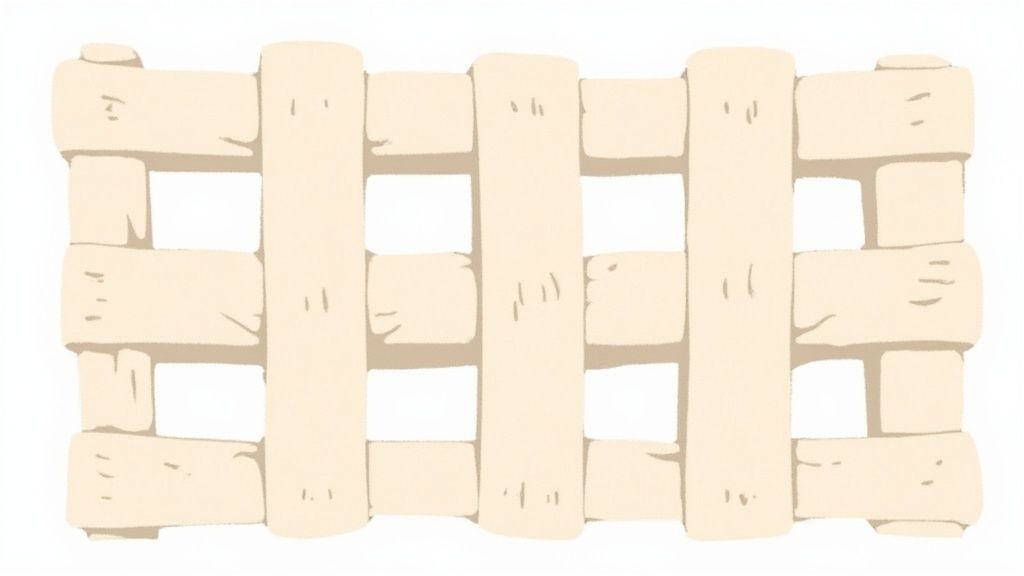
Its highly decorative, non-directional nature makes the basketweave one of the more visually intricate patterns for concrete pavers. This makes it an ideal choice for creating a focal point or adding a touch of traditional elegance. It works beautifully in spaces designed for relaxation and gathering, like a Center Valley courtyard or a historic-style patio, where the pattern itself becomes a key design element.
When to Use a Basketweave Pattern
The basketweave pattern is perfect for adding character to contained, well-defined areas where its detailed texture can be fully appreciated. Unlike linear patterns, it doesn't create a strong sense of direction, making it ideal for spaces where you want guests to linger rather than move through.
This pattern is highly effective for:
- Residential Patios: It forms a beautiful, stable surface that resembles an indoor parquet floor, elevating the sophistication of outdoor living areas.
- Courtyards and Seating Areas: The intricate design adds a formal, classic feel perfect for traditional or European-inspired landscapes.
- Decorative Inlays and Borders: Use it as a feature element within a larger field of a simpler paver pattern to create custom detail.
Design and Implementation Tips
A successful basketweave installation depends on precision and thoughtful design choices. Proper execution transforms a simple grid into a luxurious, captivating surface that enhances your property’s high-end aesthetic.
- Enhance with Color Contrast: Use two distinct but complementary paver colors to accentuate the "over-under" woven effect. A darker paver for the vertical pairs and a lighter one for the horizontal pairs can make the pattern dramatically pop.
- Scale the Pattern to the Space: In a smaller area, like a quaint garden path, using smaller pavers will make the basketweave pattern feel intricate and detailed. For a large patio, larger format pavers prevent the pattern from looking too busy.
- Frame with a Strong Border: A soldier or sailor course border is essential for containing the basketweave pattern. This defined edge provides a clean visual stop, preventing the detailed pattern from feeling chaotic and anchoring it within the landscape design.
4. Circular or Radial Pattern
For designs that demand a dramatic focal point, few patterns for concrete pavers are as impactful as the circular or radial pattern. This sophisticated layout features pavers arranged in concentric rings or radiating outward from a central point, creating a powerful sense of movement and elegance. Its roots in classical Roman and Renaissance design give it a timeless, architectural quality that instantly elevates an outdoor space.
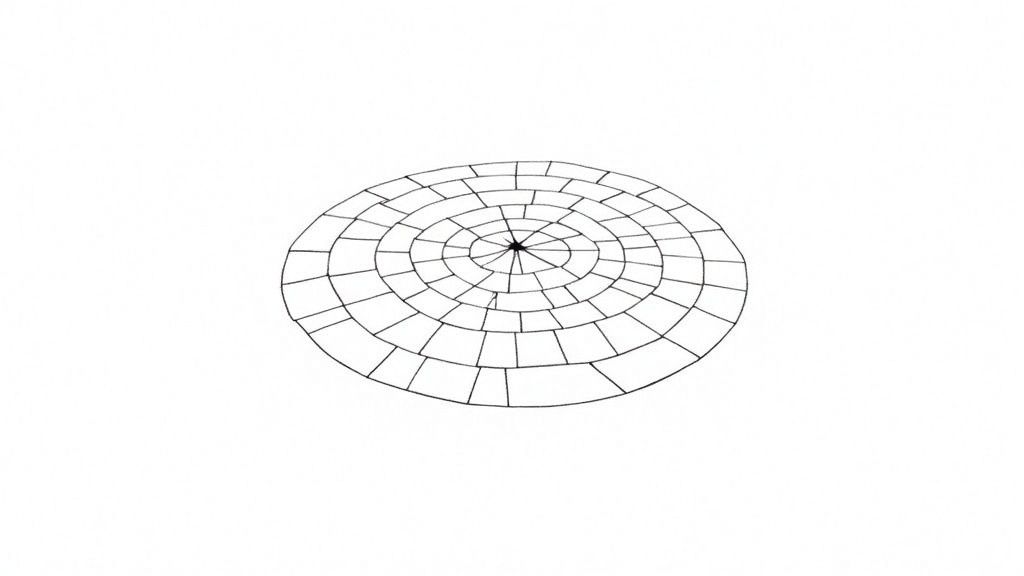
This pattern is often used to break up the linear nature of larger hardscapes, serving as a stunning centerpiece in a courtyard or at the intersection of several garden paths. Achieving its perfect curves requires either specially manufactured wedge-shaped pavers or meticulous, expert-level cutting of standard pavers, making it a hallmark of high-end, custom craftsmanship.
When to Use a Circular or Radial Pattern
A circular pattern is the ideal choice when you want to create a specific destination or anchor point in your landscape design. It naturally draws the eye and can make an area feel more intimate and intentional.
This intricate pattern is perfect for:
- Courtyard Centerpieces: It provides a beautiful foundation for a fountain, statue, or central fire feature.
- Patio Dining Areas: A circular pattern can define a specific zone for an outdoor dining table, creating an elegant, room-like feel.
- Grand Entrances: Used at the base of steps or in a motor court, it creates a luxurious and welcoming first impression for properties in areas like Center Valley.
- Garden Focal Points: It can serve as the hub from which multiple walkways radiate, guiding flow throughout the landscape.
Design and Implementation Tips
The complexity of a circular or radial pattern means that precision is paramount. Flawless execution by an experienced hardscape installation team is what separates a breathtaking feature from a flawed attempt.
- Plan with Precision: This is not a pattern for estimation. A detailed design, often created with professional software, is necessary to map out every ring and ensure accurate paver placement and cuts.
- Start from the Center: Installation must begin at the absolute center and work outwards, ring by ring. This ensures the pattern remains symmetrical and the joints stay consistent as the circle expands.
- Rely on Expert Installation: Due to the extensive custom cuts required, this pattern demands professional execution to avoid excessive waste and ensure a structurally sound, visually perfect result.
5. Random or Irregular Pattern
For a truly organic and naturalistic aesthetic, the random or irregular pattern stands out among patterns for concrete pavers. This design approach deliberately avoids rigid, repeating lines by utilizing pavers of multiple sizes and shapes. The result is a surface that beautifully mimics the timeless appeal of natural flagstone or classic European cobblestone streets.
This pattern's charm lies in its unstructured, free-flowing appearance. It creates a relaxed, countryside feel that softens hardscape elements and integrates them seamlessly into the surrounding landscape. Its non-uniform layout is perfect for adding character and a sense of history to outdoor spaces, from rustic retreats to historic-style properties in areas like Center Valley.
When to Use a Random or Irregular Pattern
A random or irregular layout is an ideal choice when the goal is to create a softer, more informal, and less structured outdoor environment. It excels at breaking up large, monotonous surfaces and adding visual texture and interest.
This pattern is highly effective for:
- Winding Garden Paths: The organic flow complements the natural curves of a landscape design.
- Rustic Patios: It creates a charming, aged look that serves as a perfect foundation for a cozy outdoor living room.
- Courtyards and Plazas: The varied sizes and shapes add a sense of old-world elegance and artisanal craftsmanship.
- Pool Surrounds: Its natural appearance helps blend the pool deck into the garden for a lagoon-like feel.
Design and Implementation Tips
Achieving a "random" look that is both beautiful and structurally sound requires careful planning and execution. A skilled designer knows how to balance irregularity with underlying stability for a high-end, durable installation.
- Balance the Layout: Before setting pavers, our team lays them out in a test section. This allows us to adjust the placement of different sizes and colors to achieve a balanced, natural look without creating unintentional lines or clusters.
- Anchor with Large Pavers: Strategically placing the largest pavers throughout the area first acts as an anchor. Our crews then fill in the surrounding spaces with medium and smaller pieces, creating a more cohesive design.
- Maintain Consistent Joint Width: While the pavers are different sizes, keeping the gaps between them relatively uniform is crucial. Consistent jointing provides a professional finish and ensures the surface remains stable and interlocked.
The random or irregular pattern is a testament to how thoughtful design can create a feeling of natural spontaneity. For homeowners seeking a unique and custom hardscape that reflects a love for nature and timeless style, these intricate patterns for concrete pavers are a superb choice.
6. Soldier Course Border Pattern
While many patterns for concrete pavers focus on the main field, the soldier course is a foundational technique that frames and defines the entire space. It features rectangular pavers laid side-by-side, standing tall and perpendicular to the edge of the patio or walkway. This creates a strong, linear frame that provides both structural integrity and a clean, finished look.
The soldier course acts as a powerful design element, often used in conjunction with other patterns like herringbone or running bond. Its purpose is to contain the interior pattern, prevent shifting, and add a layer of visual sophistication. This technique is a hallmark of high-end hardscape design, clearly separating the hardscape from surrounding landscape elements.
When to Use a Soldier Course Border Pattern
A soldier course is essential for projects that require a crisp, well-defined edge. It adds a formal, intentional feel to any hardscape, elevating the design from a simple surface to a structured outdoor room. Its linear nature helps guide the eye and contain the energy of more dynamic interior patterns.
This border is highly effective for:
- Patio and Walkway Edges: It creates a neat perimeter that prevents pavers from spreading and stops mulch or soil from encroaching.
- Driveway Perimeters: The border adds curb appeal and structural support to the edges, which bear significant stress.
- Defining Zones: Use it to outline a specific area within a larger patio, such as a designated dining or fire pit space.
- Pool Decks: A soldier course provides a clean, safe, and visually appealing edge around the pool coping.
Design and Implementation Tips
A well-executed soldier course is a sign of true craftsmanship. Paying attention to the details of its installation is critical for achieving a luxury finish that lasts.
- Install the Border First: Laying the soldier course before the main field pavers ensures perfectly straight and clean lines. It creates a container that makes laying the interior pattern faster and more precise.
- Create Powerful Contrast: Use a paver for the border that contrasts with the main field in color, texture, or even shape. A dark charcoal border around a light gray herringbone pattern, for instance, adds dramatic visual impact.
- Ensure Proper Edge Restraint: The soldier course must be backed by a durable edge restraint system to keep it firmly in place and prevent lateral movement over time.
The soldier course is more than just an edge; it’s a statement of quality. For homeowners in Bethlehem and the surrounding Lehigh Valley, this detail can unify an entire outdoor living project. To see how a soldier course border can frame and enhance a sophisticated design, you can find inspiration in this Bethlehem outdoor living space.
7. Pinwheel Pattern
The pinwheel pattern creates a rotating, dynamic visual effect using a combination of square and rectangular pavers. It is typically formed by arranging four rectangular pavers around a central square paver, creating a module that resembles the blades of a pinwheel. This intricate layout combines geometric precision with engaging visual movement.
This pattern’s appeal lies in its ability to break up the monotony of a large paved surface, introducing a sense of playfulness and sophisticated detail. Its repeating, swirling motif draws the eye and makes patios and courtyards feel more customized and artfully designed. This is one of the more complex patterns for concrete pavers, signaling a high level of craftsmanship.
When to Use a Pinwheel Pattern
A pinwheel pattern is an exceptional choice for spaces where you want the hardscaping to be a standout feature. Its non-directional nature makes a space feel balanced and contained, making it ideal for defined social areas.
This pattern is highly effective for:
- Residential Patios and Courtyards: It creates a beautiful, quilt-like floor for outdoor rooms and intimate gathering spots.
- Commercial Plazas and Entrances: The distinctive design adds character and a premium feel to public spaces.
- Pool Decks: Its unique look provides an elegant and non-linear surface surrounding a custom pool installation.
- Garden Focal Points: Use it to create a special landing or feature area within a larger landscape design.
Design and Implementation Tips
Executing a pinwheel pattern requires precision, but the stunning result is worth the effort. Proper planning is key to achieving a flawless, high-end installation that elevates your property in areas like Center Valley.
- Use Contrasting Colors: Make the central square paver a different color or texture from the surrounding "blades." This accentuates the pinwheel effect and adds another layer of visual depth.
- Plan Your Layout: Due to its modular nature, it's crucial to map out the installation beforehand. Our team starts from the center of the space and works outwards to ensure the pattern is symmetrical and avoids awkward cuts at the edges.
- Integrate Creative Lighting: The textured, multi-paver surface of a pinwheel pattern is perfect for showcasing with strategic lighting. Uplighting nearby features or using subtle, integrated hardscape lights can highlight the pattern’s unique shadows and depth after dark. For more ideas, you can explore Kennedy Design + Build's outdoor lighting and audio services.
Choosing Your Paver Pattern: A Summary
| Pattern | Best For | Visual Style |
|---|---|---|
| Running Bond | Walkways & Patios | Classic, Linear, Simple |
| Herringbone | Driveways & Grand Patios | Elegant, Dynamic, Strong |
| Basketweave | Patios & Courtyards | Textured, Traditional, Decorative |
| Circular | Focal Points & Entrances | Dramatic, Architectural, Custom |
| Random/Irregular | Winding Paths & Rustic Patios | Natural, Organic, Relaxed |
| Soldier Course | Borders & Edges | Defined, Formal, Framing |
| Pinwheel | Feature Patios & Plazas | Playful, Intricate, Geometric |
Bring Your Vision to Life with Kennedy Design + Build
Choosing the right pattern for your concrete pavers is a foundational decision, but it's only the first step in creating an exceptional outdoor living space. As we've explored, the pattern you select sets the entire tone and visual rhythm for your patio, walkway, or driveway. The true success of your project, however, hinges on how that vision is translated into reality through expert design and artisan-level installation.
At Kennedy Design + Build, we specialize in weaving these considerations into a single, cohesive vision. Our owner-led, hands-on process ensures that from the initial consultation to the final paver being set, every detail is meticulously planned and executed. We don’t just build hardscapes; we create fully integrated outdoor environments in Center Valley, Allentown, and across the greater Lehigh Valley, designed specifically for your lifestyle.
Frequently Asked Questions (FAQs)
1. How much does a paver patio cost in the Lehigh Valley?
The cost of a paver patio installation varies significantly based on the size, complexity of the design, site accessibility, and the specific pavers chosen. A simple Running Bond pattern will be more cost-effective than a complex Circular or Pinwheel pattern that requires extensive cuts. We provide detailed, transparent proposals after an initial design consultation to align the project with your budget and vision.
2. Which paver pattern is the most durable for a driveway?
The Herringbone pattern is considered the gold standard for driveway durability. Its interlocking "V" shape is exceptionally effective at distributing the weight and stress of vehicles, preventing shifting and rutting over time. This makes it a superior choice for any high-traffic hardscape installation.
3. How long does a hardscape installation project take?
The timeline for a hardscape project depends on its scope and complexity. A straightforward walkway might take a few days, while a multi-level patio with a fire feature and seating walls could take several weeks. At Kennedy Design + Build, we establish a clear project timeline during the design phase so you know exactly what to expect.
4. Can you combine different paver patterns?
Absolutely. Combining patterns is a hallmark of high-end, custom landscape design. For example, a Running Bond field can be framed with a contrasting Soldier Course border, or a large patio could feature a Circular pattern inlay as a focal point. Our design process explores these possibilities to create a truly unique outdoor living space.
5. How does the Kennedy Design + Build process work?
Our process begins with a personal design consultation to understand your goals and assess your property. We then create a detailed 3D design to help you visualize the final result, make material selections, and refine every detail. Once approved, our owner-led team handles the entire installation with meticulous craftsmanship, ensuring your vision becomes a reality.
Ready to see how the perfect patterns for concrete pavers can transform your backyard into a luxury retreat? Contact Kennedy Design + Build to schedule your personal design consultation today. Let's start creating the outdoor living space you've always envisioned in the Lehigh Valley.
Explore our portfolio of custom projects at Kennedy Outdoor Living.