Should I Build a Patio or a Deck in My Backyard? A Guide for Lehigh Valley Homeowners
Deciding between a patio or a deck is a key first step in transforming your backyard. It’s a choice that shapes how you’ll relax and entertain for years to come. Homeowners often struggle with this decision when planning an outdoor living space.
A patio offers a ground-level connection to your landscape. A deck creates a raised living area, which is great for sloped yards. The right answer isn’t about what looks best in a magazine—it’s about what works for your home, yard, and lifestyle.
The Ultimate Backyard Decision: Patio or Deck
Across the Lehigh Valley, from Center Valley to Allentown, homeowners are investing more in their backyards. These spaces have become extensions of the home. Outdoor living projects are now a top priority, with many people spending 25% or more of their remodeling budget outdoors.
A common mistake is choosing a patio or deck based only on looks. Many homeowners pick a style they like without thinking about the yard’s slope, drainage, or sunlight. The better approach is to think about how the space will actually function.
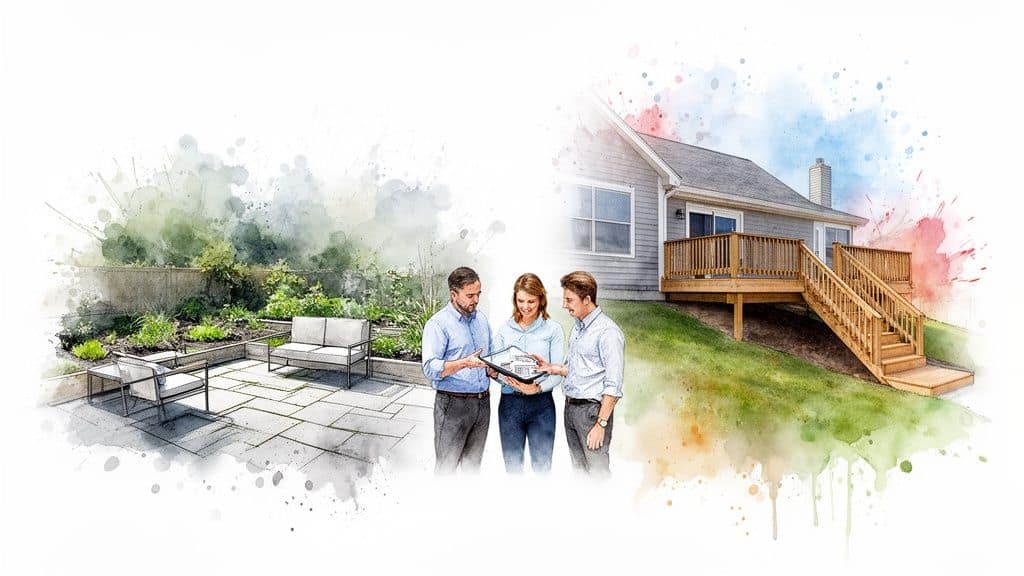
Key Differences At A Glance
To help you start, here’s a quick look at the main differences between a patio and a deck. This summary makes it easy to see where your project might be headed.
Quick Comparison: Patio vs. Deck
| Factor | Patio | Deck |
|---|---|---|
| Placement | Built directly on the ground; ground-level living. | A raised structure, often attached to the house. |
| Best For | Flat or gently sloped properties. | Uneven, sloped, or multi-level yards. |
| Materials | Pavers, natural stone, or stamped concrete. | Pressure-treated wood, composite, or PVC. |
| Integration | Blends naturally with gardens and walkways. | Creates distinct, upper-level living areas. |
This table gives you a starting point, but the details are where the real decision is made.
A design-build process is crucial. It lets homeowners explore both options during planning instead of committing too early. Visual designs show how a patio or deck will connect with the home, yard, and other outdoor features.
Your choice will set the stage for how you live outdoors. Planning for big features like an outdoor kitchen can influence whether a patio or deck is the better base. For some great inspiration, check out these outdoor kitchen layout ideas.
At Kennedy Design + Build, our design-first approach makes sure your final choice is the perfect fit. To see how we’ve helped other Lehigh Valley homeowners, learn more about our custom patios and decks.
Comparing Costs and Financial Investment
Understanding the financial side of your new outdoor living space is a key first step. When homeowners in the Lehigh Valley ask, “should I build a patio or a deck?”, budget often guides the conversation. Both can create a beautiful backyard, but their costs are very different.
A deck’s price depends on its height, structure, and materials. A patio’s cost comes from ground preparation and the surface material. Knowing this difference is key to setting a realistic budget for your project, whether you’re in Allentown or Coopersburg.
Deck Cost Factors
The cost of a deck has two parts: the structure and the surface. Building a raised platform requires a lot of labor and material for footings, posts, and framing. This foundation work makes up a big part of the total budget.
From there, your material choice creates a wide price range:
- Pressure-Treated Wood: This is the most budget-friendly option at first. It gives you that classic wood look but needs regular maintenance to prevent rot.
- Premium Composites: Materials from brands like Trex have a higher initial cost. They pay off with great durability, almost no maintenance, and long warranties.
For a professionally installed deck, you can expect to invest anywhere from $30 to $60 per square foot or more.
Patio Cost Factors
Patios usually have a lower starting cost because they don’t need a heavy structure like a deck. The main costs come from site prep—digging and laying a stable gravel base—and the surface material. As you weigh your options, understanding the concrete patio cost is important for financial planning.
The material you choose for your patio will have a big effect on the final price:
- Concrete Pavers: A very popular choice, pavers come in many shapes, colors, and textures. They are built to last and are easy to repair if one stone gets damaged.
- Natural Stone: Options like bluestone or flagstone offer a premium, timeless look. This is often the most expensive patio material, but its natural beauty is unmatched.
- Stamped Concrete: This can look like stone or pavers at a lower price. The downside is that it can crack over time and is hard to repair without it being obvious.
Patios are a great alternative to decks, often costing 20-40% less while fitting in with luxury hardscapes. Basic concrete patios average $6-$14 per square foot, while a project with high-end pavers or stone can range from $25 to $50 per square foot. You can discover more insights from HomeAdvisor’s analyses.
While patios often start at a lower price, a high-end natural stone patio can cost as much as a premium composite deck. This is why a design-first approach is so valuable. You can see how we used premium materials in our Center Valley backyard patio project for real-world inspiration.
A Closer Look at Materials and Durability
Choosing between a patio and a deck is more than just about looks. The materials you pick will decide how much time you spend enjoying your space versus maintaining it. Your choice should match your lifestyle.
When we help Lehigh Valley homeowners plan their backyards, we always stress looking beyond the initial appearance. It’s key to understand how materials will perform year after year.
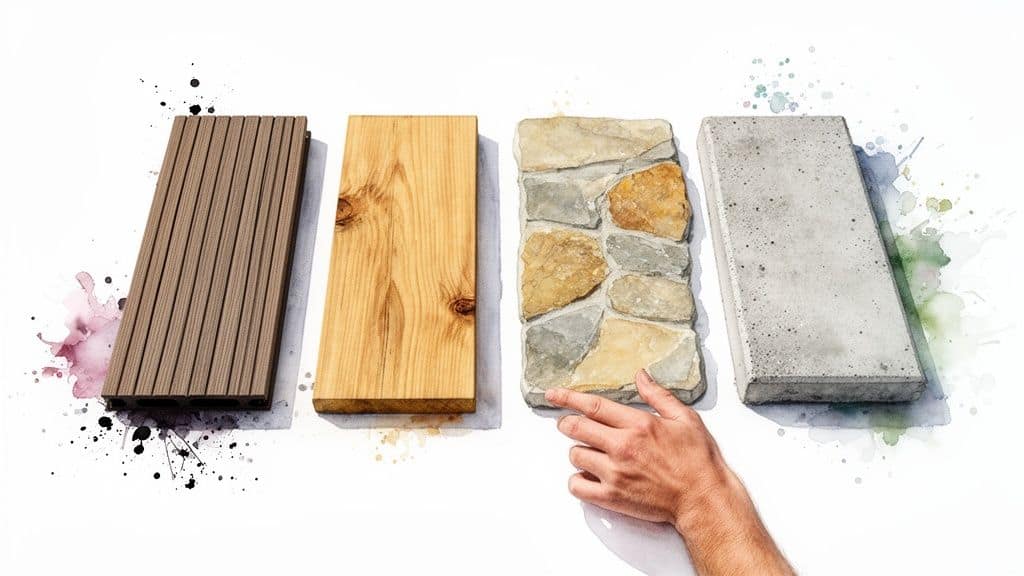
Decking Materials: Wood Versus Composite
For decks, the choice is usually between traditional wood and modern composite materials. Each offers a different balance of looks, cost, and maintenance.
-
Traditional Wood (Pressure-Treated Pine, Cedar): Nothing beats the classic, natural warmth of real wood. However, it needs annual maintenance. This means cleaning, sanding, and re-sealing to prevent rot and splintering.
-
Composite Decking: Made from wood fibers and recycled plastics, composite decking is built to last. It resists rot and warping and never needs to be stained. The upfront cost is higher, but its low-maintenance appeal is a huge draw. Industry data shows that 46% of professionals now prefer composite for its durability. You can see how we use these materials in our latest project insights.
Patio Materials: Built to Last
Patios are known for their great durability, especially when built with materials that can handle the Lehigh Valley’s weather. Proper installation is everything.
-
Pavers (Concrete or Clay): Pavers are very resilient. The small joints between them allow for slight movement, which prevents large cracks. If one paver gets damaged, it can be easily replaced.
-
Natural Stone (Bluestone, Flagstone): For pure elegance, natural stone is in a class of its own. It’s one of the most durable materials you can choose. Each stone is unique, creating a high-end, timeless look.
-
Poured Concrete: A standard concrete slab is a budget-friendly option. But it is likely to crack over time from ground settlement and temperature changes. Repairs are also hard to hide.
A key insight we’ve learned from designing hardscapes in areas like Allentown and Coopersburg is that homeowners prefer low-maintenance options. Investing in materials like composite decking or natural stone pavers saves time and money on upkeep.
Your material choice defines the look of your backyard and the time you’ll spend on it. A thoughtful decision now ensures your backyard remains a source of pride, not a list of chores.
How Your Yard’s Landscape Shapes Your Choice
When choosing between a patio or a deck, your yard’s terrain is often the deciding factor. Your yard’s natural slope can make the choice for you. Overlooking these details can lead to drainage problems and a space that doesn’t feel right.
A professional site assessment is the first step in any hardscape installation. An expert can analyze your property’s conditions and recommend a structure built for long-term stability. This is especially true for homes across the Lehigh Valley, where the ground can be varied.
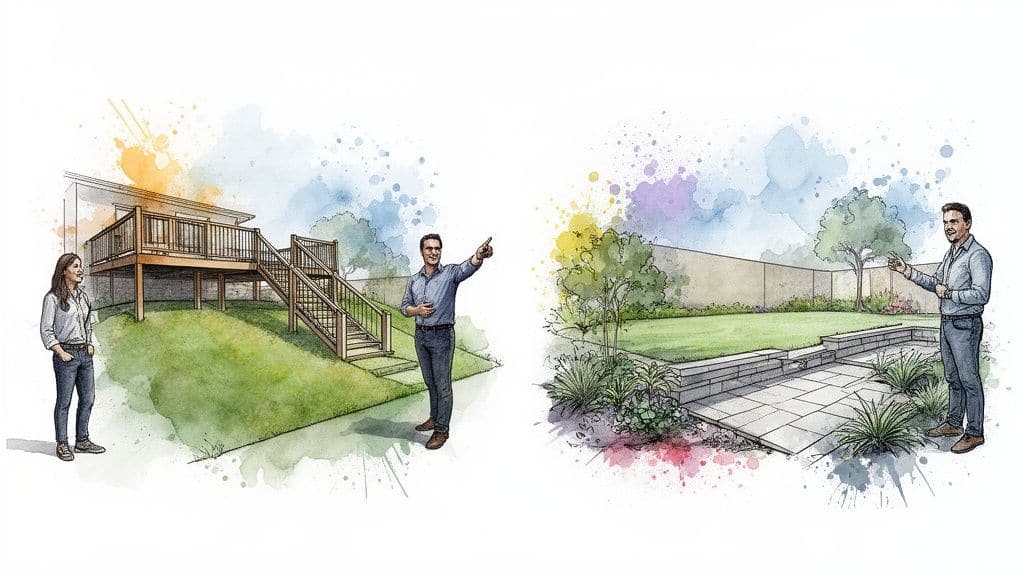
When a Deck Is the Best Solution
Decks are the clear solution for yards with challenging slopes. If your home’s main floor sits high above the ground or your yard has a steep slope, a deck is the most practical choice. It’s often more cost-effective than trying to reshape the land with retaining walls.
A deck works best in these situations:
- Homes on a Slope: A deck can create a level outdoor surface, bridging the gap between your home and a yard that drops away.
- Walk-Out Basements: For homes with a lower level, a multi-level deck can connect the main floor to a ground-level patio below.
- Elevated Views: A deck raises your line of sight, turning beautiful scenery into the main event.
When a Patio Fits Perfectly
Patios are perfect for properties that are flat. Because they are built on the ground, they create a smooth transition from your home to the landscape. This helps connect the living space with gardens, walkways, and other features, like this poolside resort area we created for one of our clients in Emmaus.
A patio is the right call if your property has these conditions:
- Level Ground: On a flat lot, a patio provides a stable surface for entertaining without needing stairs or railings.
- Direct Garden Access: Patios blend beautifully into the landscape, making them great for framing gardens and outdoor kitchens.
- Poolside Spaces: With slip-resistant surfaces, paver and stone patios are standard for creating safe and elegant areas around a pool.
The best approach is to evaluate how the space will function. Decks work well when the home sits higher than the yard or the landscape has slopes. Patios are ideal for ground-level entertaining.
Your yard dictates the possibilities. In places like Center Valley and Allentown, properties can range from flat to sloped. A professional design-build firm like Kennedy Design + Build performs a site assessment to ensure the structure you choose is beautiful and built to last.
Evaluating Resale Value and Long-Term ROI
When you’re deciding between a patio and a deck, it’s smart to think like an investor. An outdoor living space is a big addition to your home’s market value. Both patios and decks offer a solid return on investment (ROI), but the real story is in the numbers and material choices.
Thinking about how these projects perform in the Lehigh Valley market will help you make a smart decision. The right choice boosts your property’s appeal when it’s time to sell.
Comparing Resale Value and Cost Recoupment
For homeowners in communities like Center Valley and Allentown, patios often have a slight edge in what you get back. A well-built hardscape feels like a permanent, integrated part of the property.
A professionally built deck typically recoups 50-65% of its cost. A patio can return anywhere from 60-75%. You can learn more about cost and value findings from industry reports that explore outdoor living projects.
Lifespan and Long-Term Value
The expected lifespan of your new outdoor space is a huge part of its long-term ROI. Your material choices play the biggest role here.
Here’s a realistic breakdown of what you can expect:
- Wood Decks: A classic pressure-treated wood deck generally lasts 10 to 15 years with regular maintenance.
- Composite Decks: Engineered composite decking is built to last 25 to 50 years or more with very little upkeep.
- Paver and Stone Patios: When installed correctly, paver and natural stone patios often last 50 years or more.
While a deck adds appeal, a high-quality patio often represents a more durable, long-term asset. For Lehigh Valley homes, well-designed outdoor living spaces can also help a property sell up to 20% faster.
A thoughtfully designed space that flows with your home and landscape will always deliver a better return. You can see how we blend premium materials with timeless design in our Bethlehem outdoor living project.
Making the Right Choice for Your Lehigh Valley Home
Deciding between a patio and a deck means balancing your dream with your property’s realities. Homeowners across the Lehigh Valley weigh the same factors: budget, maintenance, and their yard’s terrain. The best choice is the one that fits how you want to live outside.
It’s about creating a space that feels like a true extension of your home. A professional design-build process makes all the difference. It gives you the freedom to explore both options visually during planning.
The Power of a Design-First Approach
A common mistake is choosing a deck or patio based on photos, without thinking about how it connects to the house and yard. The magic of a design-first process is seeing your project come to life before work begins. Detailed plans and visual mockups help you decide confidently.
For homeowners in the Lehigh Valley exploring a backyard upgrade, understanding the pros and cons of patios vs. decks is the first step. This knowledge helps you make a smart investment.
When it comes to resale value, both are strong additions. This infographic offers a side-by-side look at the return on investment you might expect.
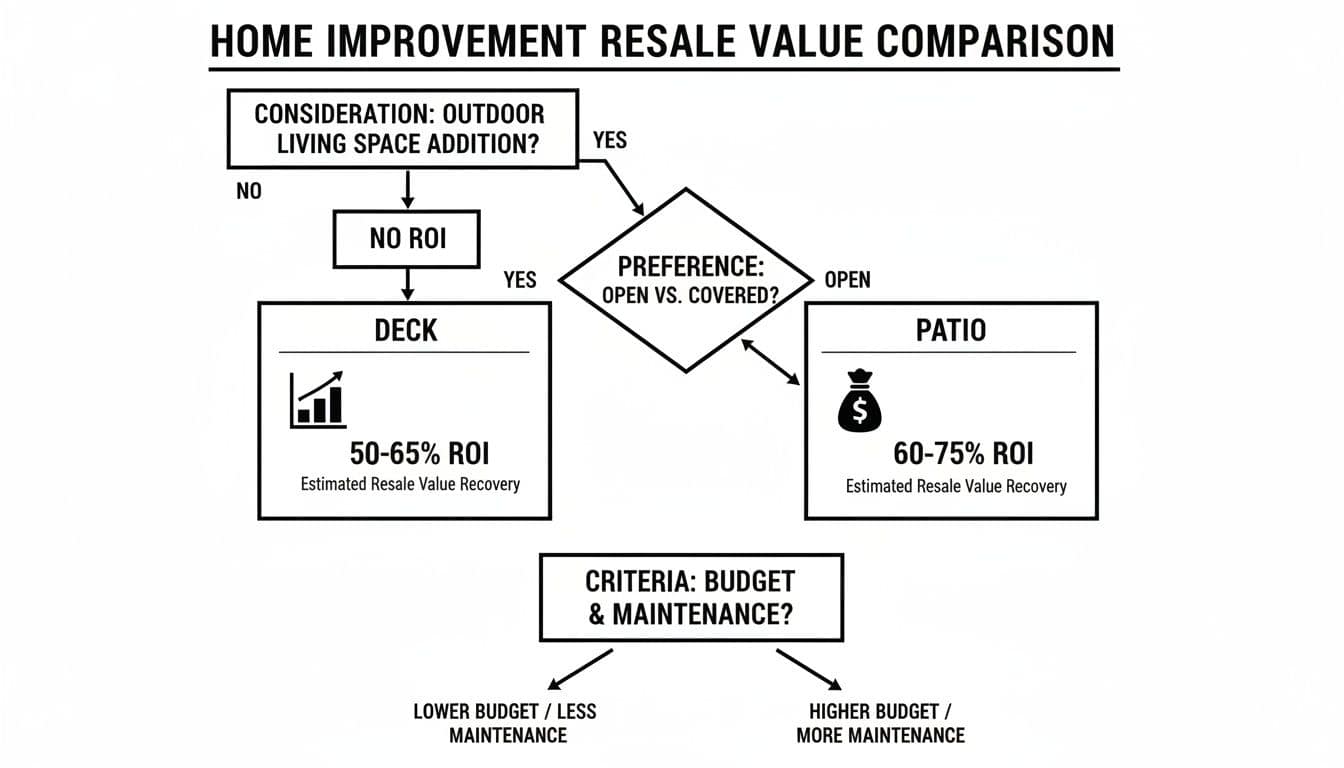
The durability and seamless look of a well-crafted patio often result in a stronger long-term financial return.
The most successful outdoor living spaces come from a plan that considers every angle. A professional design process removes the guesswork, ensuring your investment enhances your home and lifestyle.
Partnering with an expert design-build firm ensures your decision is informed and confident. The result is a stunning hardscape installation that transforms your backyard.
Ready to transform your outdoor space? The team at Kennedy Design + Build is here to guide you. Schedule your design consultation today and let us help you create the perfect outdoor living area.
FAQs: Your Patio and Deck Questions Answered
Deciding on a patio or deck brings up many questions. Here are clear answers to the most common concerns we hear from homeowners in the Lehigh Valley.
Which is better for an outdoor kitchen or fire pit?
A patio is almost always the better foundation for heavy features like an outdoor kitchen or a stone fire pit. Because it rests on the ground, a patio can easily support the weight of masonry and appliances without complex engineering. You can build these on a deck, but it requires extra reinforcement and fire-safe materials, which adds cost.
Do I need a permit for a patio or a deck in the Lehigh Valley?
You will almost always need a permit for a deck because it is a raised structure attached to your home. Patios sometimes do not need a permit if they are built level with the ground, but rules vary by township in places like Allentown and Coopersburg. It is never safe to assume.
How long does it take to build a patio versus a deck?
Patios generally have a quicker installation time. A typical paver patio often takes one to two weeks to complete. A deck is a more involved construction project that requires inspections, so a standard deck can take anywhere from two to four weeks or more.
Can I have both a patio and a deck?
Absolutely! A design that combines a deck and a patio is a fantastic way to create different zones for activities in your backyard. For example, a deck off the kitchen can be for grilling, with steps leading down to a larger patio with a fire pit and lounge seating.
Which option is safer for families with small children?
Patios are naturally safer for families with young children because they are at ground level, which eliminates the risk of falls. While all decks must have secure railings that meet safety codes, the lack of stairs gives many parents valuable peace of mind. For many families, an open, accessible play space makes a patio the clear winner.
Ready to stop asking “should I build a patio or a deck in my backyard?” and start designing? The experts at Kennedy Design + Build are here to guide you. Schedule your design consultation today and let us transform your Lehigh Valley property.