An Advanced Guide to Deck Installation in Coopersburg
Picture this: stepping out onto a beautifully crafted deck in Coopersburg, your own private oasis in the heart of the Lehigh Valley. While many contractors show you pretty pictures, a truly exceptional deck is a long-term investment. It’s engineered from the ground up to handle Pennsylvania winters and blend with your home’s entire outdoor living plan.
This guide moves beyond basic advice to focus on what really matters. We will cover the structural standards, permit compliance, and material choices that ensure your Coopersburg deck is built to last.
Building a Deck in Coopersburg That Lasts

A new deck is more than just an addition. It is a significant upgrade that improves your lifestyle and your home’s value. In fact, homeowners now allocate 25% or more of remodeling budgets to outdoor living projects.
This trend shows that homeowners in areas like Coopersburg and Allentown see their backyards as essential living areas. However, many builders focus on surface-level promises, like fast build times or “great communication,” while failing to address critical engineering details.
Beyond the Basics for a Better Build
A durable, high-value deck starts with a plan that accounts for long-term performance. This means getting into the technical specifics that prevent future headaches. For a deck to last in our region, we must look past the pretty photos and focus on the foundation.
- Structural Integrity for PA Winters: The ground in the Lehigh Valley freezes and thaws, a cycle that can shift poorly built structures. This is why proper footings are non-negotiable.
- Permit Compliance: Following local building codes in Coopersburg isn’t just about avoiding a fine. It’s about building a structure that is safe for your family.
- Long-Term Material Performance: Considering the 10-year cost difference between composite and wood helps you make a smarter financial decision.
Even small details make a huge difference. Using high-quality deck screws stainless steel prevents rust and rot, adding years to your deck’s life.
A great deck is never just an add-on; it’s the heart of a unified outdoor living space. The best results come from a design-first approach that plans for how the deck will connect to patios, lighting, and future features.
By addressing structural requirements upfront, you ensure the job is done right the first time. This approach reduces stress and maximizes your return on investment—something we practice in all our projects, from designing beautiful patios and decks to complete backyard transformations.
Navigating Coopersburg Deck Permits and Code Compliance
Before the first board is cut, there is a step many homeowners are tempted to skip: local permits. For anyone planning a deck in Coopersburg, this isn’t just paperwork. It is the foundation for ensuring your new deck is safe and built to last.
Many people see permitting as a headache, but it’s your best defense against shoddy work. A permit means a building official will review your plans to confirm they meet safety standards. This step protects your family and your home’s resale value.
Why Codes and Permits Are Non-Negotiable
Building a deck without the right permits can become a nightmare. If the township discovers an unpermitted structure, you could face heavy fines or be ordered to tear it down. It can also cause problems when selling your home in the future.
Building to code is what separates a deck that lasts a decade from one that lasts a lifetime. These rules dictate everything from how the deck attaches to your house to the height of its railings. They ensure your deck can handle a heavy Lehigh Valley snow load or the weight of a large party.
Pennsylvania’s Frost Line: The Key to a Stable Foundation
One of the most critical code requirements for any deck in Coopersburg is the frost-depth footing. Our region deals with freeze-thaw cycles every winter. When moisture in the ground freezes, it expands with enough force to push structures upward.
A deck built on shallow footings is a deck destined to fail. Over time, frost heave will cause it to become unlevel and unsafe, leading to expensive repairs that could have been avoided.
Pennsylvania building codes require that deck support posts sit on concrete footings that reach below the local frost line. This prevents the entire structure from lifting and shifting during the winter.
- What is the frost line? It’s the maximum depth the ground freezes in winter, which is typically between 36 and 42 inches in our area.
- How do frost footings work? By placing the footing base below this depth, the foundation rests on stable, unfrozen soil that won’t move.
- Why does it matter? A stable foundation is everything. It keeps your deck level and securely attached to your home, preventing serious safety hazards.
Key Code Requirements You Can’t Ignore
Beyond the foundation, other code-mandated details are crucial for a safe deck. While your design-build partner will handle these specifics, knowing what to look for helps you appreciate the quality of the work.
Railing compliance is a major focus for inspectors. Any deck more than 30 inches above the ground must have a guardrail that’s at least 36 inches high. The spindles inside the railing cannot be more than four inches apart to prevent small children from slipping through.
An experienced builder knows these codes by heart and designs your deck to meet them from the start. This proactive approach prevents failed inspections, which cause frustrating delays. By getting structural details right, you avoid stressful change orders and protect your investment.
Choosing Your Deck Materials for the Lehigh Valley Climate
Picking the right materials for your deck is a critical decision. It’s easy to focus on the upfront cost, but a great deck is a long-term investment. In Coopersburg, that means choosing something that can stand up to our demanding climate without constant maintenance.
Instead of just looking at the price tag, we need to think about performance, durability, and the total cost of ownership. Let’s break down the real-world performance of the top material options.
The Rise of High-Performance Composite Decking
In recent years, composite decking has become the go-to material for experts and homeowners. Modern composites deliver the look of wood without the relentless upkeep. In fact, 46% of industry experts now favor composite materials for their durability.
Composites are made from a blend of wood fibers and recycled plastics, all wrapped in a tough shell. This “capped” design makes them almost immune to the problems that plague traditional wood decks in our climate.
- Stain and Fade Resistance: The protective shell resists stains from spills and stops the color from fading in the sun.
- Mold and Mildew Proof: The material does not absorb moisture, so it won’t support mold or mildew growth.
- No Splintering or Warping: Composites won’t splinter, crack, or warp like wood, making them safer and better looking for years.
Because of their superior longevity, these materials are a top remodeling project for ROI. Nearly 98% of experts agree that quality outdoor upgrades significantly boost home value.
Decking Material Comparison for Lehigh Valley Homes
When you’re planning a deck in Coopersburg or Center Valley, the choice usually comes down to composite, premium hardwoods, or pressure-treated lumber. This table breaks down what you can realistically expect from each material over 10 years.
| Material | Average Upfront Cost (per sq. ft.) | Estimated 10-Year Maintenance Cost | Pros | Cons |
|---|---|---|---|---|
| Composite | $30 – $60 | $200 – $500 (Periodic Cleaning) | Unmatched durability, minimal upkeep, won’t rot or splinter, consistent color, long warranties. | Higher initial investment, can get hot in direct sun. |
| Premium Hardwood (Ipe) | $25 – $50 | $3,000 – $5,000 (Annual Oiling) | Extremely dense and naturally rot-resistant, beautiful and luxurious appearance. | Requires annual oiling to maintain color, very heavy and hard to install, high cost. |
| Pressure-Treated Wood | $15 – $30 | $4,000 – $7,000 (Staining, Sealing, Repairs) | Lowest upfront cost, classic wood look and feel, widely available. | Prone to warping and cracking, requires annual staining and sealing, susceptible to splinters. |
The numbers tell a clear story. While pressure-treated lumber is cheapest to install, it carries the heaviest maintenance burden.
A composite deck, though more expensive upfront, can save you thousands of dollars and countless hours of work over its lifespan.
A beautiful new deck should be a source of relaxation, not another chore on your weekend to-do list.
Making the Right Choice for Your Lifestyle
If you want a beautiful outdoor living area that will last for decades with almost no maintenance, high-performance composite is the clear winner. It’s why we recommend it for projects where longevity is essential, like this Center Valley deck and patio retreat.
Regardless of the material, your deck must meet specific building codes. This infographic highlights a few key requirements for our area.
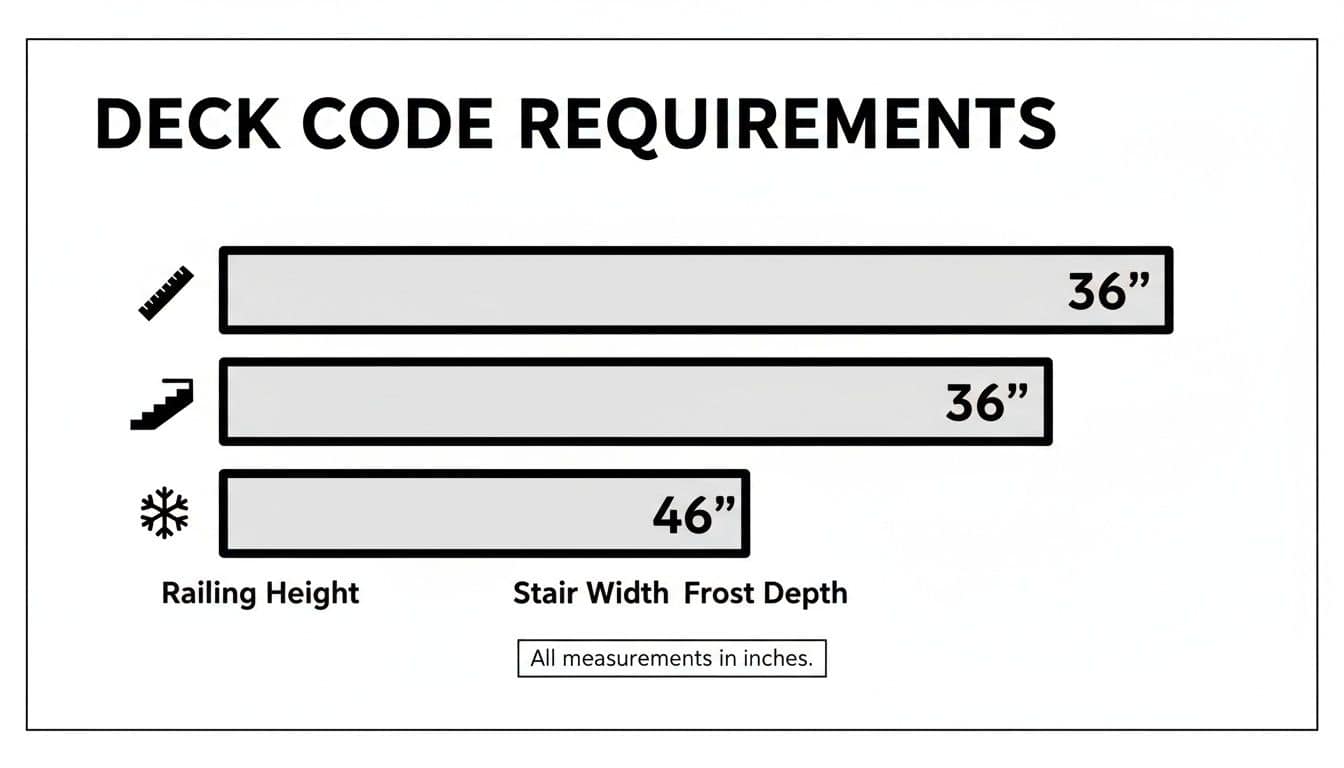
Dimensions like the 36-inch minimum for railing height and a frost depth for footings are fundamental safety and structural standards in Pennsylvania. A professional design-build firm will handle these details precisely, protecting your family and your investment.
Integrating Your Deck Into a Cohesive Outdoor Living Design
A deck should never be just a simple add-on. The best projects in Coopersburg and across the Lehigh Valley treat the deck as the true heart of the backyard. It is about moving into the art of intentional design.
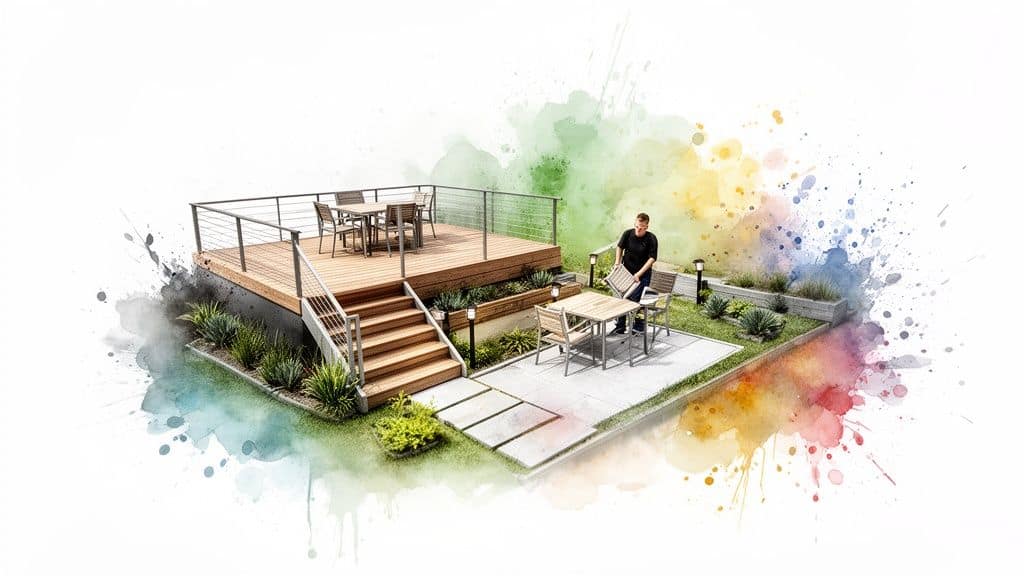
The old way of thinking treats a deck as an isolated project, but that’s a missed opportunity. We see homeowners dedicate 25% or more of their remodeling budgets to complete outdoor living environments. This means your deck needs to be part of a bigger picture.
A design-first philosophy positions your deck as the anchor of a master plan. It’s not just about adding square footage. It’s about creating smart traffic flow and making your entire property feel more cohesive.
Planning for Flow and Function
The most impressive outdoor spaces feel connected and intuitive. A well-designed deck should act as a natural bridge between your home and other backyard features like a stone patio or a future pool. Planning these connections from the start is key.
Think about how people will move through the space. A wide staircase can guide guests naturally toward a fire pit or outdoor kitchen. The deck’s orientation should be deliberate, positioned to capture the best sun or frame a perfect view.
A deck should never feel like an afterthought. By integrating it with lighting, hardscaping, and future outdoor features upfront, homeowners reduce stress, avoid costly change orders, and protect their long-term investment.
Thinking about this flow from the beginning ensures every element works together in harmony. This is how you create sophisticated outdoor spaces that feel both elegant and effortless.
Creating Zones for Outdoor Living
To get the most out of your deck, think about it in terms of “zones.” Just like the rooms inside your house, different areas on your deck can have their own purpose. This approach makes the space more organized and functional.
- Dining Zone: This area should be close to your kitchen door, making it easy to carry food back and forth.
- Lounging Zone: We love creating a comfortable spot with deep-seating sofas for pure relaxation.
- Cooking Zone: If an outdoor kitchen is in the plans, its location is critical. It must be built on a section of the deck engineered to support heavy grills and countertops. You can see more on how we incorporate outdoor kitchens into our designs.
Future-Proofing Your Design
Even if you don’t plan to build everything at once, designing with the future in mind is a smart move. Want to add a hot tub or a pergola in a few years? The deck needs to be built now to support it.
This means making sure the footings and framing are engineered to handle future loads. It is also wise to run electrical and gas lines for features you might add later. Taking these steps during the initial build is far cheaper than trying to retrofit them down the road.
Once the structure is complete, you can explore all sorts of deck decorating ideas to make it yours. This design-build approach ensures your Coopersburg project is done right the first time.
Finding the Right Design-Build Partner in the Lehigh Valley
Picking your contractor is the most critical decision you’ll make for your new deck. The right partner does more than just swing a hammer. They are your guide and designer who protects your investment.
It is essential to find a true design-build firm, not just a crew that follows a blueprint. A design-build partner gives you a single point of accountability from the first sketch to the final walkthrough. This is the best way to guarantee your vision comes to life.
Questions to Ask Any Potential Contractor
When you interview firms for your deck installation in Coopersburg, you must go beyond looking at a portfolio. A beautiful picture doesn’t tell you if a deck is built to last. You need to dig into their process and expertise.
Here are the questions you should be asking:
- How do you handle local building codes, specifically frost-depth footings? A confident pro will immediately talk about the required 36-42 inch footing depths for our area and why it’s a non-negotiable for Pennsylvania winters.
- Can you show me projects where you’ve integrated a deck with patios or other hardscapes? This question separates builders from true designers. A design-build firm will have examples of how their decks flow seamlessly into other outdoor features.
- What is your project management process for staying on schedule and on budget? You’re looking for a clear, organized system. They should be able to walk you through how they handle communication, timelines, and changes.
These questions help you find a partner who sees the big picture and puts structural integrity first.
A professional firm won’t just promise “great communication.” They will demonstrate it through a well-defined project management process that reduces change orders, prevents inspection issues, and protects your investment.
The Design-Build Advantage
There is tremendous value in working with a design-build firm. Instead of you juggling a designer and a builder, one cohesive team handles everything. This integrated approach saves time and ensures every detail is managed seamlessly.
With a design-build model, the same people who design your deck are the ones who build it. Nearly 98% of experts agree that well-executed outdoor upgrades significantly boost home value, and this method is the surest path to a high-quality result. It makes your deck a thoughtfully planned extension of your home.
To see how our philosophy shapes our work, you can learn more about our hands-on approach and our commitment to craftsmanship. When you choose a professional firm, you are bringing on a partner dedicated to turning your vision into a reality.
Your Deck Installation Questions Answered
Starting a deck project in the Coopersburg area is a big decision, and it’s natural to have questions. We want to give you clear, honest answers based on our local experience. Getting straight to the point helps you make confident decisions.
1. How much does a new deck cost in the Coopersburg area?
The cost of a new deck varies depending on size, materials, and design complexity. For a professionally built, high-performance composite deck, you should think of it as a serious home improvement project. Quality builds typically start in the tens of thousands. The final price is shaped by things like multi-level layouts and custom railings, but we provide a transparent proposal so you know exactly where your investment is going.
2. How long does the deck installation process take?
The entire journey from our first design chat to the final walkthrough usually takes several weeks to a few months. The timeline includes the initial design phase, securing permits with the local municipality, ordering materials, and the physical build. Our design-build model brings all these steps under one roof, creating a smooth and efficient workflow that keeps your project on track.
3. Why are frost-depth footings so important for decks in Pennsylvania?
Pennsylvania’s climate brings serious freeze-thaw cycles. This movement can put tremendous force on any structure. Without footings dug below the local frost line—usually 36 to 42 inches deep here—your deck is at risk of lifting and shifting. Over time, that movement can cause real structural damage, which is why building codes require proper footings to protect your investment.
4. What is the difference between a deck builder and a design-build firm?
A traditional deck builder typically focuses just on construction. A design-build firm like Kennedy Design + Build, however, handles the entire project from start to finish. We manage everything from the creative concept and custom design to securing permits and completing the installation. This integrated model ensures your deck is a functional part of a cohesive outdoor living space. You can dive deeper into topics like this on our Kennedy Design + Build blog.
5. Can I add features like an outdoor kitchen to my deck later?
While you technically can add features later, it’s far more practical and cost-effective to plan for them from the start. Heavy elements like an outdoor kitchen or a hot tub demand specific structural support that must be engineered into the deck’s foundation. Designing these features into the original plan saves you from the major expense and disruption of trying to retrofit your deck later.
Ready to transform your outdoor space with a deck designed and built to last? The experts at Kennedy Design + Build are here to guide you through every step. Schedule your design consultation today and start planning the backyard of your dreams.