Why 2026 Deck Projects in the Lehigh Valley Require Code-Savvy Contractors
Why Code-Savvy Contractors Matter for 2026 Deck Projects
Building a deck in 2026 in the Lehigh Valley is harder than it was five years ago. New code updates bring stricter plan requirements, more inspections, and local amendments in Allentown, Center Valley, Coopersburg, and nearby towns.
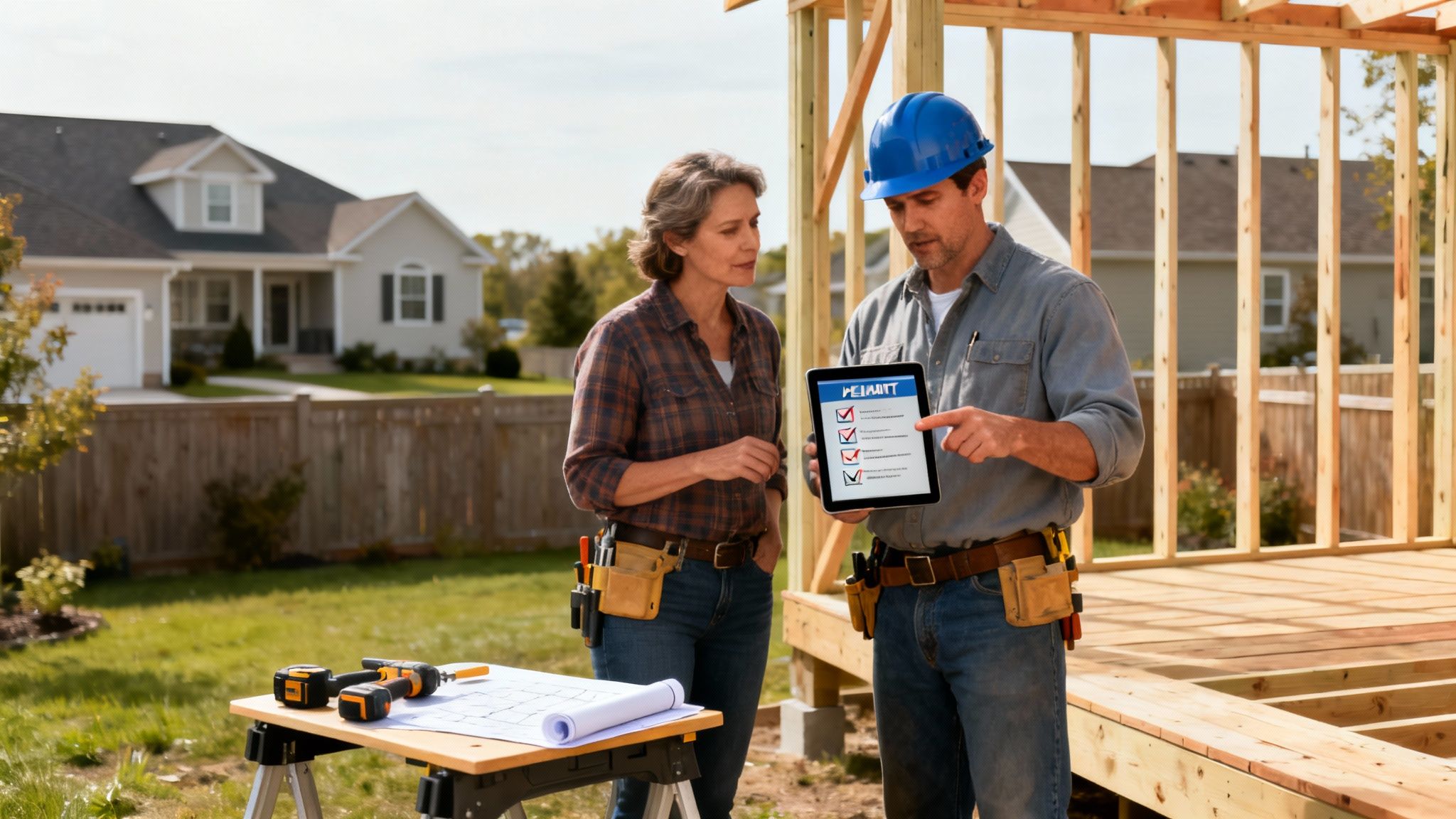
Even a small oversight—like missing engineered stair drawings—can send your permit back for corrections. A code-savvy contractor delivers:
- Faster permits with complete submissions
- Fewer revisions by tracking local inspection rules
- Accurate budgets that avoid penalty fees
- Safer structures with proper calculations and approved connectors
Key Compliance Challenges
Permit applications now demand two engineered plan sets showing post-hole depths, beam sizes, and railing details. On top of state rules, each township has its own checklist.
Missing one detail is like losing the trail on a hike—you’ll waste time and money backtracking.
Timeline and Cost Risks
Plan-review offices aim to return complete sets in 15 business days. Every revision resets that clock.
A skilled contractor maps out inspections—footings, framing, then guardrails—to keep the build moving. Without that plan, you could tear out fresh work to meet code.
“Permit setbacks can add weeks and thousands of dollars in extra costs if codes are misunderstood.”
Accurate material estimates spot required connectors and frost-depth footings most amateurs miss.
Summary of Key Reasons and Benefits
| Challenge | Project Impact | Contractor Solution |
|---|---|---|
| Permit Plan Omissions | Rejected submissions, major delays | Deliver fully engineered plan sets |
| Inspection Missteps | Demolition and rebuild costs | Schedule correct inspection order |
| Material Inaccuracies | Budget overruns | Provide precise takeoffs and estimates |
| Local Amendment Surprises | Permit denials | Stay current on township updates |
Exploring 2026 Code Updates for Lehigh Valley Decks
You sketch your dream deck in 2026, then find new Pennsylvania Uniform Construction Code rules. Allentown, Coopersburg, Center Valley, and other townships add their own edits.
Contractors who track every code memo become your best partners. They know load tables, frost charts, and digital portals—guiding you through each checkpoint.
Key changes include:
- Two engineer-ready plan sets with beam sizes, joist spans, hanger specs, and railing geometry
- Stamped stair and guardrail diagrams with rise/run calculations
- Mandatory frost-depth footings (up to 42 inches) and updated snow-load requirements
- A firm 15 business day permit review under the Pennsylvania UCC
Key Permit Requirements
Any deck over 30 inches above grade—or attached to your home—needs a building permit in all Lehigh Valley jurisdictions. Most townships now require:
- Two sealed structural plan sets
- Detailed footing and post-hole depths with soil-bearing data
- Load calculations per local snow-load maps
- Connector schedules listing hanger models and nail gauges
- Stair geometry tables for rise, run, and guardrail heights
Most homeowners find breaking the permit into mini-steps helps. A simple timeline:
| Step | Timeframe |
|---|---|
| Application Submission | Day 0 |
| Initial Plan Review | By Day 15 if details are provided |
| Revision Cycle | ~7 days per resubmission |
| Permit Issuance | 2–3 days after approval |
Accurate permit submissions cut revision risks and speed approvals.
Engineering Plan Details
An engineered deck plan is like a GPS for your structure’s weight. It traces every load—from deck boards to frost footings. Key elements:
- Lumber grade (#2 Pressure-Treated vs. Select Structural)
- Beam design: cantilever limits and bearing locations
- Joist hanger schedules keyed to manufacturer specs
- Connector callouts for post-to-beam brackets and anchors
Inspection Sequence Changes
Inspections now run like a relay race:
| Inspection | Requirements | Failure Consequence |
|---|---|---|
| 1. Footing | Trench depth, rebar, forms | Halt before concrete pour |
| 2. Ledger Attachment | Flashing, fasteners, sealant | Remove and reattach ledger |
| 3. Framing & Hangers | Joist spacing, hanger type, nailing | Dismantle framing sections |
| 4. Guardrails & Stairs | Rail height, baluster spacing, stair run | Rebuild handrail or stair run |
Skipping or failing any step forces demolition and extra costs. A code-savvy contractor treats checkpoints as milestones on a dashboard.
Why Contractors Are Essential
With code complexity like a Swiss watch’s gears, one misaligned tooth can stop the whole machine. A contractor who knows the 2026 UCC and each township’s quirks acts as your project conductor. They handle:
- Permit coordination via online portals and office meetings
- Accurate plan drafting to cut review cycles
- Inspection scheduling in the right order
- Troubleshooting site surprises (rocky soil, uneven grades)
- Liaising with structural engineers for custom details
Partnering with a code expert ensures a smooth transition from permit to final sign-off.
Learn more about deck permitting details on CKCOG.com:
Learn more about deck permitting details on CKCOG.com
Explore more landscape design insights on our blog on Kennedy Design + Build.
Navigating Structural Requirements and Permits
Tackling a deck under the 2026 code demands precision. Frost-depth footings, ledger attachments, joist spans, and guardrail heights all follow strict township rules.
Your deck is like a bridge. Skip one detail—like local snow loads—and the structure weakens or fails inspection. A code-savvy contractor treats each calculation like a recipe: miss an ingredient and the build can fall apart.
Before you break ground, your contractor should:
- Calculate snow loads using local maps
- Factor in wind loads per township amendments
- Size footings for 42-inch frost depths
- Select approved connectors and fasteners
- Confirm guardrail and stair geometry meet or exceed 36 inches
Key Load Calculations
Snow in the Lehigh Valley can top 30 psf in winter. Joist spans, beam sizes, and ledger details work off that number. Wind loads shift by terrain and lot elevation—each changes fastener and span specs.
Comparison of Structural Requirements
| Design Element | Code Requirement | Inspection Point |
|---|---|---|
| Footing Depth | Frost-depth up to 42 inches | Verify trench depth and form setup |
| Ledger Attachment | Approved lag screws and flashing | Check flashing and fastener specs |
| Joist Span | Span tables for #2 pressure-treated | Measure spacing and hanger install |
| Guardrail Height | Minimum 36 inches (some areas 42″) | Height measurement pre-final sign-off |
Inspection Milestones
Inspections follow a strict sequence—each step a green light for the next. First: footing trenches. Then ledger attachment. Next: framing and hangers. Last: guardrails and stairs.
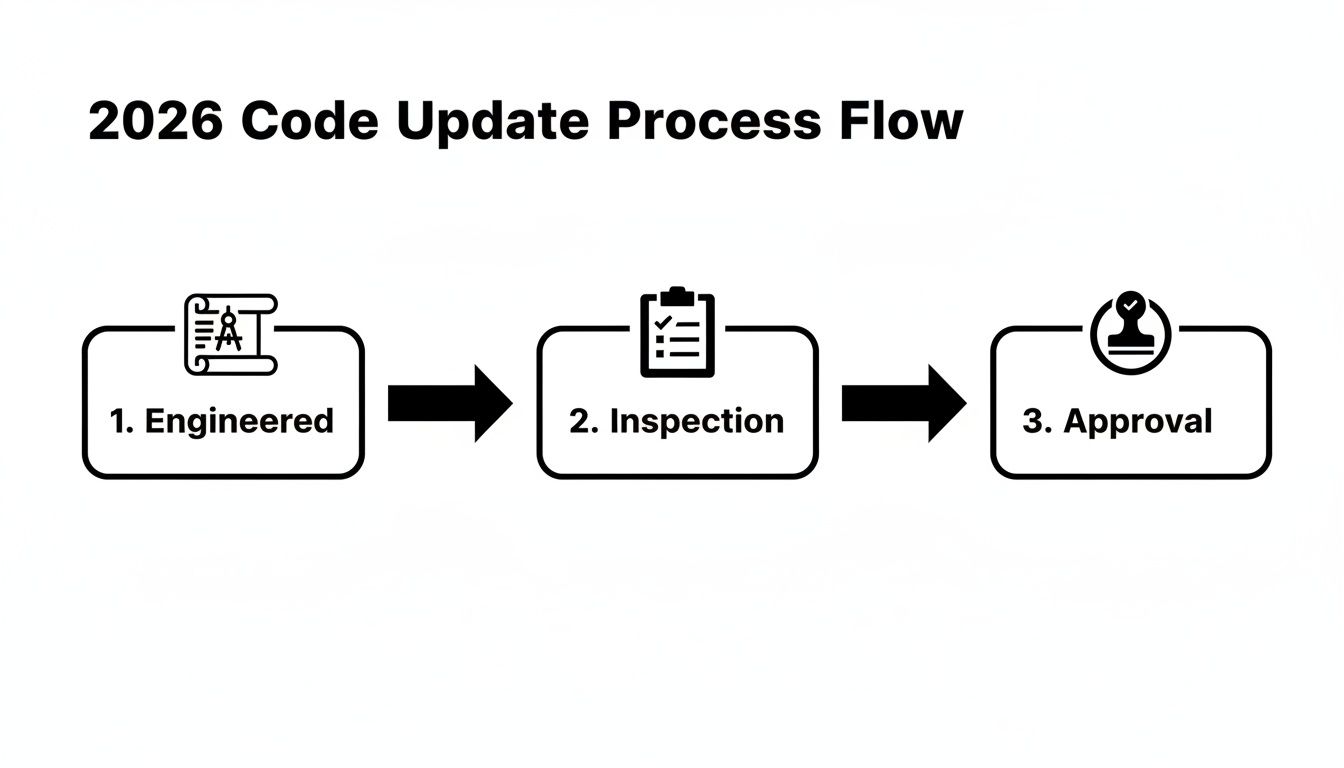
A code-savvy contractor submits two sealed plan sets—every footing depth, beam size, and connector callout spelled out. They work with engineers to cut review cycles and lock in your timeline.
Check out our patios and decks services: Explore Kennedy Outdoor Living Patios and Decks
Real World Deck Project Delays
Deck builds often stall over details caught too late. Homeowners from Center Valley to Coopersburg face permit hiccups, footing failures, and guardrail issues that add weeks and thousands of dollars.
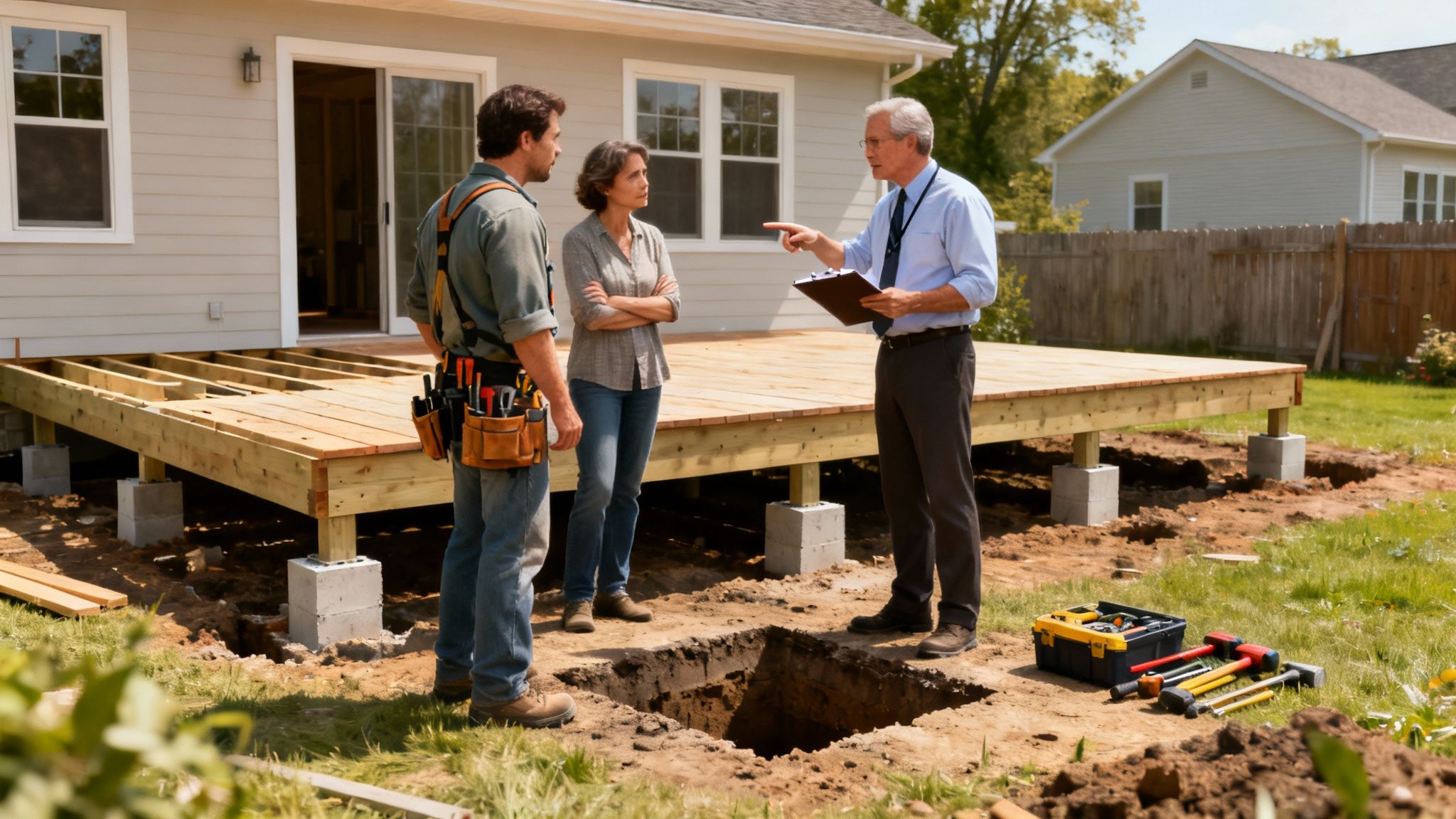
Common Delay Causes
- Permit plan omissions from missing structural details
- Frost-depth miscalculations on footings
- Incorrect guardrail heights or baluster spacing
Center Valley Permit Rejection
A Center Valley homeowner missed ledger detail. That oversight added 3 weeks and a $2,000 plan revision fee.
Allentown Footing Hold
In Allentown, a trench dug to 30 inches failed the 36-inch frost-depth rule. The redo took 2 weeks and $1,500.
Coopersburg Guardrail Retrofit
Coopersburg stairs had 34-inch rails instead of 36-inch. Retrofit took 1 week and $800.
| Misstep | Delay (Weeks) | Extra Cost | Pro Fix |
|---|---|---|---|
| Missing ledger detail | 3 | $2,000 | Complete engineered attachment plan |
| Shallow footing trench | 2 | $1,500 | Verify frost-depth before dig |
| Underheight guardrails | 1 | $800 | Apply correct rail height specs |
You might like our case study on how expert planning avoids these issues: Read the Center Valley Deck and Patio Project
Contractor Action Plan
A code-savvy contractor treats permits like a pilot’s pre-flight:
- Pre-Application Review with frost-depth and load checks
- Plan Preparation with engineered details
- Permit Submission of two annotated plan sets
- Inspection Scheduling in the correct order
- Quality Audit to close feedback and secure approval
Expert planning cuts approval time by up to 50%.
Benefits of Code Expertise
- Lower revision costs with fewer plan cycles
- Faster approvals thanks to pre-checked details
- Predictable budgets including all code requirements
Takeaway for Homeowners
Code updates in 2026 will heighten these challenges. Vet contractors on real track records, not promises. Ask for plan samples, inspection logs, and proof of code training.
“In the Lehigh Valley, permit rules change faster than seasons. Partner early with code-savvy pros.”
Download our detailed guide or contact Kennedy Design + Build to get started on your compliant deck.
Learn about our team’s expertise: Kennedy Design + Build About page
Homeowner Vetting Checklist for Contractors
Finding the right contractor makes a world of difference when 2026 deck projects in the Lehigh Valley face new code demands. Use this checklist:
- Ask for a 100% first-submission permit success rate.
- Confirm they produce sealed structural drawings.
- Review their inspection scheduling track record.
- Verify training on the 2026 Pennsylvania UCC and local amendments.
- Look for proposals with full plan sets and firm timelines.
- Request references from recent Lehigh Valley projects.
- Check insurance covers code-related fixes and liability.
Preparatory Questions to Ask
- How many permit applications did you submit last year?
- What was your first-pass approval rate?
- Can you share samples of your engineered plan sets?
Verifying Credentials and Coverage
Call past clients to see how contractors handle real challenges. Confirm they have current liability and indemnity insurance covering code corrections.
| Vetting Step | What to Verify | Expected Outcome |
|---|---|---|
| Permit Track Record | First-submission approval rate | Faster permit issuance |
| Engineering Documentation | Sealed plans and calculations | Accurate code compliance |
| Insurance and Liability | Policy limits and coverage details | Protection against fix costs |
“A contractor’s permit success rate is the clearest sign of code proficiency.”
Conclusion and Next Steps
Building your 2026 deck in the Lehigh Valley comes with new code requirements at every phase—from footings to guardrails. Partnering with a code-savvy contractor helps you:
- Slash permit cycles with complete engineered plan sets
- Smooth inspections by following expert sequencing
- Control budgets through accurate load calculations and material takeoffs
Kennedy Design + Build combines hands-on design vision with deep code fluency. Our services:
- Allentown: Personalized plan review and township liaison
- Center Valley: In-house engineering and permit coordination
- Coopersburg: Detailed inspection scheduling and code tracking
Ready to transform your outdoor living space?
Schedule Your Consultation at Kennedy Design + Build
Frequently Asked Questions
Q1. What permits are needed for a deck in 2026 in the Lehigh Valley?
Any deck over 30 inches above grade or attached to your home needs a building permit. Townships require two sets of engineered plans and mandatory inspections at key stages.
Q2. How long does the permitting process take?
When your package is complete, municipalities aim for 15 business days. Incomplete submissions add weeks for revisions.
Q3. How do I vet a deck contractor for 2026 code compliance?
Ask about their first-pass permit success rate, engineered plan submissions, and inspection scheduling. Verify references and liability insurance coverage.
Q4. Will the 2026 code changes increase deck costs?
Yes. Frost-depth footings, precise engineering, and approved connectors add design and material fees. But reworking failed inspections costs more in time and money.
Q5. Do I need extra insurance for code compliance issues?
Absolutely. Ensure your contractor’s liability and indemnity coverage includes code correction costs. That protects you from unexpected rebuild bills.
Q6. What is the inspection sequence for deck builds?
Inspections follow this order:
- Footings
- Ledger attachment
- Framing & hangers
- Guardrails & stairs
Ready to move forward? Reach out to Kennedy Design + Build at https://www.kennedydb.com.