Going Green in Style: Sustainable Landscaping Ideas for High-End Homes
Today, luxury is about more than just how things look. It is about making smart choices. Homeowners in the Lehigh Valley are asking for outdoor spaces that are both beautiful and good for the environment.
Sustainability is no longer an afterthought in outdoor design. It is now a top priority for clients who want their homes to reflect their values. This means creating spaces that are both impressive and environmentally responsible.
Eco-conscious design includes native plants, permeable pavers, and sustainable materials. These features can be beautifully integrated into luxury outdoor spaces. They not only help the environment but also help homeowners save time and lower upkeep costs.
Data shows that over 50% of homeowners are interested in the environmental impact of their landscaping. In fact, 70% are now choosing low-maintenance or native plants. This is a lasting shift, especially in communities like Allentown and Coopersburg where natural beauty is important.
1. Native Plant Gardens: A Tapestry of Local Beauty
A native plant garden uses plants that naturally grow in the Lehigh Valley. These plants are adapted to our local climate and soil, so they thrive with little help. This is a key part of going green in style because it mixes natural beauty with responsible design.
Unlike plants from other regions, native plants do not need constant watering or chemicals. They provide food and shelter for local pollinators like bees and butterflies. A skilled designer can arrange these plants to create a stunning, year-round landscape that reflects the beauty of Pennsylvania.
Benefits of a Native Garden
- Less Upkeep: Once they are established, native plants need very little extra water or care.
- Supports Local Wildlife: These gardens help local animals, creating a lively outdoor space.
- Authentic Regional Beauty: A native landscape connects your home’s design to the Lehigh Valley.
- Year-Round Interest: Native gardens offer changing colors and textures through every season.
Implementation Tips
To add a native garden, start with a professional site analysis. This helps map your property’s sun, soil, and drainage. Work with a designer who can create a polished, high-end look with native plants to ensure the design is intentional and elegant.
2. Rainwater Harvesting Systems: Smart Water Management
Rainwater harvesting is a smart way to collect rain from your roof to water your landscape. This method reduces your use of city water, which saves a natural resource and lowers your bills. It turns a practical function into an elegant design feature.
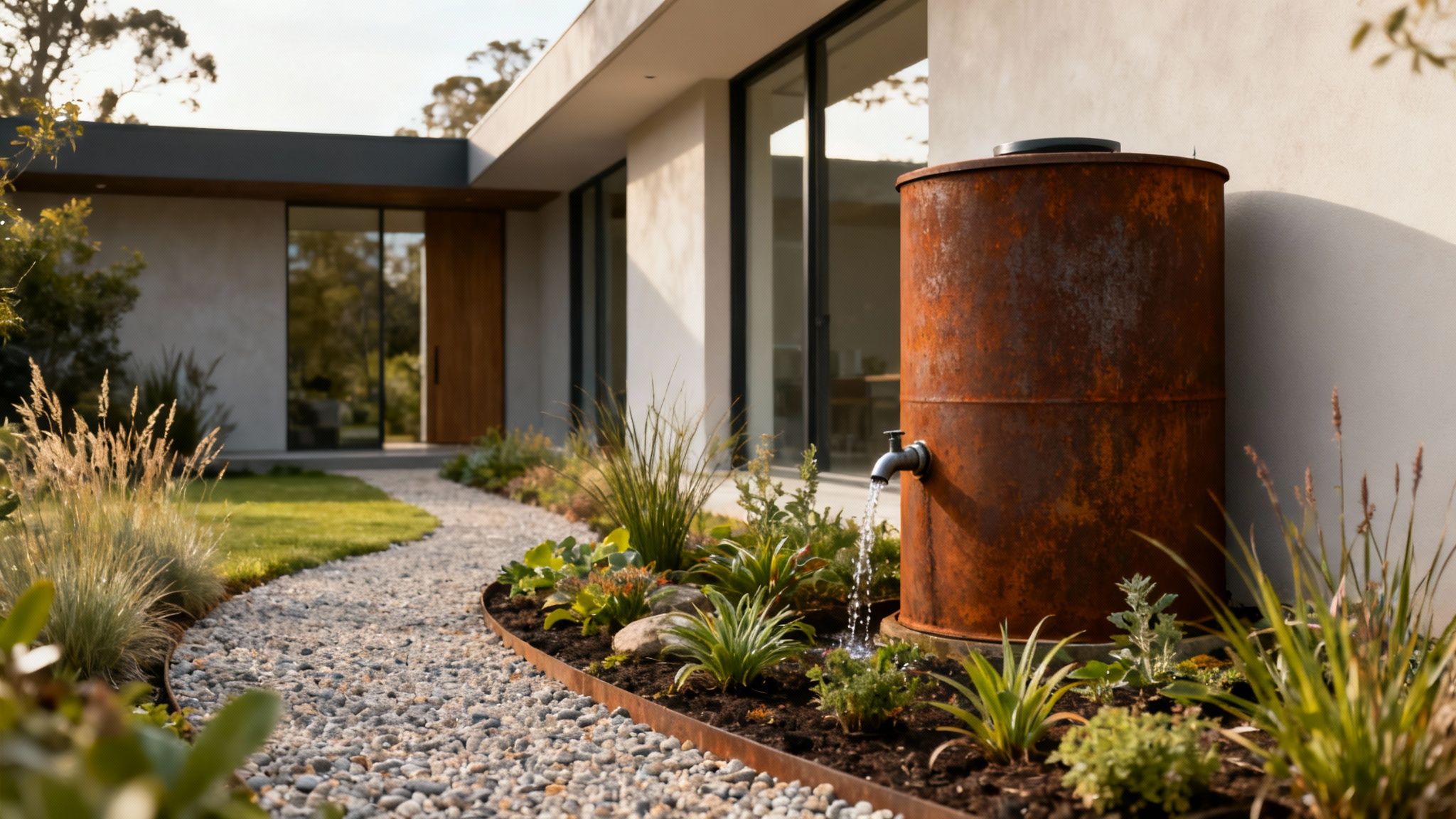
For high-end homes, these systems are more than just a rain barrel. Modern options include stylish above-ground cisterns or hidden underground tanks. By collecting pure rainwater, you give your plants chemical-free water that helps them grow strong.
Benefits of Rainwater Harvesting
- Water Savings: Collecting rainwater can greatly reduce or end the need for city water for irrigation.
- Healthier Plants: Rainwater is free of chemicals found in treated water, leading to better plant growth.
- Stormwater Management: These systems reduce runoff, which prevents soil erosion and protects local watersheds.
- Design Integration: High-end systems can be beautifully built into your landscape design.
Implementation Tips
Start by figuring out your landscape’s water needs. A designer can help place storage tanks so they look like part of the design. It is important to install a filter to keep the stored water clean for your plants.
3. Living Walls and Green Facades
A living wall, also called a green facade, is a vertical garden on a building or structure. These installations are true statement pieces that blend art with nature. This concept is a perfect example of going green in style because it turns a flat wall into a living ecosystem.
These walls use special systems to grow plants, which helps purify the air and insulate your home. For a luxury property, a living wall becomes a dramatic focal point. It is a creative way to add more green space, especially where ground space is limited.
Benefits of Living Walls
- Natural Air Purification: The plants help filter pollutants and improve the air quality around your home.
- Better Insulation: A green facade acts as a natural barrier, helping to cool your home in summer and keep it warm in winter.
- Stunning Visual Impact: Living walls create a unique, high-end look that improves any space.
- Boosts Biodiversity: They provide a home for local pollinators, creating a healthier ecosystem.
Implementation Tips
Successful installation requires careful planning. You may need to check that the wall can support the weight. Choose plants based on the wall’s sun exposure and install an automated irrigation system. Professional installation is key to ensure your living wall thrives. Learn more about these custom features.
4. Permeable Paving and Hardscaping
Permeable paving is a stylish and practical hardscape solution. It allows rainwater to soak through the surface instead of running off. These materials help manage water on your property, which protects groundwater and reduces strain on local storm drains.
Unlike solid concrete, permeable systems prevent puddles on driveways, walkways, and patios. For luxury homes in the Lehigh Valley, designers can use high-end permeable pavers that are both beautiful and durable. These surfaces support a strong and self-sufficient property.
Benefits of Permeable Hardscaping
- Better Stormwater Management: Permeable surfaces reduce runoff, preventing erosion and local flooding.
- Improved Durability and Safety: They eliminate standing water and can reduce ice in winter.
- Design Versatility: Permeable pavers come in many colors and styles to match any home.
- Reduced Long-Term Costs: They may lower the need for complex drainage systems.
Implementation Tips
Proper installation is key for good performance. It starts with a professional site assessment to check the soil and drainage needs. A special base of layered stone is installed under the pavers to ensure water filters through correctly. Learn more about how these elegant and durable patios can be part of a sustainable design.
5. Edible Landscaping and Productive Gardens
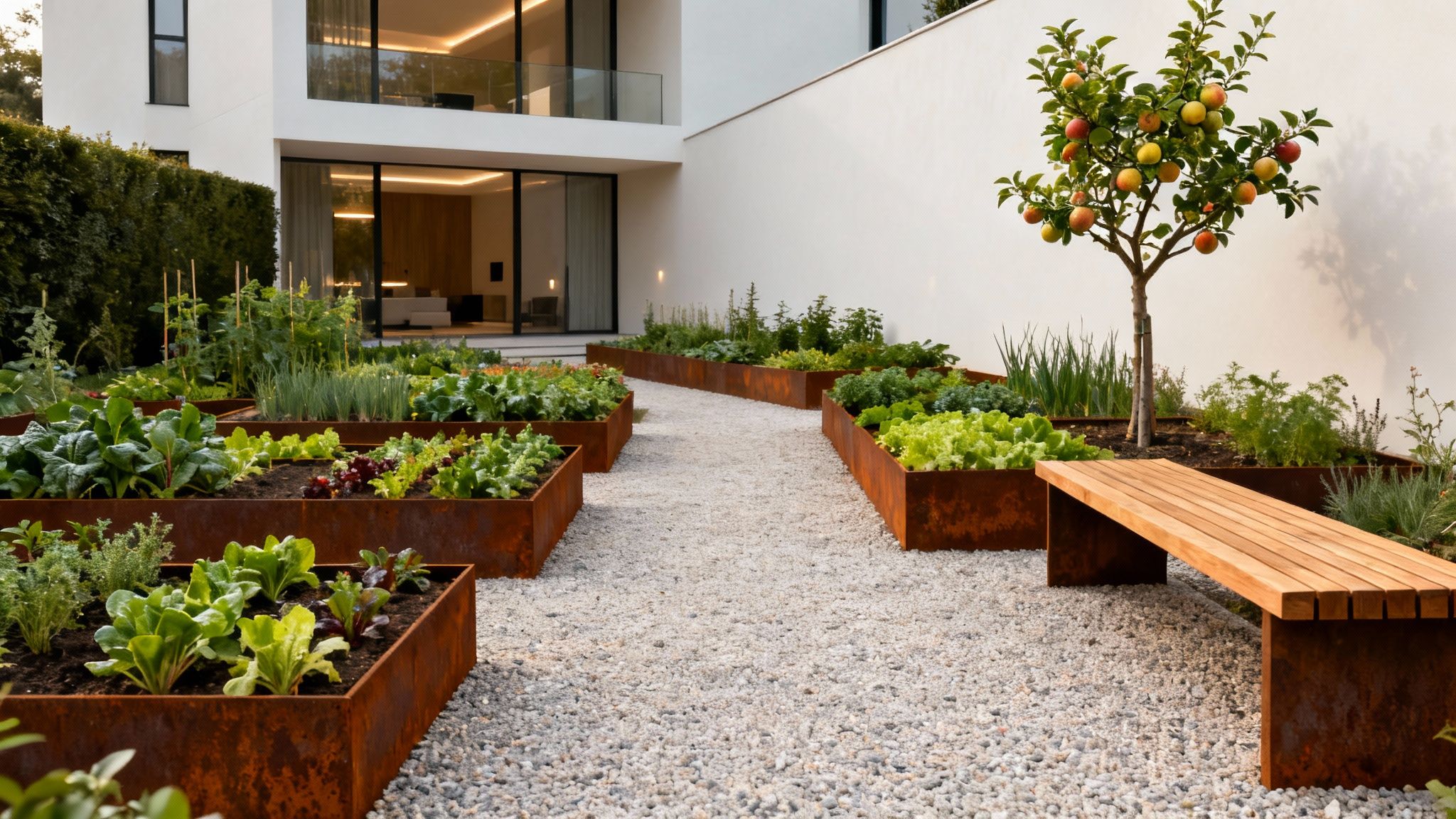
Edible landscaping mixes food-producing plants into your ornamental garden. This creates a space that is both productive and beautiful. For high-end homes, this can include designer raised beds and elegant herb gardens that act as focal points.
Instead of hiding the kitchen garden, it becomes a main feature of your outdoor living area. A well-designed edible landscape in the Lehigh Valley can provide fresh, organic produce for your family. It also adds unique textures and colors to your property.
Benefits of an Edible Garden
- Farm-to-Table Freshness: Enjoy tasty and healthy produce picked right from your yard.
- Beautiful and Functional: A thoughtfully designed edible garden improves your property’s beauty.
- Reduced Food Miles: Growing your own food lowers your carbon footprint.
- Educational and Fun: Productive gardens are a great way for families to connect with nature.
Implementation Tips
Design your edible garden as a planned outdoor room. Use premium materials like stone or cedar for raised beds to match your home’s style. Select plants that are both productive and attractive. For ideas on how a garden can fit into a larger vision, see this private Macungie backyard makeover.
6. Solar-Powered Landscape Features
Solar-powered landscape features use technology to power outdoor elements like lights and water features. These high-end systems fit seamlessly into your landscape design. They provide energy without adding to your utility costs.
Solar installations use the sun’s power instead of electricity from the grid. This reduces your carbon footprint and provides reliable power even during an outage. For luxury homes in the Lehigh Valley, designers can use sleek panels and fixtures that complement your home’s style.
Benefits of Solar-Powered Features
- Zero Energy Costs: Once installed, these features run without using grid electricity.
- Reduced Carbon Footprint: Using renewable energy lowers your property’s environmental impact.
- Energy Independence: Solar features work even during power outages.
- Seamless Design Integration: Modern solar technology is designed to be discreet and stylish.
Implementation Tips
Start with a professional sun analysis to find the best spots for solar panels. Choose high-quality LED fixtures with battery storage for reliable performance at night. Kennedy Design + Build can expertly add outdoor lighting and audio solutions powered by clean energy.
7. Pollinator-Friendly Habitats and Bee Gardens
A pollinator-friendly habitat is a garden designed to support local wildlife like bees and butterflies. These gardens provide a complete ecosystem with food, water, and shelter. This approach turns your property into a lively sanctuary that is both beautiful and important for the environment.
A pollinator habitat is a dynamic space buzzing with life. It features a mix of native plants that bloom from spring through fall. For high-end properties in the Lehigh Valley, these habitats show a commitment to the environment without giving up on sophisticated design.
Benefits of a Pollinator Habitat
- Supports a Healthy Environment: You actively help sustain local pollinators.
- Creates a Dynamic Landscape: Your garden will be filled with the movement and color of visiting wildlife.
- Reduces Need for Pesticides: By attracting helpful insects, you create natural pest control.
- Adds Unique Visual Interest: Features like bee hotels can be included as artistic elements.
Implementation Tips
To create a successful pollinator garden, choose a variety of native plants that bloom at different times. Provide a shallow water source, like a birdbath with pebbles. Do not use pesticides to ensure a safe space for wildlife.
8. Composting Systems and Organic Waste Management
A composting system turns yard and kitchen waste into rich soil amendment. Modern composting solutions are designed to be attractive, odor-free, and efficient. This practice supports a zero-waste philosophy with a smart, functional design.
Instead of sending organic waste to a landfill, these systems create free, high-quality fertilizer. This improves the health of your gardens and ornamental plants. This practice reduces your environmental footprint and promotes a healthy ecosystem at home.
Benefits of Integrated Composting
- Waste Reduction: Lowers the amount of waste sent to landfills, which reduces methane gas.
- Free Soil Enrichment: Creates a natural fertilizer that improves your soil.
- Chemical-Free Gardening: Ends the need for synthetic fertilizers.
- Enhanced Plant Health: Compost adds good microorganisms to the soil, helping plants fight disease.
Implementation Tips
Choose a composting system based on your property’s size and how much waste you create. A landscape designer can seamlessly fit the unit into your garden design. To get the best results, mix materials correctly and turn the compost regularly. For more on custom landscape solutions, explore our blog on KennedyDB.com.
9. Sustainable Hardscape Materials and Recycled Elements
Sustainable hardscaping means using reclaimed, recycled, or responsibly sourced materials. This can be for patios, walkways, and retaining walls. This approach adds character to a landscape while reducing its carbon footprint.
Instead of using only new stone or wood, this design philosophy uses materials with a past. Imagine a patio built from salvaged Pennsylvania bluestone. These elements tell a story and create a unique outdoor space that cannot be copied.
Benefits of Sustainable Hardscapes
- Reduced Environmental Impact: Using recycled materials lowers the demand for new resources.
- Unmatched Character: Salvaged materials bring a unique texture and sense of history.
- Exceptional Durability: Many older, reclaimed materials offer superior strength.
- A Tangible Story: The origin of these materials becomes a fascinating part of your landscape.
Implementation Tips
To use sustainable hardscapes, connect with suppliers who specialize in reclaimed materials. It is important to check materials for quality before buying them. A designer experienced with these elements can blend them into a polished and cohesive look.
Build a Legacy of Beauty and Responsibility with Kennedy Design + Build
Lehigh Valley homeowners can embrace going green in style. From elegant native plant gardens to functional permeable paver patios, it is clear that environmental responsibility and luxury design are a perfect match.
Adopting sustainable practices is not about sacrifice. It is about making smart, forward-thinking choices that improve your lifestyle and property value. Thoughtful design can reduce upkeep, save resources, and create a healthier outdoor environment.
The Modern Approach to Luxury Landscaping
Kennedy Design + Build believes sustainability is a core principle of excellent design, not a niche option. We are experts at combining high-end aesthetics with sustainable practices. Our design-first approach ensures every project balances beauty with long-term impact.
We guide our clients in selecting sustainable materials, designing smart water management systems, and creating beautiful habitats. This creates an opportunity for thoughtful education and leadership in the local market. Clients in areas like Center Valley may want green solutions but do not know where to start.
Partnering for a Sustainable Future
By building with purpose, you create a legacy of beauty and responsibility for your family. Your landscape becomes proof that you can have a stunning, high-end outdoor oasis that also helps the environment. If you are planning a backyard transformation in the Lehigh Valley and want to build with purpose, Kennedy Design + Build is ready to help.
Frequently Asked Questions (FAQs)
1. How much do sustainable landscape design projects typically cost? The cost varies widely based on the project’s size, materials, and features. While some sustainable options like permeable pavers have a higher initial cost, they often lead to long-term savings on water bills and upkeep. We work with you to create a design that fits your budget and goals.
2. How long does a sustainable landscape installation take? The timeline depends on the project’s complexity. A simple native garden installation might take a few weeks, while a full backyard renovation with hardscaping and a rainwater harvesting system could take several months. We provide a detailed project schedule during the design phase.
3. What sustainable materials do you recommend for a high-end look? For a luxury aesthetic, we often recommend locally sourced natural stone like Pennsylvania bluestone, high-quality permeable pavers from top brands, and sustainably harvested wood like Black Locust. These materials are durable, beautiful, and have a lower environmental impact.
4. Can a sustainable landscape still look modern and polished? Absolutely. Sustainable design is not limited to a “natural” or rustic look. Our team excels at creating clean, modern, and elegant outdoor spaces using eco-friendly principles. The goal is to integrate sustainability seamlessly into a design that matches your home’s architecture.
5. How does the design process work at Kennedy Design + Build? Our process begins with an in-depth consultation to understand your vision, lifestyle, and sustainability goals. We then move into concept development, detailed design, and material selection. As a design-first, project-based firm, we manage the entire process from the initial idea through final installation, ensuring a smooth and successful project.
Ready to create an outdoor space that’s as sustainable as it is stunning? Let’s create a space that’s built with purpose. Contact Kennedy Design + Build to schedule your design consultation today and explore your eco-luxury options.