Upgrade to the Best Decking Material for Allentown’s Wet and Cold Weather
Choosing a decking material in the Lehigh Valley is a big decision. You are not just picking a color; you are making a long-term investment. Homeowners in Allentown, Center Valley, or Coopersburg need a deck that can handle our tough weather. This means finding a material that stands up to harsh winters, wet springs, and humid summers without constant work.
Choosing The Right Decking For Allentown’s Challenging Climate
A new deck is a great way to make your home more beautiful and useful. The problem is that our local weather can be very hard on the wrong materials. The cycle of wet weather and big temperature changes takes a toll.
Many homeowners face the same problems a few seasons after building their deck. These issues include:
- Rot and Decay: Rain and snow create the perfect place for fungus to grow. This can weaken your deck’s structure quickly.
- Warping and Splintering: Water gets into the wood, freezes, and expands. This cycle makes boards crack, splinter, and warp.
- Costly Maintenance: Traditional wood decks need to be stained, sealed, and repaired every year. This is a cycle of cost and effort that never ends.
Why Modern Materials Offer a Better Solution
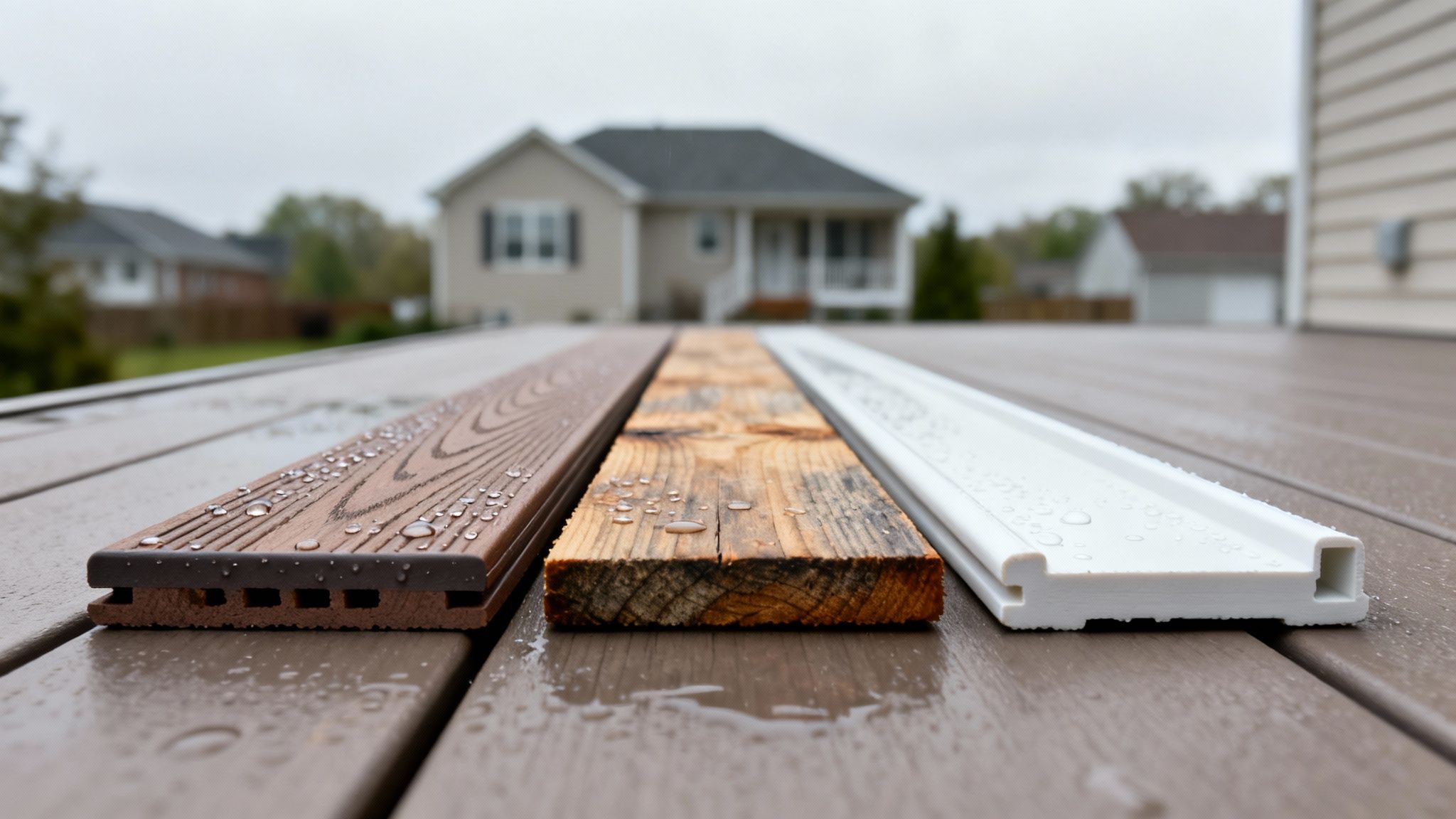
This is why picking the right material from the start is so important. Pressure-treated wood might seem cheap at first. But modern options like composite decking are made to handle these weather challenges. They give you lasting beauty without all the maintenance.
At Kennedy Design + Build, we believe a deck should be a place to relax, not a source of constant work. We specialize in designing and installing decks using materials proven to last in Pennsylvania’s weather.
Our goal is to build you a deck that looks beautiful and provides value for years. By using better materials and expert work, we make sure your new outdoor space is for enjoyment, not a chore. To see how we change backyards in the Lehigh Valley, look at our outdoor living services.
Why Traditional Wood Decks Fail In The Lehigh Valley
A classic wood deck is a beautiful idea. But in the Lehigh Valley, that beauty often doesn’t last. The weather in Allentown and Center Valley is tough on traditional materials like pine and cedar.
Understanding why these decks fail helps you choose a smarter, more durable option for your home. Residents of the Lehigh Valley face harsh winters, wet springs, and humid summers. These conditions cause rot, warping, and costly repairs on wood decks in just a few seasons.
The main enemy of a wood deck here is moisture. From damp springs to heavy winter snow, wood is always wet. Wood is a porous material, so it soaks up moisture like a sponge. This creates the perfect home for mold and fungus, leading to rot that can ruin a deck in a few years.
The Damage Caused By Freeze-Thaw Cycles
Besides being damp, Pennsylvania’s freeze-thaw cycles are also a big problem. When water inside the wood freezes, it expands. This puts pressure on the wood from the inside, causing it to crack and split.
As it gets warmer, the ice thaws, and more water gets into the new cracks. This cycle repeats all winter and spring. This process slowly destroys the wood, causing many problems:
- Warping and Cupping: Boards twist and bend as they expand and contract.
- Splintering Surfaces: The deck becomes unsafe for bare feet and looks old.
- Loose Fasteners: The movement loosens screws and nails, making railings unstable.
Contractors who don’t adjust for this climate risk unhappy customers. A wood deck may look great at first, but it degrades fast without protection. This can lead to bad reviews and warranty issues.
The Inevitable Maintenance Burden
To fight this decay, a wood deck needs constant and costly maintenance. It must be cleaned, sanded, and re-sealed or re-stained every year or two. If you miss this step for one season, moisture gets in and starts a decay process that is hard to fix.
This upkeep costs money and time you could be spending enjoying your deck. The truth is that traditional wood was not designed for our local weather. For a lasting investment, you need a material made to resist moisture and handle our freeze-thaw cycles.
Comparing Modern Decking Materials For Local Weather
Picking the right decking material in Allentown is about more than looks. You need something tough enough for our changing weather. Let’s look at the top options for Lehigh Valley homeowners.
The biggest problems for a deck here are moisture, freeze-thaw cycles, and rot. This is why homeowners in places like Center Valley and Coopersburg are choosing materials other than wood. Local search interest in “Trex deck Lehigh Valley” shows that homeowners are researching long-term value.
To help, here is a quick comparison of how these materials perform in our area.
Decking Material Performance In Allentown Weather
| Material | Average Lifespan (PA Climate) | Maintenance Needs | Upfront Cost (Per Sq. Ft.) | Best For |
|---|---|---|---|---|
| Pressure-Treated Wood | 10-15 years | Annual sanding & sealing | $20 – $35 | Budgets where upkeep isn’t a concern. |
| Capped Composite | 25-30+ years | Occasional soap & water cleaning | $45 – $75 | The best balance of looks, low maintenance, and long-term value. |
| PVC | 30-50+ years | Occasional soap & water cleaning | $60 – $90 | Areas with extreme moisture like poolsides. |
This table gives a quick overview. The real story is how each material handles our specific weather day-to-day.
Pressure-Treated Wood: The Budget-Friendly Choice
Pressure-treated (PT) pine is common because it’s cheap at first. It’s the material most people know. But that low price can be misleading.
Since it’s still wood, PT lumber soaks up moisture. This makes it a target for rot and damage from freeze-thaw cycles. Keeping it in good shape means yearly cleaning, sanding, and staining.
Composite Decking: The Modern Standard
High-quality composite decking is the top choice for many homeowners in the Lehigh Valley. It offers a great mix of beauty, durability, and low maintenance. It’s designed to solve the problems that ruin wood decks here.
Modern composite boards have a core of recycled wood fibers and plastics. The magic is the protective polymer shell, or “cap,” that wraps the board. This makes it very resistant to:
- Moisture and Rot: The cap blocks water, which stops rot, mold, and mildew.
- Stains and Fading: Spills wipe off easily, and UV protection stops the sun from fading the color.
- Splintering and Cracking: No water gets in, so there’s no cracking from freeze-thaw cycles.
You get the look of wood without the constant work. A simple cleaning with soap and water is all it needs. Our Bethlehem outdoor living project shows how composites create a beautiful, worry-free space.
PVC Decking: The Ultimate Moisture Barrier
PVC decking is even better at fighting moisture. Unlike composites, PVC boards have no wood fibers. They are 100% waterproof. This makes them ideal for the wettest areas, like around a pool.
PVC is also light and durable. It resists scratches and stains very well. The trade-off can be the look. Some feel PVC doesn’t look as much like natural wood as high-end composites. It is also one of the more expensive options.
Why Composite Decking Is The Superior Choice For Pennsylvania
If you are a Lehigh Valley homeowner, you know the struggle with wood decks. It’s a constant cycle of sanding, staining, and repairing. When you’re ready for a better solution, high-quality composite decking is the answer. It is made to handle Allentown’s wet and cold weather.
The secret is its advanced construction. Composite boards have a durable core of recycled wood fibers and plastics. The key is the tough outer layer, or “cap,” that protects this core. This shell acts as a shield against the elements.
Engineered To Defeat Moisture And Freeze-Thaw Cycles
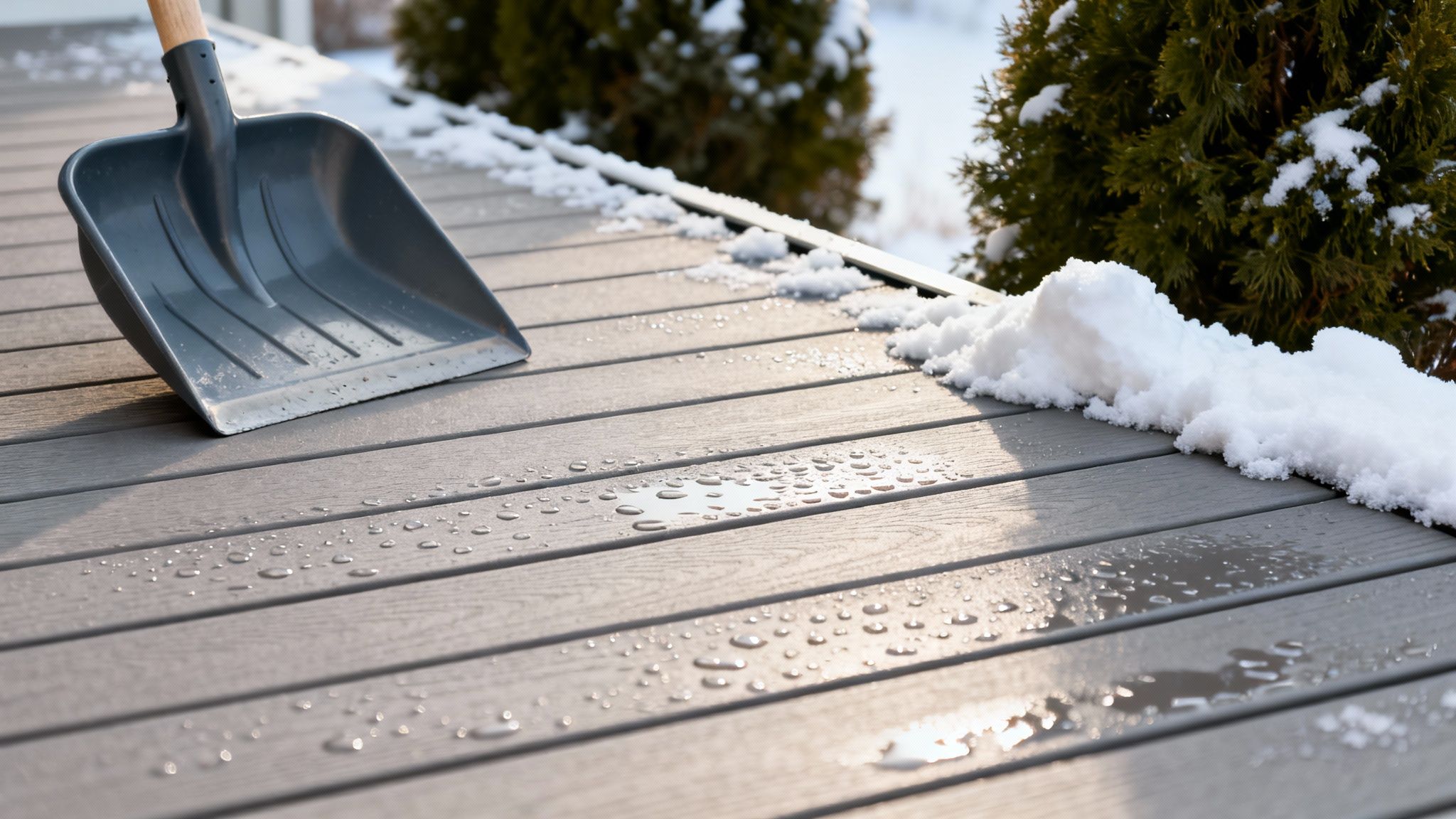
In Pennsylvania, moisture is the biggest enemy of any outdoor structure. Unlike wood that soaks up water, the composite shell blocks it. This prevents a lot of common problems in our area.
When water can’t get into the board, mold and rot can’t grow. This means the boards won’t decay or get discolored. This moisture resistance also makes composite immune to our freeze-thaw cycles. Since water can’t get inside to freeze and expand, the material won’t crack or split.
A Lifestyle Upgrade, Not Just A Material Choice
Perhaps the biggest benefit of composite decking is the freedom it gives you. A wood deck is a chore. Composite decking gives you your time back.
Instead of working on your deck, you can enjoy it. The maintenance is simple: just an occasional cleaning with soap and water. When comparing decking options, ask about moisture resistance and how materials handle freeze-thaw cycles. Composite may cost more upfront but saves thousands over time.
Kennedy Design + Build specializes in these beautiful, long-lasting outdoor areas. To see what’s possible for your home, check out our patios and decks services. We can help you design a space built to last in our Pennsylvania climate.
How Proper Installation Protects Your Deck Investment
Choosing the right decking material is a huge first step. But it’s only half the battle. Even the best materials can fail if they aren’t installed correctly. Professional installation is about building a structure that can survive our local climate for decades.
A deck is more than just the surface you walk on. From the footings to the framing, every part has to be designed to handle moisture. This is especially true here in the Lehigh Valley. An expert installation focuses on protecting the hidden framework.
The Critical Role of Ventilation and Drainage
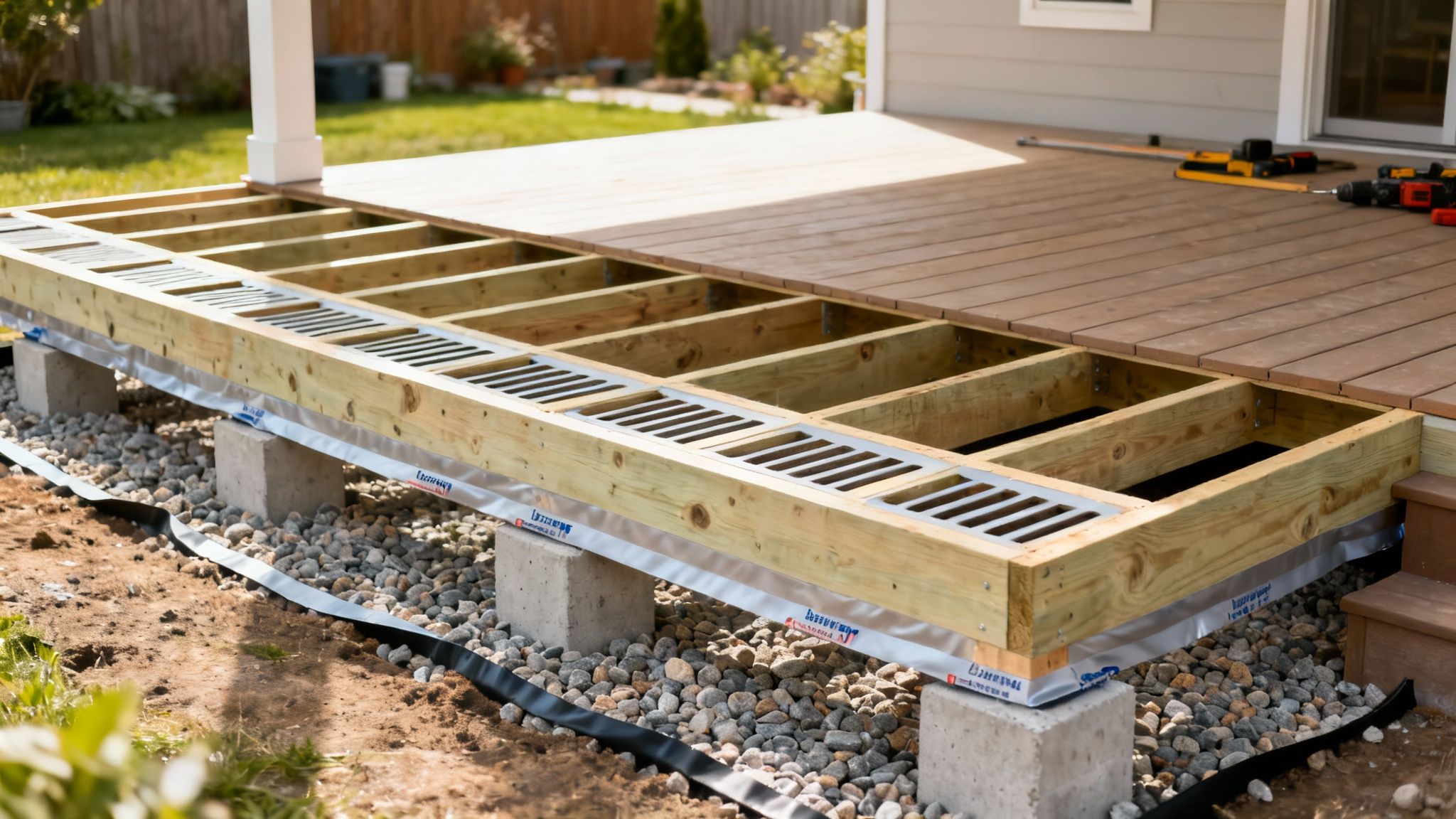
In a damp area like ours, the space under your deck can trap moisture. Without proper airflow, humid air can cause mold and rot on the substructure. At Kennedy Design + Build, our installs include proper ventilation and drainage to ensure structural integrity season after season.
First is proper ventilation. We design our decks to have enough airflow under the boards. This keeps the joists and beams dry and stops decay.
Second is effective drainage. Water needs a way to escape from your home’s foundation and the deck’s support system. This includes:
- Correct Ground Grading: The soil under the deck must slope away from the house.
- Proper Board Spacing: This lets water drain through instead of pooling on top.
- Joist Protection: We use protective tape over framing to create a waterproof barrier.
These details are often overlooked by others. But they are essential for building a deck that lasts in Pennsylvania.
Protecting Your Deck From The Ground Up
The foundation of a durable deck starts below the surface. We make sure concrete footings are poured below the frost line. This prevents the ground from pushing the deck up during freeze-thaw cycles.
From there, every connection matters. Using the right hardware protects the whole system from temperature swings. This careful, design-first approach is what makes a Kennedy Design + Build project different.
Serving Center Valley, Coopersburg, and the greater Lehigh Valley, we build decks designed for our climate. We help you choose the right materials and install them with the craftsmanship needed to protect your investment.
Building Your Lehigh Valley Deck To Last
When choosing the best decking material for an Allentown home, one thing is clear. Our wet and cold weather requires a smarter solution. Traditional wood decks can’t handle Pennsylvania’s freeze-thaw cycles and moisture. This leads to endless maintenance and repairs.
For most homeowners, high-performance composite decking is the best choice. It offers the perfect mix of beauty, strength, and long-term value. But even the best materials will fail without expert installation. Proper ventilation and drainage are essential to protect your deck’s frame from rot.
Partnering with a design-build firm that understands our local environment is the most important decision you can make. A well-built deck is the foundation for decades of outdoor enjoyment. Serving Center Valley, Coopersburg, and greater Lehigh Valley, Kennedy Design+Build helps you choose the right deck for our climate. It will be built to last and look great for years.
Ready to build a deck that adds lasting value to your home? Schedule your design consultation today and let’s create the perfect outdoor space for you.
Frequently Asked Questions About Allentown Decking
When you are ready to invest in a new deck, it is good to have questions. Here are answers to some common questions we hear from homeowners in the Lehigh Valley.
How much more does composite decking cost than wood?
Composite decking does cost more upfront than standard pressure-treated wood. But that doesn’t tell the whole story. When you add the yearly cost of staining, sealing, and repairs for wood, composite can save you thousands over the life of the deck.
Will a composite deck get too hot in the summer?
This used to be a concern, but modern composite decking has improved a lot. Manufacturers now use heat-resistant technology. While darker colors absorb more heat, new product lines include lighter, cooler tones that stay comfortable on your feet.
How do you ensure proper drainage for a new deck?
Proper drainage is a key part of our building process. We start by grading the ground under the deck so water flows away from your home. We also set the board spacing to let rain and snowmelt pass through easily, which prevents water from pooling.
What is the timeline for building a new deck?
The timeline depends on the deck’s size, design, and material availability. The design and planning phase usually takes a few weeks. After that, an average-sized deck in the Lehigh Valley is often finished in 2 to 4 weeks. We will give you a detailed schedule when you schedule a consultation with our team.
Is PVC decking a better option than composite for wet weather?
PVC is an excellent material for moisture resistance because it contains no wood fibers. This makes it a great choice for poolside decks or very damp areas. However, high-quality capped composite decking offers nearly the same moisture protection. Many homeowners feel composite looks more like real wood, so the choice often comes down to personal style.