How to Design a Patio for Your Lehigh Valley Backyard Oasis
Before you even think about pavers or furniture, the most important part of designing a new patio starts with a simple question: How do you actually want to live out here?
The answer to that question is everything. It will shape every decision you make, from the layout and materials to the overall flow, making sure your new patio is a genuine reflection of your lifestyle.
Defining Your Patio's Purpose and Vision
The very first step—before any design software is opened or a single stone is laid—is to get crystal clear on your vision. This is about translating your family's daily routines and entertaining dreams into a functional blueprint for your Center Valley or Allentown home.
Try to picture specific moments. Are you sipping coffee alone on a quiet morning? Firing up the grill for a big weekend barbecue with friends and family? Or maybe you just need a peaceful spot to put your feet up with a good book.
From Lifestyle to Layout
Your patio’s main job will directly steer its design. A space built for hosting large parties has completely different needs than a private nook meant for quiet relaxation.
To get started, ask yourself a few key questions:
- What’s the main event? Will this be a space for dining, lounging, cooking, or a mix of all three?
- Who will use it most? Is it mainly for you and your immediate family, or do you plan on hosting bigger crowds?
- How does it connect to the house? A patio right off the kitchen is a must for easy outdoor dining, while a connection to the living room creates that amazing indoor-outdoor feeling.
Answering these questions helps you start to map out traffic flow and create natural “zones” for different activities. For example, an outdoor kitchen needs to be convenient without sending smoke into your main seating area.
A well-designed patio isn't just an addition—it's a true extension of your home's living space. The goal is to create an environment that feels intuitive, comfortable, and perfectly suited to your life.
Balancing Desires with Practicality
These days, homeowners want their patios to do it all. We’re seeing a huge trend toward multi-functional outdoor hubs that can handle relaxation, entertaining, and even a bit of remote work.
Recent data shows that a 64% majority of homeowners are looking for outdoor spaces that can do more. This is especially true for millennials, with 75% wanting outdoor kitchens and a 40% rise in demand for dedicated entertainment zones. You can see more of the latest patio design trends and how homeowners are thinking about their spaces.
This desire for an all-in-one space requires smart planning. At Kennedy Design + Build, we help homeowners across the Lehigh Valley find that perfect balance between ambitious dreams and what’s practical for their property.
Mapping Your Space for Size, Shape, and Location
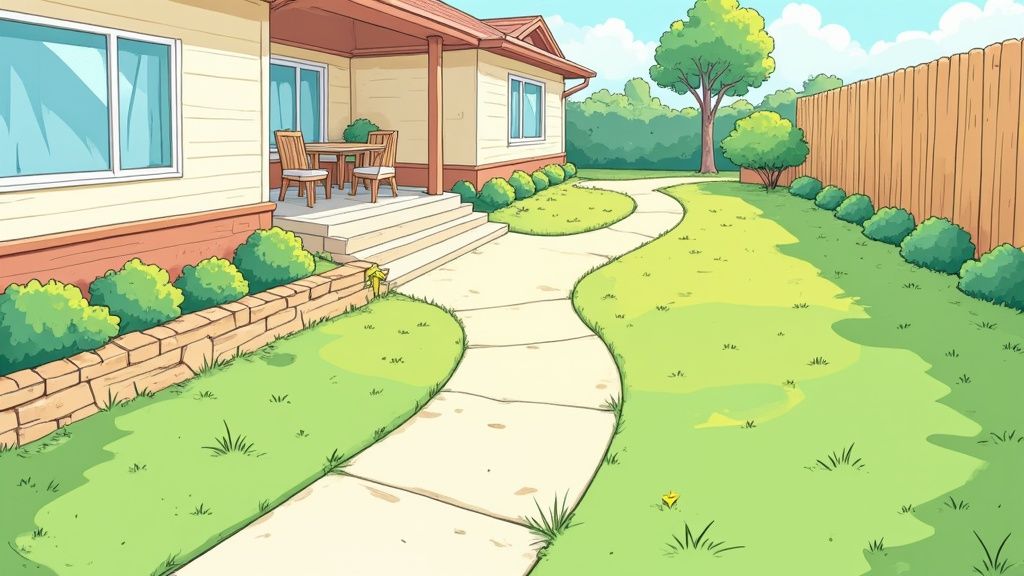
Once you have a clear vision, it's time to ground that vision in the reality of your backyard. A thorough site assessment is essential for creating a space that feels natural, functional, and perfectly integrated with your home and landscape.
This goes beyond raw dimensions. We look at everything from sun and shade patterns throughout the day to the natural flow of your property, ensuring your new patio is perfectly placed.
Choosing the Ideal Location
The location of your patio is one of the most significant decisions you’ll make. It dictates convenience, privacy, and the entire feel of your outdoor living area.
There are two main philosophies when it comes to patio placement:
- Attached Patios: Located directly adjacent to the house, these create a seamless transition from indoors to out. This is a game-changer for outdoor kitchens or dining areas.
- Destination Patios: Set further back in the yard, these create a sense of escape. A destination patio can feel like a private retreat, perfect for a fire pit lounge.
As you evaluate potential spots, don't forget to consider the views. A well-placed patio can frame a beautiful garden scene while cleverly screening out a neighbor’s garage or an unsightly utility box.
The right location makes a patio feel like it was always meant to be there. It should complement your daily life, whether that means stepping directly out from your living room or taking a short, pleasant walk to a peaceful corner of your yard.
Determining Size and Shape
Getting the scale correct for your home is absolutely critical. While the national average patio size is around 290 square feet, preferences in areas like the Lehigh Valley often lean toward larger, more versatile spaces. To learn more, you can explore detailed outdoor patio design statistics.
The shape of your patio should also complement your home's architecture and the surrounding landscape.
- Geometric Shapes: Squares and rectangles offer a formal, classic look that works well with traditional or modern homes.
- Free-form Shapes: Curving, organic shapes feel more natural and can help soften the hard lines of a house, creating a more fluid design.
Finally, it’s crucial to be aware of local zoning rules in municipalities like Coopersburg or Allentown. As part of our comprehensive service, we handle all necessary permits to ensure your project is fully compliant when we design and build patios and decks throughout the Lehigh Valley.
Choosing Materials That Define Your Style
The materials you select are the heart and soul of your patio. They set the aesthetic tone, dictate long-term durability, and ultimately define the character of your outdoor living space.
This decision is about finding that perfect sweet spot where style, function, and budget intersect. For homeowners in the Lehigh Valley, it's also about picking materials that can handle Pennsylvania’s freeze-thaw cycles.
Natural Stone: The Timeless Standard
For a look of pure elegance and authenticity, nothing beats natural stone. Materials like flagstone and bluestone bring organic textures and unique color variations that simply can't be faked.
While it represents a higher initial investment, natural stone pays you back with unmatched beauty and longevity. It’s the perfect choice for creating a high-end retreat that feels like it’s been part of your property for generations.
The right material choice elevates a patio from a simple slab to a deliberate design statement. It’s the foundation upon which your entire outdoor style is built.
Concrete Pavers: The Versatile Workhorse
If design flexibility is at the top of your list, then concrete pavers are a fantastic choice. Modern manufacturing has opened up an incredible array of shapes, sizes, colors, and textures.
Beyond their versatility, pavers are engineered for exceptional durability, making them an excellent option for the climate in Allentown and the surrounding areas. Their individual units reduce the risk of large-scale cracking common with solid concrete.
This image gives you a quick visual on how different patio materials stack up in the minds of homeowners.
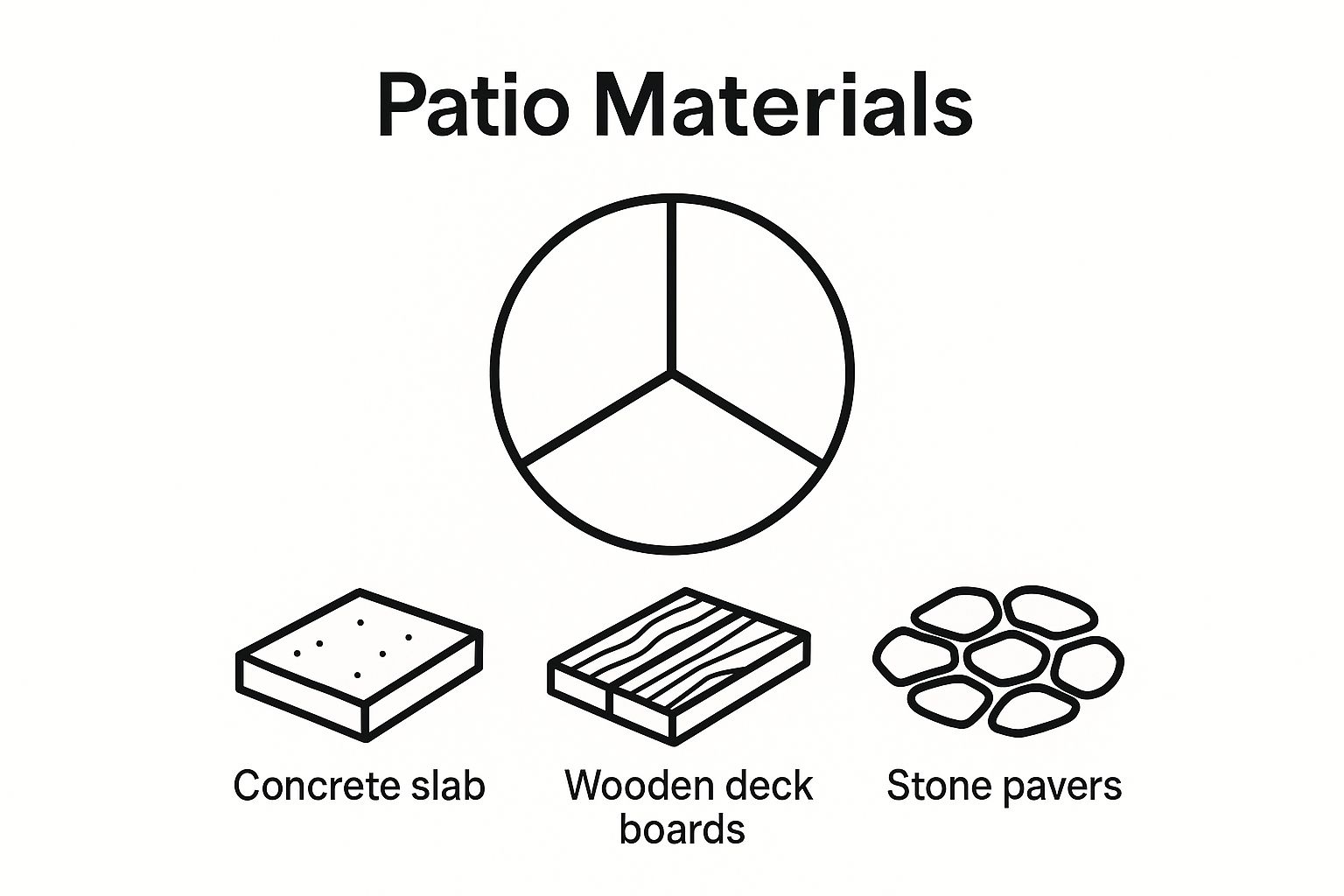
As you can see, each option has its own distinct appeal, but pavers are frequently chosen for that great balance of style and resilience.
Patio Material Comparison
This table breaks down the key characteristics of each material to help you match them to your home's style and your family's needs.
| Material | Key Characteristics | Best For |
|---|---|---|
| Natural Stone | Authentic, unique colors/textures, timeless look. Higher initial cost but incredible longevity. | Creating rustic, old-world, or high-end elegant patios. Perfect for homes with natural surroundings. |
| Concrete Pavers | Highly versatile with endless shapes, colors, and styles. Durable, resistant to cracking, and great value. | Modern, traditional, or transitional designs. Ideal for achieving a specific look on a practical budget. |
| Porcelain Tile | Sleek, modern, and non-porous. Extremely resistant to stains, frost, and fading. | Contemporary and minimalist outdoor spaces, pool decks, and rooftop terraces. |
Ultimately, the best material is the one that aligns with how you plan to live in your new space for years to come.
Crafting a Custom Look with Borders and Inlays
Truly exceptional hardscape installation goes far beyond the main field of pavers or stone. The real magic happens in the details, where decorative borders and inlays transform a standard patio into a custom work of art.
We often use these techniques to add an extra layer of visual interest:
- Contrasting Borders: Framing your main patio area with a darker or lighter paver creates a crisp, finished edge.
- Mixed Materials: Combining the rugged texture of natural stone with the clean lines of modern pavers creates a dynamic, layered look.
- Pattern Inlays: A circular or diamond-shaped inlay can become a stunning focal point, perfect for anchoring a dining set.
For a real-world example of how these elements come together, explore this beautiful Center Valley backyard patio project we completed. It showcases how thoughtful material choices create a personalized outdoor oasis.
Integrating Essential Hardscape and Softscape Elements
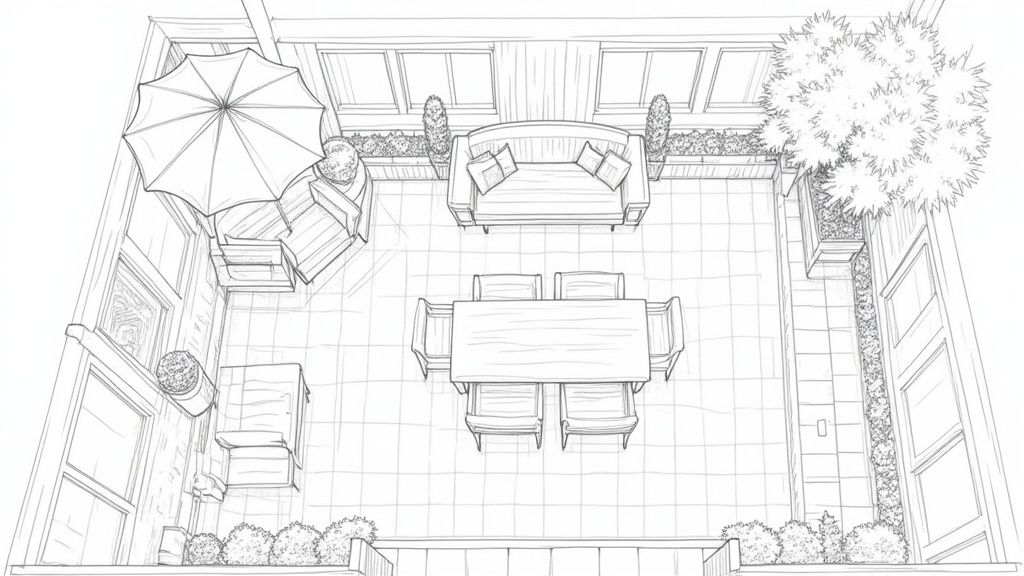
A truly remarkable patio is far more than its foundation. It’s a carefully orchestrated blend of hard and soft elements, where functional structures meet living nature to create a cohesive outdoor room.
Thinking about how to design a patio means looking beyond the floor. It involves integrating key features that elevate your space into a genuine outdoor living destination.
Incorporating Foundational Hardscapes
Hardscape features provide the structure, function, and "bones" of your patio design. They solve practical problems while adding significant architectural interest and value to your Lehigh Valley home.
In our region, a sloped yard is a common challenge we see as an opportunity. Retaining walls are the perfect solution, allowing us to create stunning multi-level patios that add dimension and define distinct zones.
Other essential hardscapes to consider include:
- Built-in Seating Walls: These are fantastic space-savers, providing ample, permanent seating around a fire pit or patio edge.
- Outdoor Kitchens: A well-designed outdoor kitchen becomes the functional heart of any entertainment-focused patio.
- Fire Pits and Fireplaces: These features instantly become the social hub of the patio, extending its use into cooler evenings.
- Pergolas and Overheads: A pergola adds verticality and architectural definition, creating the feeling of an outdoor room while providing shade.
The best hardscape additions feel like they were part of the original plan, not afterthoughts. They should flow seamlessly with the patio's layout, enhancing both its beauty and its usability.
The Crucial Role of Softscaping
While hardscapes create the framework, softscaping brings your patio to life. This is the strategic use of plants, trees, and shrubs to soften hard edges, introduce color, and connect your patio to the landscape.
A common mistake is pushing all plantings to the far edges of the yard. A thoughtful design integrates softscape elements directly into and around the hardscape itself.
For instance, pockets of ornamental grasses alongside a seating wall can soften the stone. Climbing vines on a pergola provide natural shade and a lush, green canopy.
This approach creates a more immersive and harmonious environment. For a great example of how hardscape and softscape can be balanced, see the details of this Lower Saucon outdoor oasis project we designed and built.
Bringing Your Patio to Life with Lighting and Furnishings
A beautifully built patio is just the start. The real magic happens when you add the final layers of lighting and furnishings—transforming a hardscape into an inviting, functional outdoor room.
These aren't afterthoughts. They are the critical pieces that set the mood, extend enjoyment after sunset, and make your patio truly feel like home.
Creating Ambiance with Layered Lighting
A thoughtful lighting plan is non-negotiable for any patio design in the Lehigh Valley. Good lighting creates atmosphere, improves safety, and showcases the best features of your hardscape.
We use a layered strategy that blends different types of fixtures for a balanced and versatile outdoor space.
Here are the key components we build into our designs:
- Ambient Lighting: This is your foundation for overall illumination, like soft string lights or subtle sconces casting a warm glow.
- Task Lighting: This is direct, focused light right where you need it, such as over an outdoor kitchen prep station or dining table.
- Accent Lighting: This is where the artistry comes in, using spotlights to highlight a beautiful tree or tucking small lights into planting beds.
Mixing these types creates a rich, dynamic atmosphere and ensures safe movement. To see how these elements can be fully integrated, you can explore our professional outdoor lighting and audio services.
Selecting Furniture That Lasts
Your furniture choice completes the vision, turning your patio into a true outdoor living room. Zero in on durability, comfort, and a style that complements your home’s architecture and patio materials.
A well-furnished patio beckons you outside. It should be a place where seating encourages conversation, and every element contributes to an atmosphere of total comfort and relaxation.
Arrange seating to create natural conversation areas and use outdoor rugs to define zones. Recent studies show that among homeowners making patio updates, 72% expect to spend more time relaxing outside, and 60% are looking forward to more family time.
To make the most of your patio during sunny Pennsylvania afternoons, add some shade. A great first step is choosing the best sun shades for your patio, whether it's a large umbrella, a retractable awning, or a permanent pergola.
Your Top Questions About Patio Design & Installation
Starting a new patio project always brings up questions. As hardscape specialists across the Lehigh Valley, we've heard them all. Getting clear, honest answers from the start is the best way to move forward with confidence.
Here are some of the most common concerns we hear from homeowners in Allentown, Coopersburg, and beyond.
1. How much does a new patio cost in the Lehigh Valley?
The honest answer is: it varies widely. The final investment depends on three main factors: the patio's overall size, the materials you choose, and the complexity of the design and site.
A simple paver patio on a flat yard will cost less than a large, multi-level natural stone patio with a custom fire pit and retaining walls. We provide a detailed, transparent estimate after our design consultation to ensure the plan fits your vision and budget.
2. What is the best material for a patio in Pennsylvania?
There’s no single "best" material for everyone. For our climate, both concrete pavers and natural stone are fantastic options that we recommend based on your home's style, budget, and functional needs.
Concrete pavers offer incredible design flexibility and are engineered to handle our freeze-thaw cycles. Natural stone, like flagstone or bluestone, delivers a timeless, high-end look with unmatched organic beauty.
3. How long does the hardscape installation take?
The project timeline depends directly on the patio's scale, site conditions, and weather. A more straightforward, single-level patio might take one to two weeks from start to finish.
Larger, more complex outdoor living spaces can take several weeks, especially if they include outdoor kitchens, significant retaining walls, or large-scale masonry. We provide a clear, realistic timeline before breaking ground.
4. Do I need a permit for a new patio in my town?
Permit rules differ between municipalities like Allentown and Coopersburg. Simple, on-grade patios often don’t require a permit, but projects with structural elements almost always do.
This includes features like taller retaining walls, complex electrical work for lighting, or major grading changes. As part of our service, the Kennedy Design + Build team manages the entire permitting process for you.
5. Can you design a patio on a sloped yard?
Absolutely! We view sloped yards as a fantastic opportunity to create a truly dynamic and stunning outdoor space. A great example of this is a project where we transformed a tricky grade—check out this private Macungie backyard makeover to see what's possible.
By using integrated retaining walls and thoughtfully designed steps, we build gorgeous multi-level patios. This approach doesn't just solve the slope; it adds incredible dimension and carves out distinct "zones" for dining and lounging.
Ready to transform your outdoor space into a beautiful, functional retreat? The team at Kennedy Design + Build is here to bring your vision to life with expert craftsmanship and a design-first approach. Schedule your consultation today by visiting us at https://www.kennedydb.com.