Discover Stunning Patterns for Paver Patios | Kennedy Design + Build
A beautiful paver patio is more than just a place for your grill. It’s the foundation of your outdoor living space. The right pattern defines the area, adds value to your home, and sets the stage for family memories. While paver color and type are important, the pattern you choose turns a simple surface into a work of art.
The right design adds texture and personality to your patio. In the Lehigh Valley, homeowners want to create unique outdoor spaces. From Allentown to Coopersburg, a well-chosen paver pattern can match any home style and improve its look.
Choosing from the many patterns for paver patios can feel like a big decision. This guide breaks down the most popular options to help you. At Kennedy Design + Build, we believe great design starts from the ground up, and this is your first step toward building the backyard of your dreams.
1. Herringbone Pattern
The Herringbone pattern is a classic, stylish choice for paver patios. It brings a timeless European feel to your outdoor space. This design uses rectangular pavers laid in a V-shaped, zigzag arrangement.
This pattern is not just about looks; its design is very strong. The interlocking pavers spread weight evenly, making it one of the most durable patterns for paver patios. It’s a great choice for high-traffic areas like walkways and busy patios in Lehigh Valley homes.
Why Choose a Herringbone Pattern?
The Herringbone pattern looks great and works well. Its dynamic design creates a sense of movement and can make a small patio feel larger. The interlocking pavers also prevent shifting over time, ensuring your patio stays stable for years.
The following infographic highlights key data points to consider when planning a Herringbone installation.
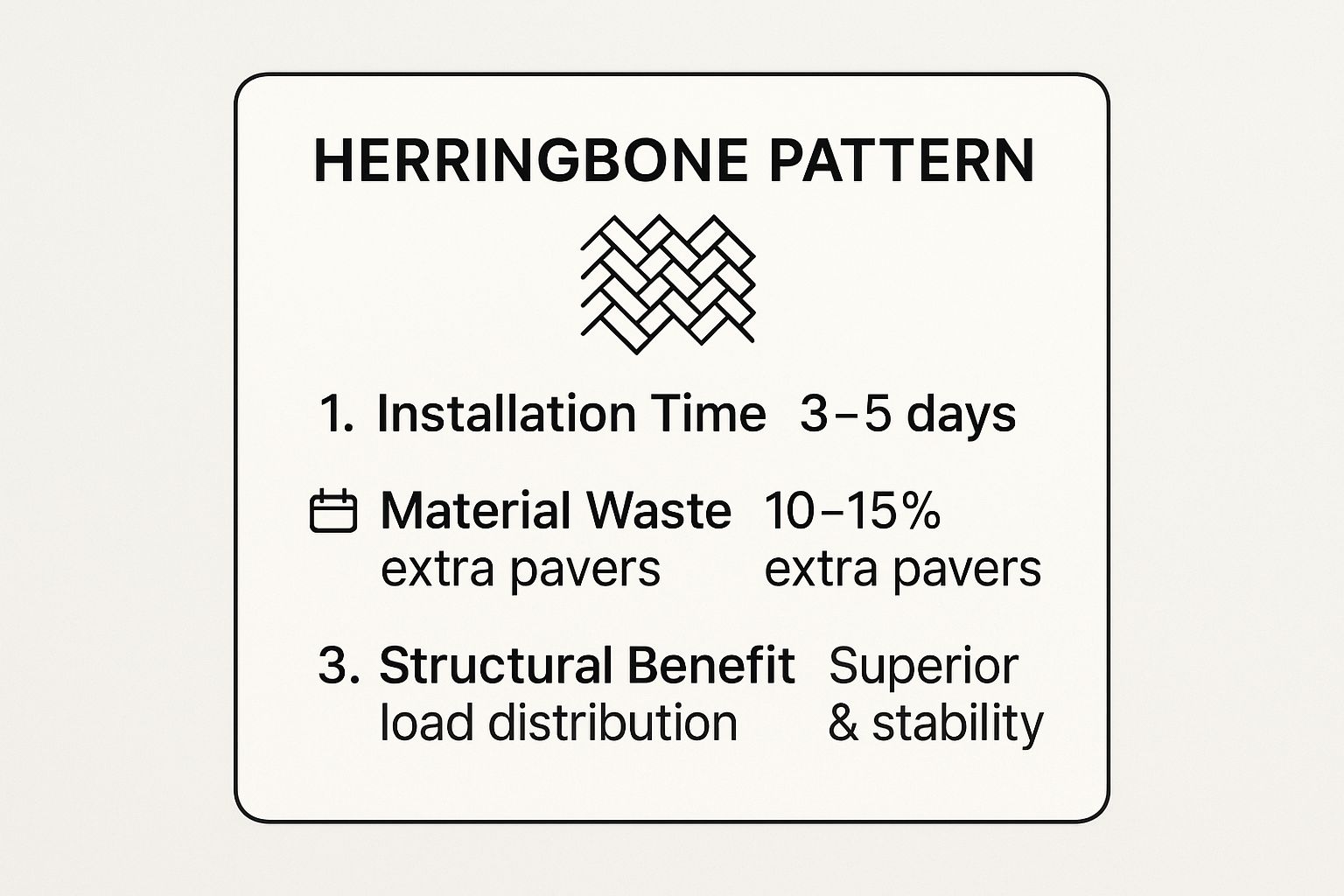
As the data shows, the superior stability of the Herringbone pattern comes with considerations. It takes a bit longer to install and requires extra material for angle cuts.
Installation and Design Tips
A perfect Herringbone layout requires careful planning. For a professional result, consider these tips:
- Start with a Straight Line: Begin installation along a straight edge, like your home’s foundation or a retaining wall. Use string lines to keep your pattern straight.
- Plan for Waste: You will need to make many angle cuts, especially along the border. It’s smart to order 10-15% extra pavers to make sure you have enough material.
- Secure the Edges: The Herringbone pattern needs a strong edge restraint. This can be a concrete curb or a high-quality edging system designed for pavers.
2. Running Bond Pattern
The Running Bond pattern is a classic and versatile choice. This design looks like traditional brickwork, with each paver offset by half from the row above and below it. The result is a simple, clean, and linear look.
This is one of the most popular patterns for paver patios because it’s easy to install and has a timeless style. It creates a feeling of space and direction. This pattern works well for many design styles, from modern to traditional, across the Lehigh Valley.
Why Choose a Running Bond Pattern?
The Running Bond pattern is a great choice for its efficiency and strong visual lines. It needs fewer cuts than more complex patterns, which saves material and can lower installation costs. This makes it a practical option for homeowners in Center Valley and Allentown.
Its strong lines can also make a narrow space look wider or a short space feel longer. The patio’s structure is solid, making it suitable for most walkways and patios. When you’re ready to explore how this pattern can enhance your outdoor space, you can learn more about patio design options.
Installation and Design Tips
A successful Running Bond installation depends on keeping lines straight. Follow these expert recommendations:
- Use Guiding Lines: Snap chalk lines on your prepared base to guide you. This ensures each row stays perfectly straight.
- Check Alignment Often: Stop every few rows to check your work with a level. It’s easier to make small fixes as you go.
- Plan Your Direction: Think about how you will view the patio. Laying pavers with the long side parallel to your house can make the space feel deeper.
3. Basketweave Pattern
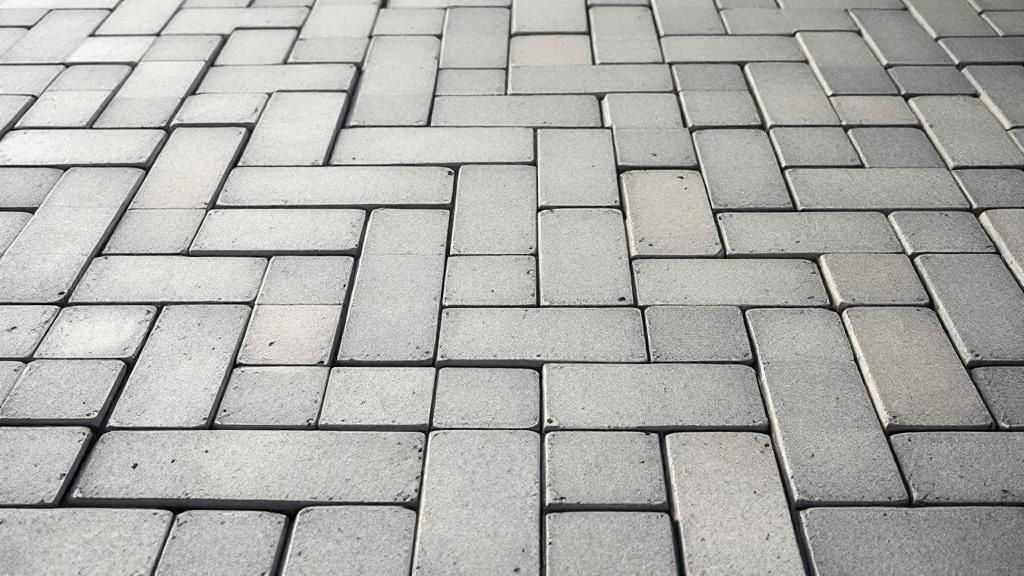
The Basketweave pattern offers a charming, traditional look. This design creates the illusion of a woven basket by arranging pairs of pavers in simple, repeating squares. The result is a textured surface that adds warmth to any outdoor space.
This pattern is a popular choice for garden paths and patios in classic or cottage-style homes. It’s a simple yet impactful design among the many patterns for paver patios. It provides timeless appeal for homeowners in communities like Center Valley.
Why Choose a Basketweave Pattern?
The Basketweave pattern is valued for its decorative style and simple installation. Its grid-based layout is easier for installers to create, which can speed up the project. The strong visual texture adds depth and character to your patio.
Its orderly look brings a sense of structure and elegance. It is ideal for defining cozy seating areas or formal garden paths. For Lehigh Valley homeowners who appreciate classic design, the Basketweave pattern delivers a welcoming feel.
Installation and Design Tips
To ensure a beautiful Basketweave patio, precision is key. Follow these professional recommendations:
- Maintain Square Alignment: The pattern relies on perfect squares. Use a framing square to check your alignment as you work.
- Use Proper Edge Restraints: A strong edge restraint is needed to lock the pavers in place and prevent them from shifting over time.
- Consider a Contrasting Border: Frame your patio with a border of pavers laid end-to-end. Using a contrasting color makes the woven pattern stand out.
4. Circular/Radial Pattern
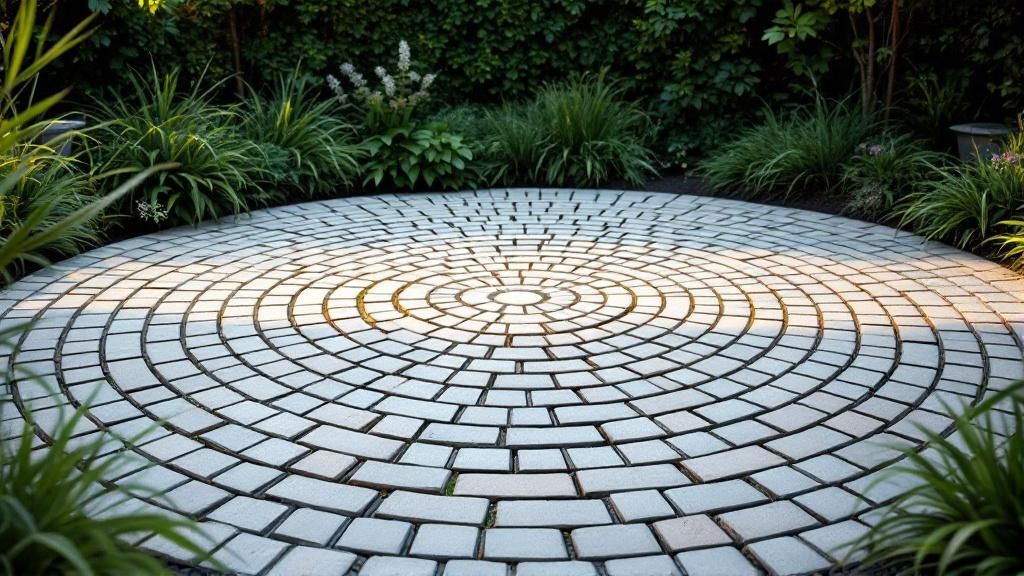
The Circular or Radial pattern creates a dramatic focal point. This pattern features pavers arranged in circles that radiate from a central point. It is a sophisticated design choice that draws the eye.
This design is often used for high-end pool surrounds or plazas. Its powerful look makes it one of the most compelling patterns for paver patios. It is perfect for creating a designated seating area, a space for a fire pit, or a grand entrance.
Why Choose a Circular/Radial Pattern?
A Circular pattern is chosen for its stunning look and ability to define a specific area. It turns an ordinary patio into a custom work of art. This pattern works well for properties in Lehigh Valley that have curved garden beds.
This design adds significant value and character to a property. By adding a circular element, as seen in some Center Valley backyard retreats, you can create a unique and inviting gathering space.
Installation and Design Tips
Creating a perfect Circular pattern is a complex task that requires skill. Professional installation is highly recommended.
- Establish a Perfect Center: The entire pattern depends on a precise center point. All measurements will radiate from this spot.
- Use Specialized Tools: Professional installers use tools like a compass made from a stake and string to guide the placement of each ring of pavers.
- Plan for Complex Cuts: This pattern requires many angled cuts. It is important to order 15-20% extra material to account for waste.
- Consider a Kit: Many paver brands offer pre-cut kits for creating circular patterns. These kits can simplify installation and ensure a clean finish.
5. Random/Ashlar Pattern
The Random or Ashlar pattern offers a beautiful, natural look. This design uses a mix of different-sized pavers laid in a non-repeating arrangement. Though it looks random, an Ashlar pattern follows a plan to ensure a balanced look.
This pattern is very versatile and complements many home styles. Its natural look breaks up a uniform grid, adding visual interest. As one of the most adaptable patterns for paver patios, it’s a great choice for winding garden paths or free-form patios in Lehigh Valley.
Why Choose a Random/Ashlar Pattern?
The main appeal of the Ashlar pattern is its ability to create an old-world charm. The use of multiple paver sizes helps hide small imperfections. The irregular layout is also great for complex spaces with curves or unusual shapes.
For property owners in Center Valley and the surrounding areas, this pattern delivers a high-end look. It suggests a level of craftsmanship that enhances a property’s value.
Installation and Design Tips
A successful Ashlar pattern requires some planning, but the result is worth it.
- Create a Plan: Before starting, lay out a small section or sketch a plan. This helps ensure a balanced distribution of paver sizes.
- Mix Your Pavers: When your pavers are delivered, mix stones from several different pallets. This blends any slight color variations.
- Maintain Consistent Joints: While the paver sizes vary, the space between each paver should be consistent. Using paver spacers helps achieve a professional look.
- Order a Kit: Many manufacturers offer pre-packaged Ashlar pattern kits. These kits include the right ratio of different paver sizes.
6. Pinwheel Pattern
The Pinwheel pattern offers a dynamic and playful geometric design. This pattern uses a mix of square and rectangular pavers to form a shape like a pinwheel. It’s a visually engaging choice that breaks from traditional layouts.
This design is more than just a style statement. It creates a captivating look that is effective in modern landscape designs. It is one of the most interesting patterns for paver patios, especially for homeowners in Center Valley looking for a custom feel.
Why Choose a Pinwheel Pattern?
The Pinwheel pattern is ideal for creating a focal point on a large patio. Its repeating, swirling design adds texture and complexity. This pattern works well in contemporary settings or as a unique feature in garden paths.
The design also allows for creative use of color. A contrasting paver can be used in the center of the “pinwheel” to highlight the effect. For an example of how this pattern can define a space, explore this beautiful Center Valley backyard patio project.
Installation and Design Tips
A successful Pinwheel installation relies on a precise plan. Follow these expert recommendations for a great result:
- Ensure Paver Precision: The pattern requires pavers with exact dimensions to fit together perfectly. Use pavers from the same batch to avoid size variations.
- Start from the Center: It is best to start a Pinwheel pattern from a central point and work your way out. This keeps the pattern balanced.
- Emphasize with Color: Consider using a contrasting color for either the center paver or the surrounding pavers. This can enhance the pinwheel effect.
- Maintain Consistent Joints: Uniform joint spacing is critical for the pattern’s look. Use paver spacers to ensure every joint is consistent.
7. Soldier Course Border Pattern
The Soldier Course Border is a powerful finishing touch that frames your patio. This design features rectangular pavers laid side-by-side along the edge of the patio. They stand upright like soldiers, creating a clean, bold edge.
This pattern serves two important purposes. It provides a crisp, formal frame that can make the main pattern pop. It also acts as a strong edge restraint, locking the interior pavers in place and preventing them from shifting.
Why Choose a Soldier Course Border?
A Soldier Course Border adds custom detail to any patio project. It elevates a simple layout into a more high-end design. This makes it a favorite for formal entryways and upscale outdoor dining areas in Lehigh Valley.
For homeowners in Center Valley and Bethlehem, adding a border is a simple way to improve their patio’s look and strength. This pattern is very versatile and can be paired with almost any interior pattern. You can see how a well-executed border elevates a project by viewing our work in Bethlehem.
Installation and Design Tips
A perfect Soldier Course Border requires attention to detail. Keep these expert tips in mind:
- Establish Boundaries First: Many professionals install the border first. This creates a frame that makes laying the interior pattern easier.
- Prioritize Alignment: The success of a soldier course depends on perfect alignment. Use string lines to ensure every paver is straight.
- Plan Corner Details: Decide how you will handle the corners before you begin. A mitered cut creates a seamless, professional look.
- Consider a Color Contrast: Use a border paver color that contrasts with the main patio pavers. This adds visual interest to the design.
8. Mixed Material Pattern
The Mixed Material pattern is a modern and highly custom approach. This style combines different materials, such as natural stone and concrete pavers. You can also blend various colors and textures in one design.
This design strategy is a powerful tool for defining functional zones. By using contrasting materials, you can separate a dining space from a lounge area. This is one of the most versatile patterns for paver patios, offering endless creative options for homeowners in the Lehigh Valley.
Why Choose a Mixed Material Pattern?
A Mixed Material pattern is the ultimate choice for a truly custom patio. It adds layers of texture, color, and interest. This approach allows for the creation of decorative borders or “area rugs” that anchor furniture.
For homeowners in Center Valley and surrounding areas, this pattern is perfect for creating a high-end feel. As seen in projects like our Lower Saucon outdoor oasis, combining materials creates a stunning and personalized outdoor environment.
Installation and Design Tips
A Mixed Material design requires careful planning and expert craftsmanship. Consider these professional tips:
- Ensure Compatible Thickness: When combining materials, it is critical to select products with a consistent thickness. This prevents uneven surfaces and tripping hazards.
- Plan Transitions Carefully: The points where different materials meet are important. A clean transition creates a polished look.
- Consider Future Care: Different materials may have different care needs. Plan for this to ensure the entire patio ages beautifully.
Choosing the Right Paver Pattern
Choosing the perfect paver pattern is a foundational decision for your outdoor space. The pattern you select influences the visual flow, durability, and overall style of your home. It is the framework upon which your backyard memories will be built.
From the classic strength of the Herringbone to the simple Running Bond, your options are vast. A charming Basketweave or a captivating Circular pattern can turn a simple patio into art. For a more natural feel, the Ashlar pattern delivers elegance, while the Pinwheel offers playful geometry.
Your Next Steps to a Perfect Patio
The best paver pattern is one that fits your home’s style and your lifestyle. Keep these key ideas in mind as you move forward:
- Scale and Proportion: The pattern size should match your patio size. A busy pattern might overwhelm a small space.
- Style Harmony: Your paver pattern should complement your home’s exterior. A modern home might pair well with a sleek Running Bond.
- Function First: High-traffic areas benefit from strong interlocking patterns like Herringbone. Seating areas allow for more decorative choices.
- Borders as a Finishing Touch: A well-designed border provides a clean, polished frame for your patio.
Bring Your Vision to Life
Understanding the different patterns for paver patios is the first step in the design process. The true magic happens when these ideas are expertly applied to your unique space. This is where professional design and installation become essential.
At Kennedy Design + Build, we guide homeowners throughout the Lehigh Valley, from Coopersburg to Allentown. We turn your vision into a detailed design plan. We ensure the final hardscape not only looks stunning but is built to last.
Frequently Asked Questions (FAQs)
1. What is the most durable paver pattern? The Herringbone pattern is often considered the most durable. Its interlocking V-shape distributes weight very effectively, which prevents pavers from shifting. This makes it an excellent choice for high-traffic areas and driveways.
2. How much does a new paver patio cost in the Lehigh Valley? The cost of a paver patio varies widely based on size, materials, and pattern complexity. A simple design with standard pavers will cost less than an intricate pattern with premium natural stone. We provide custom quotes after an initial design consultation to ensure accuracy for your specific project.
3. How long does it take to install a paver patio? A typical residential paver patio installation can take anywhere from a few days to a few weeks. The timeline depends on the project size, site preparation needs, weather, and the complexity of the chosen pattern. Our design-build process includes a clear project timeline from the start.
4. Can I mix different paver patterns on one patio? Yes, mixing patterns is a great way to create a custom, high-end look. For example, you can use a Running Bond for the main area and a Soldier Course border in a contrasting color. Our design team can help you create a beautiful and cohesive combination that defines different zones in your outdoor living space.
5. Which paver pattern is best for making a small patio look bigger? Simple, linear patterns like the Running Bond can make a small space feel larger. Laying the pavers so the long lines run across the shortest dimension can create an illusion of width. Using larger format pavers can also help a compact area feel more open and less busy.
Ready to transform your outdoor space? The expert team at Kennedy Design + Build specializes in creating custom hardscapes that blend beauty with function. We handle every detail, from initial design to final installation, for a stress-free process and a breathtaking result. Schedule your design consultation today.