The Best Plants for Privacy Screening in Lehigh Valley Landscapes
A beautiful backyard should be a private sanctuary. It’s a place to relax and entertain without feeling like you’re on display.
For homeowners in Allentown, Coopersburg, and across the Lehigh Valley, creating that sense of seclusion is key. The right plants can create a natural, living wall that blocks unwanted views, reduces noise, and adds beauty to your property.
This guide will show you the best plants for privacy screening in Lehigh Valley landscapes. We will explore top choices like Arborvitae and American Holly that are low-maintenance and look great all year.
Designing Natural Screens with Aesthetic Impact
Privacy planting can be both functional and beautiful. A successful design blends greenery with hardscaping elements like walls, fences, or pergolas.
This creates layered backyard privacy that feels intentional and high-end. It’s not just about planting a row of trees; it’s about creating a cohesive, elegant space.
Why Plant Selection Matters in Professional Landscape Design
Choosing the right plants is critical for long-term success. Kennedy Design + Build has the expertise to select plants based on your property’s specific conditions.
We consider the available space, soil type, and sunlight. This ensures your privacy screen thrives and complements the overall landscape design for years to come.
Privacy Screening as Part of a Bigger Backyard Vision
A privacy screen is just one element of a custom outdoor living design. It should be seamlessly incorporated into the master plan.
The right plantings can enhance patios, poolscapes, and outdoor kitchens. They help create a complete, private retreat for you and your family to enjoy.
1. Eastern Red Cedar (Juniperus virginiana)
The Eastern Red Cedar is a native powerhouse. It is one of the most reliable and effective plants for privacy screening in Lehigh Valley landscapes.
This tough evergreen is perfectly adapted to our local climate. It offers dense, year-round coverage that blocks views and buffers sound.
Why It’s a Top Choice for Privacy
Eastern Red Cedar is a great choice for homeowners who want a functional screen that is also low-maintenance. As a native species, it supports local wildlife and thrives in the varied soils found throughout the Lehigh Valley.
This tree grows quickly and is very resilient. It forms a visual barrier faster than many other evergreens and is tolerant of drought once established.
Key Performance Metrics
The following chart shows the key features that make Eastern Red Cedar a strong choice for privacy screens in our area.
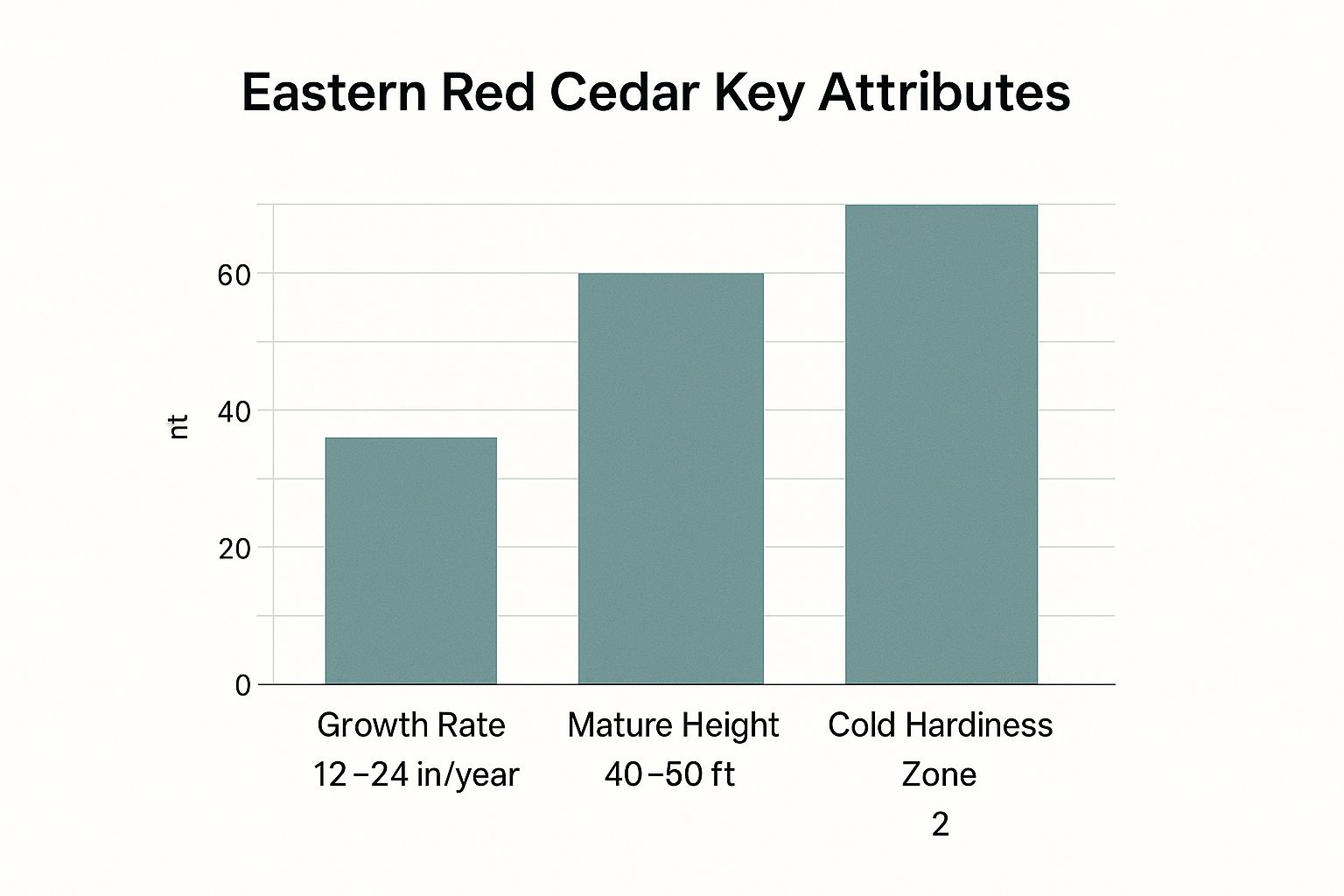
Its mature height and fast growth rate mean you can achieve significant privacy in just a few years.
Planting and Installation Tips
To create a seamless green wall, follow these guidelines for planting in the Lehigh Valley:
- Spacing: Plant individual trees 6 to 8 feet apart. This gives them room to grow while ensuring their branches interlock to form a dense screen.
- Timing: The best time to plant in our area is in the spring or early fall. This gives the root system time to establish.
- Location: Choose a location that receives full sun for at least six hours a day.
2. American Arborvitae (Thuja occidentalis)
The American Arborvitae is a classic in landscape design. It is one of the most popular plants for privacy screening in Lehigh Valley landscapes.
This native evergreen is known for its dense, column-like shape. It forms a lush living wall with minimal effort and provides reliable, year-round coverage.
Why It’s a Top Choice for Privacy
This plant’s popularity comes from its dense foliage. It quickly creates a solid visual barrier.
Unlike some faster-growing trees, Arborvitae maintains its fullness from top to bottom, ensuring complete privacy. Its narrow shape also makes it perfect for smaller yards or planting along property lines.
Key Performance Metrics
This chart highlights the key features that make American Arborvitae a great choice for privacy screens in our region.
| Attribute | Performance Data |
|---|---|
| Mature Height | 20-40 feet |
| Mature Spread | 10-15 feet |
| Growth Rate | Moderate (1-2 feet per year) |
| Sunlight Needs | Full Sun to Partial Shade |
| Soil Preference | Adaptable, prefers moist, well-drained soil |
| Hardiness Zone | 3-7 (Ideal for Lehigh Valley) |
Its manageable size and steady growth rate allow you to build a substantial screen without it overpowering your landscape.
Planting and Installation Tips
To create a seamless green wall, follow these guidelines for planting in the Lehigh Valley:
- Spacing: Plant individual trees 3 to 4 feet apart for a dense hedge. This close spacing encourages the branches to weave together quickly.
- Timing: The best time to plant in our area is in the spring or early fall.
- Location: Choose a location that receives at least six hours of direct sunlight.
3. Green Giant Thuja (Thuja standishii × plicata)
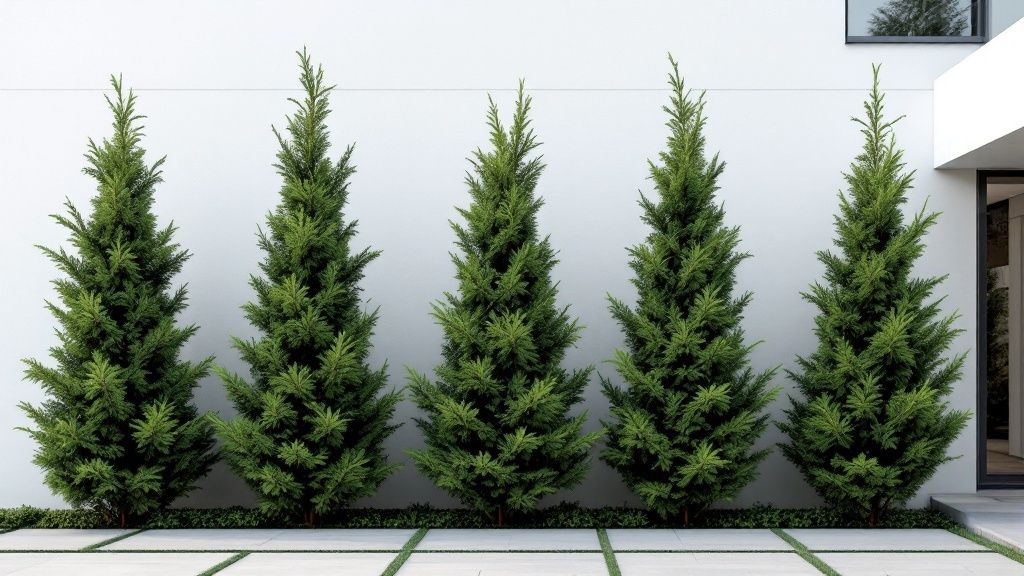
Green Giant Thuja has become the gold standard for creating fast and effective privacy screens. This evergreen grows vigorously, making it a popular choice for Lehigh Valley homeowners.
Its uniform, cone-like shape provides a clean, polished look. It complements a variety of home styles.
Why It’s a Top Choice for Privacy
This plant’s main advantage is its incredible growth rate. It can grow up to three feet per year in ideal conditions.
Homeowners can achieve a significant privacy barrier in just a few seasons. You can see how we used it to frame an elegant outdoor space in our Center Valley deck and patio project to see its dramatic impact.
Key Performance Metrics
This chart highlights the key features that make Green Giant Thuja a premier choice for privacy screening in our region.
| Attribute | Performance |
|---|---|
| Mature Height | 40-60 ft. |
| Mature Spread | 12-18 ft. |
| Growth Rate | Fast (2-3 ft./year) |
| Sun Exposure | Full Sun to Part Shade |
| Soil Preference | Adaptable, prefers well-drained |
| Hardiness Zone | 5-8 |
| Foliage | Evergreen |
Its impressive height and fast growth rate make it one of the best plants for privacy screening when speed is a factor.
Planting and Installation Tips
To ensure your Green Giant Thuja screen thrives, follow these guidelines:
- Spacing: For a dense privacy screen, plant individual trees 5 to 6 feet apart. This spacing allows their branches to grow together.
- Timing: Plant in the spring or fall to allow the roots to establish.
- Location: Choose a site that receives at least six hours of direct sunlight per day. Plan for its mature size.
4. American Holly (Ilex opaca)
American Holly is a beautiful and classic choice for privacy. This native broadleaf evergreen offers dense, dark green leaves and bright red berries in the winter.
It provides excellent year-round screening. It also adds a touch of traditional elegance to any landscape design.
Why It’s a Top Choice for Privacy
American Holly creates a solid, living wall that is both functional and attractive. Its dense foliage blocks views effectively.
The spiny leaves also make it a good deterrent for unwanted foot traffic along property lines. As a native plant, it supports local bird populations, which feed on its berries.
Key Performance Metrics
American Holly provides a sturdy and beautiful screen.
- Mature Height: 15-30 feet
- Mature Spread: 10-20 feet
- Growth Rate: Slow to Moderate (1 foot per year)
- Sunlight Needs: Full Sun to Part Shade
- Soil Preference: Prefers well-drained, slightly acidic soil
- Key Feature: Provides winter interest with red berries
Its steady growth and beautiful appearance make it a valuable long-term investment in your landscape.
Planting and Installation Tips
Proper planting is key for a healthy American Holly hedge.
- Spacing: Plant trees 5 to 6 feet apart to create a dense, interlocking screen.
- Timing: The best time for planting is in the early fall or spring.
- Location: Choose a site with full sun and good drainage. It can tolerate some shade.
5. Privet (Ligustrum species)
For those who want a classic, formal hedge, Privet is an excellent choice. This shrub is known for its incredible density and rapid growth.
This makes it one of the best plants for privacy screening where a manicured look is desired. Its dense branching provides a good visual barrier even in winter.
Why It’s a Top Choice for Privacy
Privet’s main advantage is its ability to quickly form a thick, living wall. Its fast growth rate means you can achieve a dense hedge in just a few seasons.
This makes it a perfect screen for patios, pools, and backyard entertainment areas. It responds well to trimming, so you have complete control over its height and width.
Key Performance Metrics
The following chart highlights the key features that make Privet a strong choice for formal privacy screens in our region.
Its rapid growth and adaptable height make it a top choice for creating custom, formal privacy hedges.
Planting and Installation Tips
To create a seamless and dense hedge, follow these guidelines:
- Spacing: Plant individual shrubs 2 to 3 feet apart. This close spacing is crucial for forming a solid wall.
- Timing: Plant in the spring or early fall to ensure a healthy start.
- Location: Privet performs best in full sun to partial shade. More sun will result in denser growth.
6. Inkberry Holly (Ilex glabra)
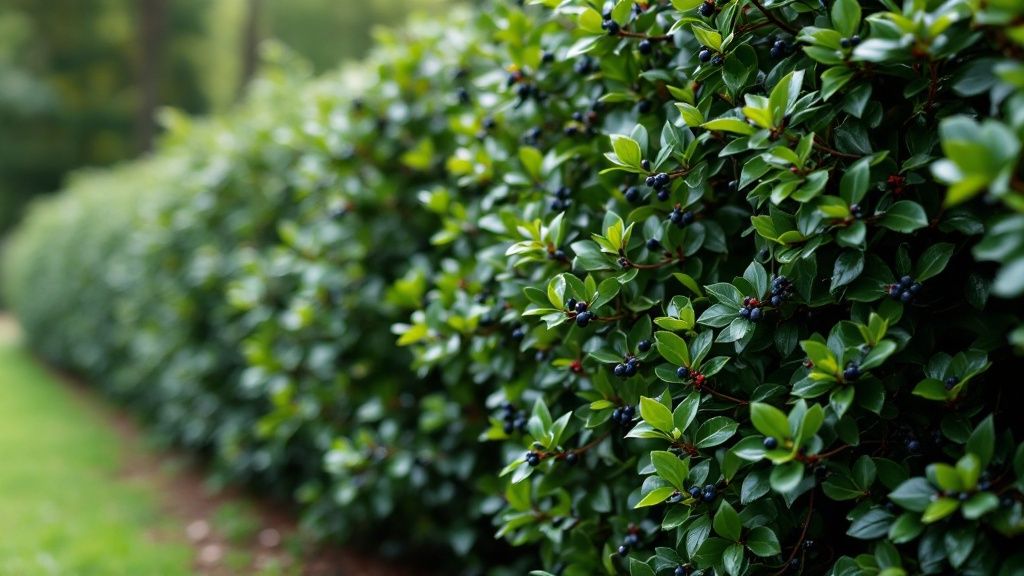
For a more natural-looking privacy screen, Inkberry Holly is an excellent native evergreen. This shrub offers dense, year-round screening with glossy dark-green leaves.
Inkberry Holly provides a softer, more textured look. This makes it one of the best plants for privacy screening in Lehigh Valley landscapes that aim for a relaxed style.
Why It’s a Top Choice for Privacy
Inkberry Holly’s value is in its adaptability and refined look. Its dense growth creates an effective visual block from the ground up.
This is perfect for screening patios or property lines without overwhelming the space. You can see how we incorporated it into a design in our Emmaus poolside resort project to add texture and year-round privacy.
Key Performance Metrics
This shrub’s moderate growth and manageable height make it a great choice for smaller spaces or layered plantings.
- Mature Height: 5-8 feet
- Mature Spread: 5-8 feet
- Growth Rate: Slow to Moderate
- Sunlight Needs: Full Sun to Part Shade
- Foliage: Evergreen
Its compact size is perfect for creating low to medium-height screens that feel lush and intentional.
Planting and Installation Tips
To establish a healthy Inkberry Holly hedge, follow these guidelines:
- Spacing: Plant individual shrubs 3 to 4 feet apart. This spacing encourages the branches to grow together quickly.
- Timing: The best time to plant is in the spring or early fall.
- Location: It thrives in full sun to partial shade. It is an excellent choice for areas with moist soil.
From Plants to a Complete Private Oasis
Choosing the right plants is a key first step. However, creating a truly luxurious backyard retreat involves much more than just planting a row of trees.
An expert design from Kennedy Design + Build considers everything from soil composition on your Allentown property to the microclimate of your Center Valley yard. This ensures that your privacy screen doesn’t just grow, but thrives.
This approach transforms a simple row of trees into a beautiful part of your custom-designed sanctuary.
Conclusion: Your Private Lehigh Valley Retreat Awaits
Creating a private, elegant outdoor space starts with a smart design. Choosing the best plants for privacy screening is an important part of that plan.
Options like Green Giant Thuja offer fast growth, while American Holly provides classic, year-round beauty. The right selection depends on your goals, your property, and your overall vision.
Ready to transform your outdoor space? The design-build team at Kennedy Design + Build can help you create a private retreat that is both beautiful and functional.
Schedule your design consultation with Kennedy Outdoor Living today.
Frequently Asked Questions (FAQs)
1. How long will it take for my new plants to create a full privacy screen? The time it takes depends on the plant you choose. Fast-growing options like Green Giant Thuja can provide significant privacy in just 2-3 years, while slower growers like American Holly may take 5-7 years to form a dense screen. Our design process helps select plants that match your timeline and goals.
2. What is the typical budget for a professional privacy screening installation? The cost of a privacy screening project varies based on the size of the area, the type and maturity of the plants selected, and site preparation needs. A well-designed screen is an investment in your property’s value and your enjoyment of your home. We discuss budget and options during our initial design consultation.
3. Can you design a privacy screen that looks good in all four seasons? Absolutely. We specialize in creating four-season interest. By using a backbone of evergreen plants like Arborvitae or Holly and layering in other plants with seasonal features, we ensure your privacy screen looks beautiful and remains functional all year long.
4. How does Kennedy Design + Build choose the right plants for my specific property? Our process begins with a thorough site analysis. We assess your soil type, sunlight patterns, and specific needs for privacy in your Lehigh Valley landscape. We then recommend plants that are proven to thrive in our local climate and will integrate seamlessly with your overall design vision.
5. Do you combine privacy plants with fences or walls? Yes, we often design layered solutions. Combining a structural element like a fence or stone wall with plantings creates immediate privacy while the plants mature. This approach adds depth, texture, and sophistication to your landscape design.