Landscape Designer vs Landscape Architect: Which Pro Is Right for Your Project?
Are you ready to create an amazing outdoor space? One of the first big questions you’ll face is who to hire. Should you choose a landscape architect or a landscape designer?
While the titles sound alike, their roles are very different. Picking the right professional is key to bringing your vision to life. This is especially true for homeowners planning a major upgrade here in the Lehigh Valley.
The main difference is this: a landscape architect is a state-licensed pro. They handle large, complex projects that need structural engineering, grading plans, and permits. Think public parks or tricky residential lots with retaining walls and drainage problems.
A landscape designer, on the other hand, focuses on how a space looks and feels. They are the artists who create beautiful, functional gardens and outdoor living areas for homes. Your choice depends on whether your project needs official engineering plans or is more about creative planting and layout.
Choosing Your Outdoor Project Professional
The difference between these roles comes from their training and qualifications. Landscape architects complete tough degree programs and must pass exams to get their state license. This is because their work involves public safety and technical challenges like grading, drainage, and building stable structures. You can learn more about their professional journey and focus to see how deep their training goes.
Landscape designers are also highly skilled and often have degrees. However, they are not required to be licensed. They focus their expertise on planting designs and creating beautiful garden layouts for homeowners.
This image gives a great visual breakdown of the differences in education, licensing, and even typical earnings.
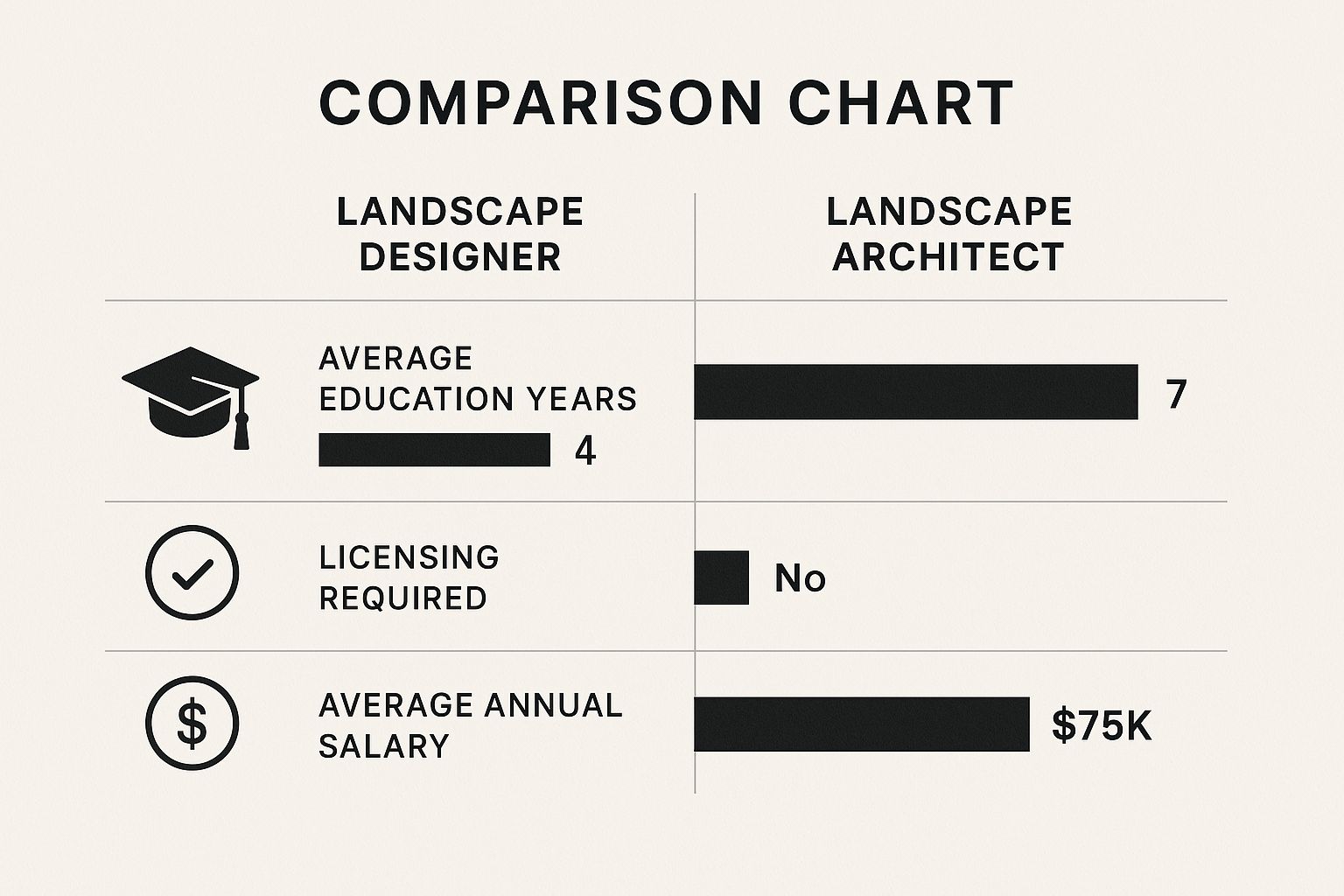
As you can see, becoming a landscape architect requires a big investment in formal education and licensing. This reflects the technical work they do.
At Kennedy Design + Build, we use a design-first approach. This is perfect for creating the custom outdoor living spaces our clients in Coopersburg and Center Valley dream of. We combine a designer’s creative vision with the hands-on building skill needed to make that vision a reality. Check out our landscape and hardscape services to see how we bring these amazing projects to life.
For a quick side-by-side look, this table breaks down the main differences.
Quick Comparison: Landscape Architect vs. Landscape Designer
| Attribute | Landscape Architect | Landscape Designer |
|---|---|---|
| Licensing | State licensure required | No state license required |
| Typical Projects | Public parks, large commercial sites, complex residential | Residential gardens, patios, planting plans |
| Core Focus | Technical, structural, site engineering | Aesthetic, horticultural, spatial design |
| Permits | Can stamp and seal drawings for permits | Cannot stamp plans for structural permits |
This comparison helps clarify which expert is the right fit. For large projects with big site changes, an architect is necessary. For creating a beautiful backyard oasis, a skilled designer is often the perfect partner.
Understanding Education and Licensing Differences
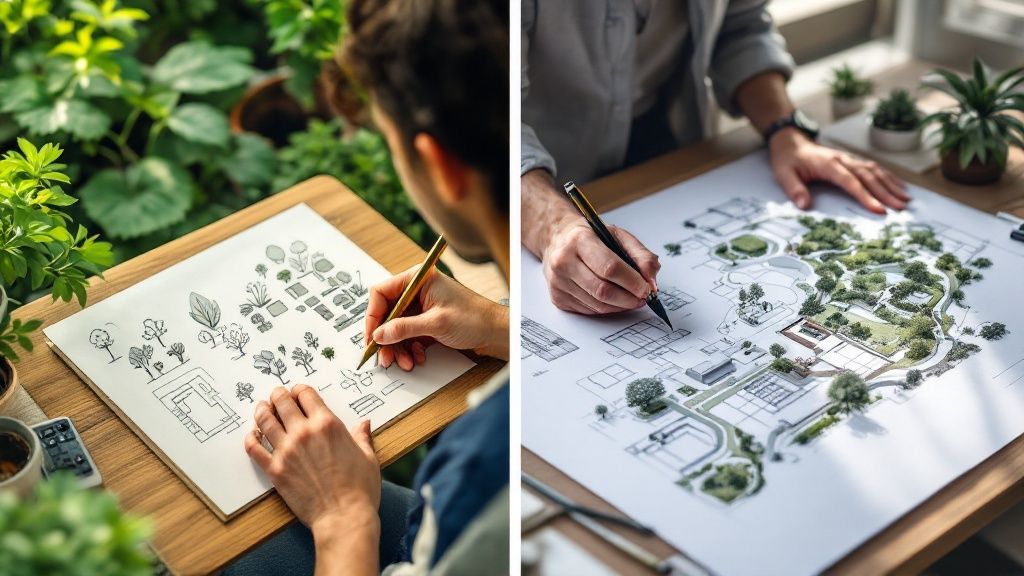
When comparing a landscape designer vs. a landscape architect, the clearest difference is their education and legal credentials. It’s not just about titles. These formal requirements decide what each professional can legally design and build.
For homeowners in the Lehigh Valley, this distinction is very important. It often determines who can manage big projects that need official permits, like those with major grading or structural changes.
The Landscape Architect’s Path to Licensure
Becoming a licensed landscape architect is a tough, regulated journey. It takes years of special university education and a difficult licensing process. This ensures they can handle a project’s technical side safely and correctly.
First, most states require a professional degree from an accredited university. This education is not just about plants; it covers engineering, stormwater management, and complex site analysis.
After graduating, they must complete an internship and pass the national Landscape Architect Registration Examination (LARE). This difficult exam covers everything from construction plans to public health and safety. The whole process certifies they are qualified to design and oversee complex structures like large retaining walls and drainage systems.
This license is the key difference. It legally allows a landscape architect to stamp and seal construction drawings. This is a must-have step for getting building permits for many large hardscape projects.
The Landscape Designer’s Expertise
Landscape designers, on the other hand, usually do not need a state license. Their expertise comes from horticultural degrees, professional certifications, or years of valuable hands-on experience.
Designers are masters of creating beautiful and functional outdoor spaces. Their skills focus on the elements that shape the look and feel of your yard:
- Horticulture and Plant Science: They have deep knowledge of which plants will grow well in our local conditions, from Allentown to Center Valley.
- Spatial Design Principles: This is the art of creating flow, balance, and visual appeal in a garden or patio design.
- Material Selection: They are experts at choosing the perfect materials to match your home’s style, last a long time, and fit your budget.
While they don’t handle engineering plans for major structures, their role is essential for creating a beautiful outdoor environment. They are the visionaries who turn your personal style into a detailed plan for plantings, layout, and overall look.
This is why nearly all U.S. states have such strict requirements for landscape architects. You can explore more about these professional requirements to get a full picture of their training and authority.
Comparing Project Scope and Core Services
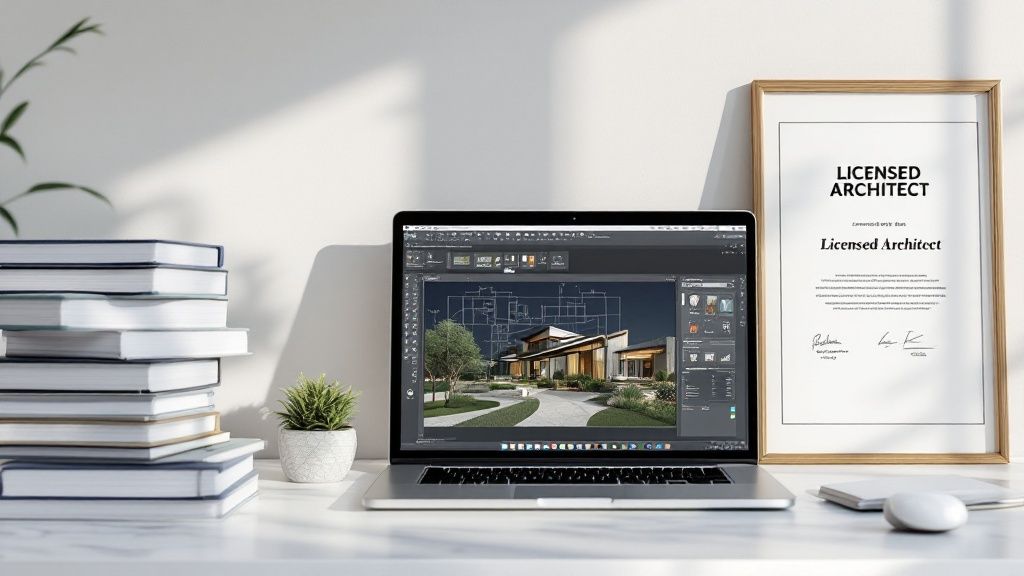
This is where you see the real difference in what each professional can do for your property. Their project scopes come directly from their training. One focuses on technical engineering, and the other on beautiful design.
The “landscape designer vs. landscape architect” debate often comes down to the scale and complexity of your project.
When to Hire a Landscape Architect
A landscape architect is your expert for large, complex projects that need serious technical skill. You hire them when a property has major challenges or needs formal construction plans to get permits.
This means they work on the foundation of a site long before anyone plants a flower. Their main job is to make sure the land is properly engineered and structurally sound.
Landscape architects handle the heavy lifting of site development. Their expertise includes:
- Comprehensive Site Analysis: Looking at land shape, soil, water, and environmental factors.
- Grading and Drainage Plans: Engineering the land to manage water flow and prevent erosion. This is vital for properties with steep slopes in the Lehigh Valley.
- Navigating Building Codes: Creating and stamping the technical drawings required by local towns like Allentown or Coopersburg to get building permits.
- Structural Hardscape Design: Planning large features like retaining walls or complex pool installations.
In short, if your project involves moving a lot of earth or requires a permit for a large structure, a landscape architect is the only one legally qualified to lead it.
For new construction or major renovations with big site challenges, an architect’s involvement is often a legal requirement. Their plans ensure safety and compliance from the ground up.
When to Hire a Landscape Designer
While an architect engineers the “bones” of the landscape, a designer brings it to life with beauty and color. Landscape designers are masters of the aesthetic and plant-focused side of home projects. They craft spaces that reflect your personal style and improve your daily life.
A designer’s services are all about the visual and sensory experience of your outdoor space. They specialize in creating detailed environments that feel like a natural part of your home.
They create detailed plans for every visual element. They will select the perfect materials for a new patio, dream up colorful planting plans, and design the ideal layout for a stylish outdoor kitchen. If your goal is to build a beautiful and functional outdoor living area without needing major site engineering, a designer is the perfect fit.
The difference is clear in practice. An architect might design the complex drainage system for a patio, but a designer selects the pavers, plans the lush plants around it, and chooses the perfect lighting to create a warm, inviting atmosphere for your family in Center Valley.
When You Need to Hire a Landscape Architect

While a landscape designer is a great choice for many home projects, some situations absolutely require the special skills of a licensed landscape architect. Their expertise is necessary when your project involves structural engineering, legal rules, and complex site challenges.
If your vision for your Lehigh Valley home involves changing the land itself, an architect is the right professional. This is especially true for properties with tricky terrain, like steep slopes that need major grading or advanced drainage systems.
When a Permit Requires a Professional Stamp
The clearest sign you need a landscape architect is when your local town—whether in Allentown or Coopersburg—requires stamped and sealed drawings to issue a building permit. Their state license gives them the legal authority to sign off on major structural elements. This certifies that the design is safe and meets local codes.
This requirement often applies to projects like:
- Large Retaining Walls: Any wall over a certain height (often four feet) needs an architect’s or engineer’s stamp. This guarantees it can safely hold back thousands of pounds of soil.
- Complex Pool Installations: Detailed pool designs, especially those on sloped land or close to property lines, almost always need an architect’s oversight.
- Decks and Pergolas: Large, elevated, or structurally complex overhead structures often fall into this category.
A landscape architect’s signature on a set of plans is more than a formality. It’s a legal confirmation that the design is structurally sound and meets all local safety regulations. This protects you and your investment.
Navigating Sensitive Sites and Regulations
Another time an architect is essential is when your property is on an environmentally sensitive site. This could mean your land is near wetlands, on a steep hillside, or in a protected conservation area.
A landscape architect has the technical knowledge to handle these complicated rules. They can create designs that work with the natural environment while still delivering your dream backyard. Their expertise is critical for getting approvals from local authorities.
For a real-world example of how complex pool projects and site challenges come together, you can explore our work on this Emmaus poolside resort project. In these situations, hiring an architect is about responsible and successful project completion.
When a Landscape Designer Is the Perfect Fit
Sometimes, the best professional for the job has the right creative eye, not the most complex engineering license. For many high-end home projects, a landscape designer brings the ideal mix of art, plant knowledge, and spatial planning. They create truly stunning outdoor living spaces.
If your project is about beauty, lifestyle, and enjoyment, a designer is exactly who you need. They excel at turning your vision into a beautiful reality without needing complex site engineering.
Where a Designer’s Skills Shine
A designer’s work is all about the look, feel, and function of your space. They are the experts you call when you want to create an environment that reflects your personal style.
This is where a talented landscape designer makes a real difference:
- Detailed Planting Plans: They know which plants, trees, and shrubs will thrive in the Lehigh Valley climate. This results in a garden that offers color and texture all year.
- Hardscape Aesthetics: Designers are masters at selecting the perfect materials—from pavers for a patio to natural stone for a walkway—that complement your home’s style.
- Creating Outdoor Rooms: They are skilled at creating functional layouts for outdoor kitchens, cozy fire pit areas, and inviting patios that feel like a seamless part of your home.
- Themed Garden Creation: Whether you dream of a lively pollinator garden or a calm, modern retreat, a designer can bring a specific mood to life.
A landscape designer’s main job is to turn your vision into a beautiful, functional plan. They focus on the elements you see and experience every day.
Your Vision Realized in the Lehigh Valley
Here’s the bottom line: if your project doesn’t require major structural changes, complex grading, or stamped plans for building permits, a great designer is what you need. Their design-first approach, like ours at Kennedy Design + Build, is all about creating spaces that are both gorgeous and practical for homeowners in Allentown, Coopersburg, and the surrounding areas.
This focus ensures the final result is a thoughtfully planned outdoor oasis. You can see how this design-focused approach works in projects like this Lower Saucon outdoor oasis. For most homeowners looking to build their dream backyard, a landscape designer has the exact expertise needed to make it happen.
Frequently Asked Questions
When deciding between a landscape designer and a landscape architect, a lot of questions come up. Here are some of the most common ones we hear from homeowners across the Lehigh Valley.
1. Does Kennedy Design + Build have architects or designers on staff?
Our team is built around expert landscape designers who specialize in high-end residential outdoor living. Our design-first approach means every project is beautifully planned from the start. For projects that need structural plans, we partner with our trusted network of licensed engineers and architects to handle the necessary permits.
2. Can a landscape designer build a retaining wall?
A landscape designer is perfect for designing the look of a retaining wall—choosing the right materials and placement to make it a beautiful feature. However, walls over a certain height (which varies by town) need a plan stamped by a licensed professional for a permit. We manage this entire process for you to ensure your project is seamless and safe.
3. What is the design process for a hardscape project?
Our process starts with a detailed consultation to understand your vision for your home, whether you’re in Coopersburg or Center Valley. From there, we create a detailed 3D design rendering. This virtual walkthrough lets you see exactly how your new space will look. Once you approve the design, our skilled craftspeople get to work.
4. How long does a landscape design project take?
The timeline depends on the project’s complexity. The initial design phase can take several weeks as we work with you to perfect every detail. The installation timeline is affected by the project’s scale, material availability, and weather. We are always transparent about the schedule from the beginning.
5. Which professional is better for increasing my home’s value?
Both can add significant value. An architect adds value by solving complex site challenges like drainage or slope issues. A designer excels at creating stunning curb appeal and beautiful living spaces that make buyers fall in love with a home. The “better” choice depends on your property’s specific needs.
Ready to transform your outdoor space? The experts at Kennedy Design + Build are here to bring your vision to life with unparalleled craftsmanship and a design-first approach. Schedule your design consultation today.