Does Landscaping Increase Home Value? A Lehigh Valley Guide
Quick Answer
Yes. Does improving the property's grounds increase home value? In most cases, it does, especially when you’re talking about thoughtful exterior design and permanent outdoor improvements rather than routine yard upkeep. Well-designed outdoor areas can raise value by up to 20% according to This Old House and Smart Money reporting summarized by Meadows Farms, and the strongest return usually comes from integrated features like patios, outdoor living areas, and mature plantings.
If you're looking at your yard and wondering whether a major outdoor project is worth it, that's a fair question. Homeowners in the Lehigh Valley often aren't deciding between doing nothing and planting a few shrubs. They're deciding whether to make a serious investment in a patio, pool area, lighting, or a full backyard layout.
That’s where the answer gets more useful. Does landscaping increase home value in the same way across all projects? No. A mowing service and a built-in outdoor kitchen don't belong in the same category, and treating them like they do leads to bad decisions.
The Data on Landscaping and Property Value
In the Lehigh Valley, the homes that command stronger offers usually share one trait outside. The site feels finished. Buyers can tell the difference between a property that gets routine yard service and one that has received real capital improvements.
The broader market research cited earlier supports that pattern. Well-planned exterior improvements can add meaningful value, but the return does not come from grass cutting, seasonal cleanup, or a fresh load of mulch by themselves. It comes from design and construction work that permanently improves how the property looks, functions, and sells.
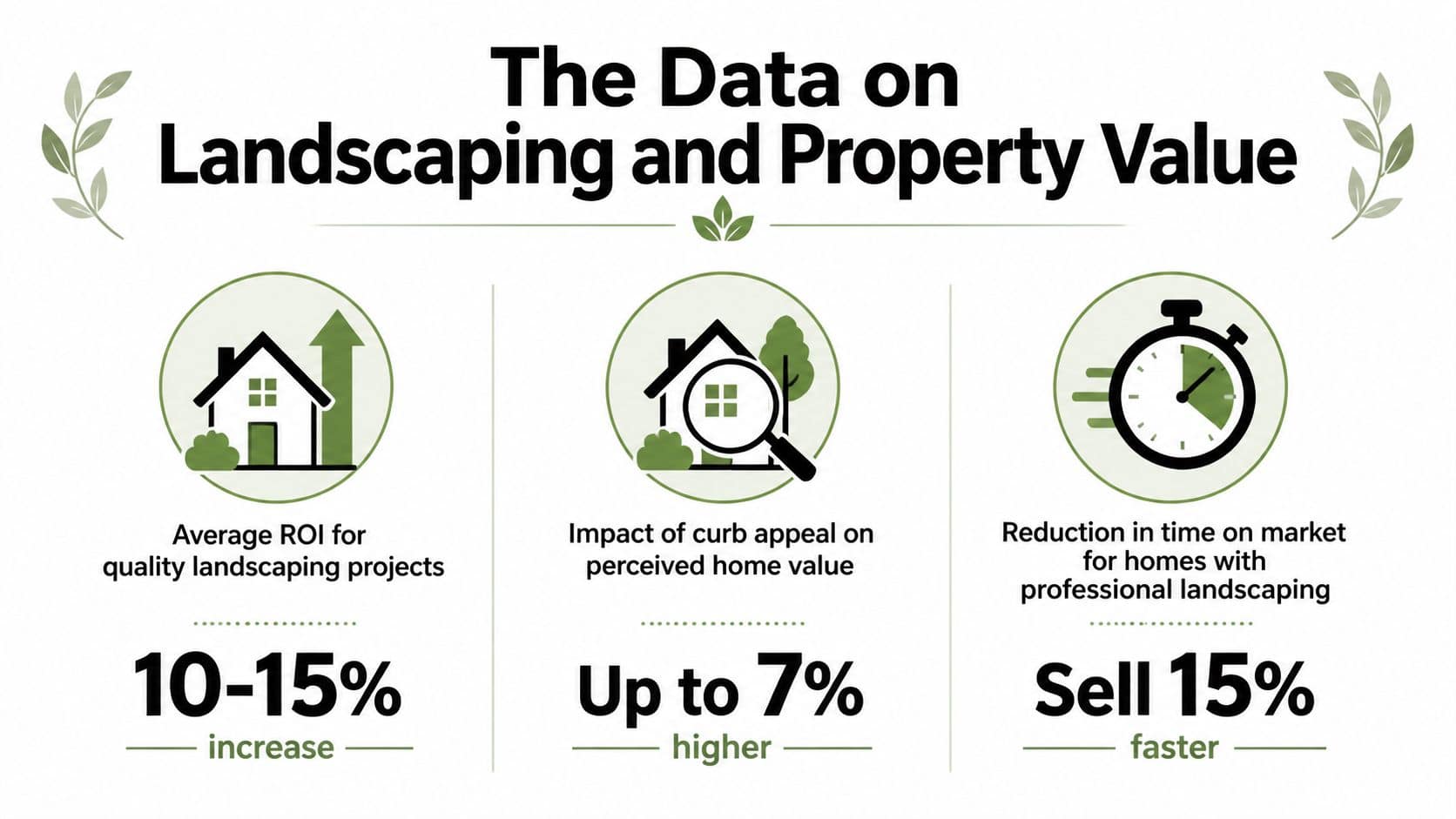
What the value looks like in real life
On actual projects, buyers respond to usability first. A front walk with proper grading, stone edging, layered planting, and low-voltage lighting reads as finished construction. A backyard with a built patio, defined dining area, drainage that works, and clear circulation feels like added living space.
That matters more in the upper end of the Lehigh Valley market, where buyers expect the exterior to match the house. A large custom home in Saucon Valley or Upper Macungie loses momentum fast if the backyard still feels unresolved. The square footage may be there, but the experience is not.
I see the same pattern on consultations. Homeowners often group mowing, pruning, patios, lighting, retaining walls, and pool surrounds under one word: exterior enhancements. The market does not. Buyers treat maintenance as upkeep. They treat built outdoor design as part of the property itself.
Buyers rarely pay a premium for routine service. They do pay for an outdoor environment that feels complete and ready to use.
Why appraisal and buyer interest often rise together
Some of the return shows up in appraised value. Some shows up in faster decisions, stronger perceived quality, and fewer objections during a sale. Those two tracks are different, but they tend to support each other when the project solves real site problems and adds usable outdoor living.
Three factors drive that response:
- The exterior sets the tone early: Buyers form opinions before they reach the foyer.
- Permanent improvements add function: Patios, walls, lighting, drainage, and entry sequences change how the property works every day.
- Finished grounds suggest better ownership: Clean construction details outside often signal consistent care inside the home as well.
For homeowners weighing outdoor work against other resale improvements, Edinhart's guide to maximizing home value gives helpful context on how exterior projects fit into the full buyer decision.
Not All Landscaping Is Created Equal
This is the distinction that matters most. People use the word landscaping to describe everything from weekly mowing to a full design-build project with stonework, lighting, drainage, grading, and outdoor living features. Those aren’t the same investment.
Routine upkeep preserves appearance. Permanent site improvements change the property itself.
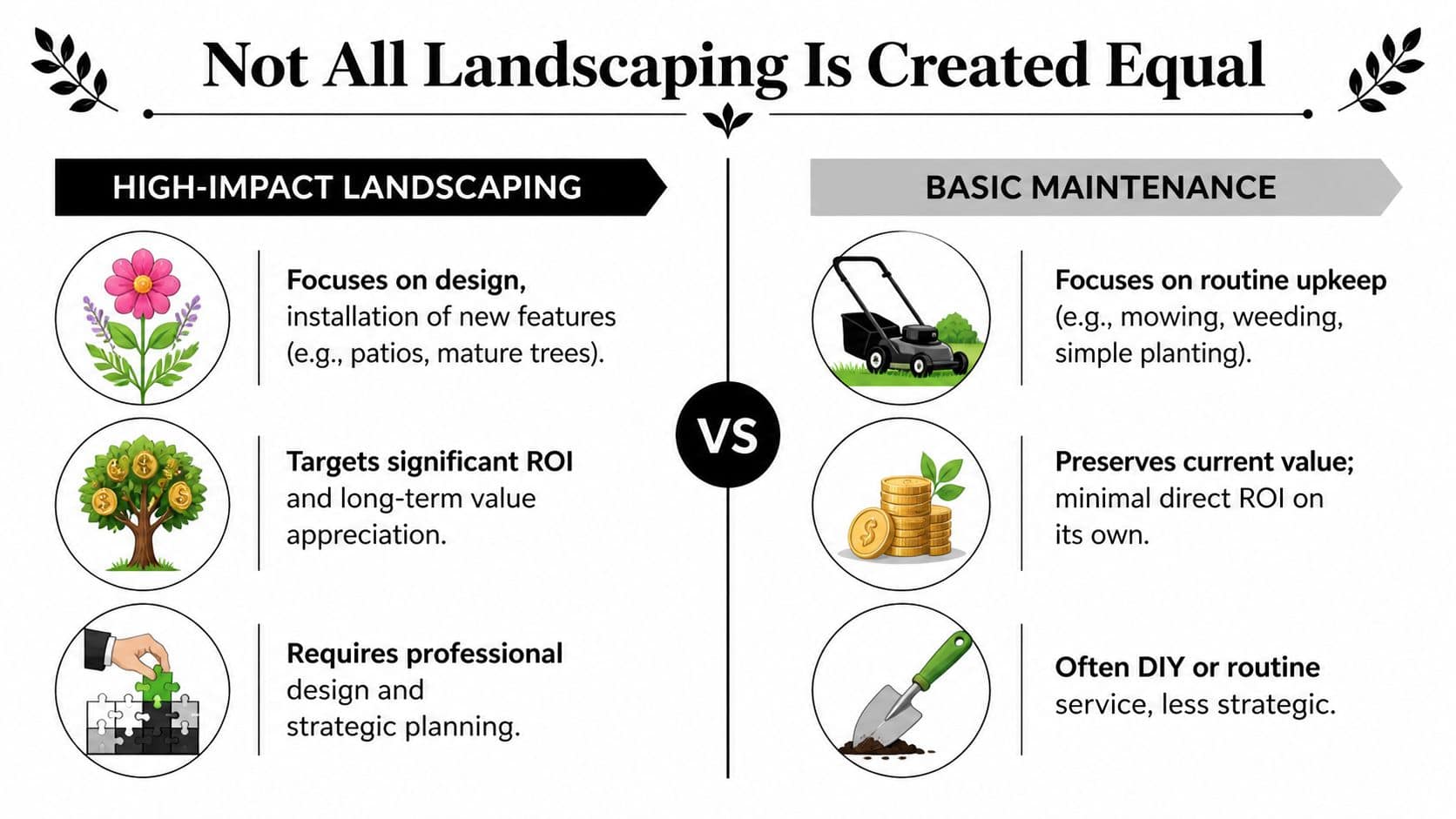
Maintenance protects value
Basic maintenance still matters. If beds are overgrown and edges are sloppy, buyers notice. Angi’s summary of National Association of Realtors data says lawn maintenance can deliver 217% return, and basic maintenance such as mulching, pruning, and weeding can boost curb appeal by 7% while recouping 104% ROI on average within the cost ranges they cite in that same piece. It also notes that landscaping can recover 100-200% of its cost when it fits the surroundings, and that integrated projects like decks and patios bring stronger long-term value than simple upkeep alone in Angi’s discussion of smart landscaping value.
That doesn’t mean maintenance is a substitute for design. It means maintenance keeps a property from slipping backward.
Design-build work creates new value
A built retaining wall, a properly scaled patio, a covered structure, or a lighting plan changes how the property lives. That’s capital improvement territory. You’re not just preserving the current condition. You’re creating features the home didn’t have before.
Here’s a simple way to separate the two:
| Type of work | Main purpose | Effect on value |
|---|---|---|
| Mowing, trimming, cleanup | Preserve appearance | Helps prevent buyer objections |
| Bed refreshes and minor planting | Improve presentation | Modest visual improvement |
| Patio, wall, kitchen, pergola, lighting, poolscape | Add function and permanence | Stronger long-term market impact |
The strongest projects usually combine structure and atmosphere. A stone patio without lighting can feel unfinished at night. A fire feature without enough seating area may photograph well but function poorly. Thoughtful outdoor lighting and audio design can make the entire installation feel usable instead of decorative.
Practical rule: If the work adds everyday function, improves flow, and looks tied to the architecture of the house, it usually has a better chance of adding real value than cosmetic changes alone.
High-Impact Projects That Maximize Resale Value
Some projects consistently do more heavy lifting than others. The common thread is simple. They give buyers a finished outdoor space they can understand immediately.
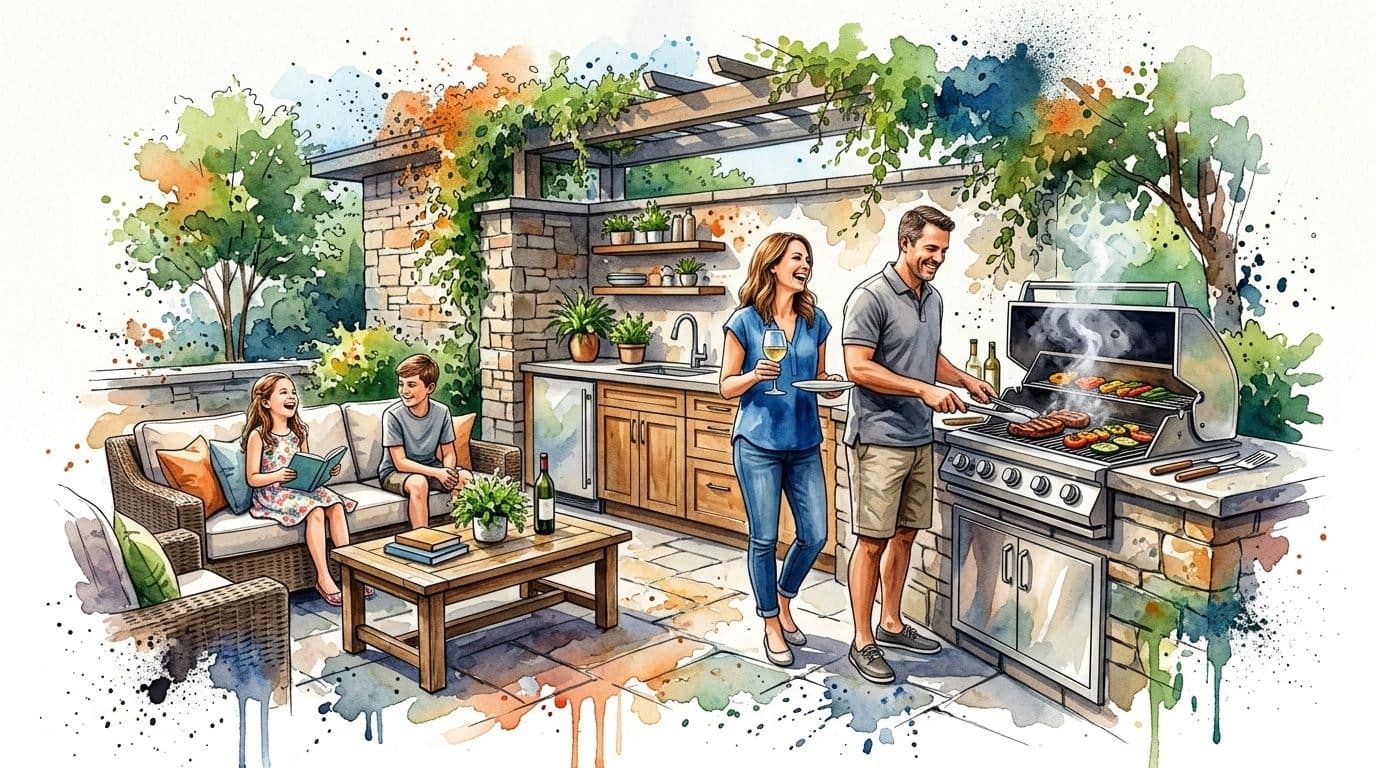
ASLA and NAR studies cited by Zimmerman Mulch put thorough landscaping at 15-20% value increases, with hardscape elements like patios and outdoor kitchens contributing most. The same source says quality level matters, with 10-30% uplifts based on quality, and notes that mature trees alone can add $1,000-$10,000 each in Zimmerman Mulch’s overview of landscaping and home value.
Patios and outdoor rooms
A patio does the most value work when it’s sized for actual furniture, circulation, and use. A cramped landing outside the back door isn’t an outdoor room. A patio that supports dining, lounging, and a connection back to the house is.
Material choice matters too. In this market, buyers can usually tell the difference between a surface that was chosen for longevity and one that was chosen because it was quick.
Outdoor kitchens and fire features
These features can be excellent value builders when they’re integrated into a larger plan. On their own, they can feel like accessories. Built into a patio layout with proper sightlines, prep space, seating, and lighting, they change how often the space gets used.
That’s the point. Buyers respond to a backyard that already solves the entertaining problem.
- Outdoor kitchens: Strongest when placed close enough to the house for convenience but far enough to create a real gathering zone.
- Fire features: Best when they anchor a seating area instead of sitting off to the side as a visual extra.
- Pergolas and pavilions: Useful when they create shade and structure without making the space feel crowded.
Pools and complete poolscapes
A pool can add appeal, but the pool alone rarely carries the value. The surrounding design does. Decking, planting, privacy, drainage, access, lighting, and transitions back to the home are what make the space feel complete.
For homeowners considering this route, it helps to think in terms of the entire environment rather than a single feature. A well-designed custom swimming pool project usually makes the most sense when it’s planned alongside the patio, plantings, and gathering areas from the start.
A buyer remembers the backyard where everything felt connected. They rarely remember the one with a long list of disconnected features.
Why a Design-First Approach Protects Your Investment
Value doesn’t come from checking boxes. It comes from fit. The best-return projects are the ones that look like they belong on that property, with that house, on that grade.
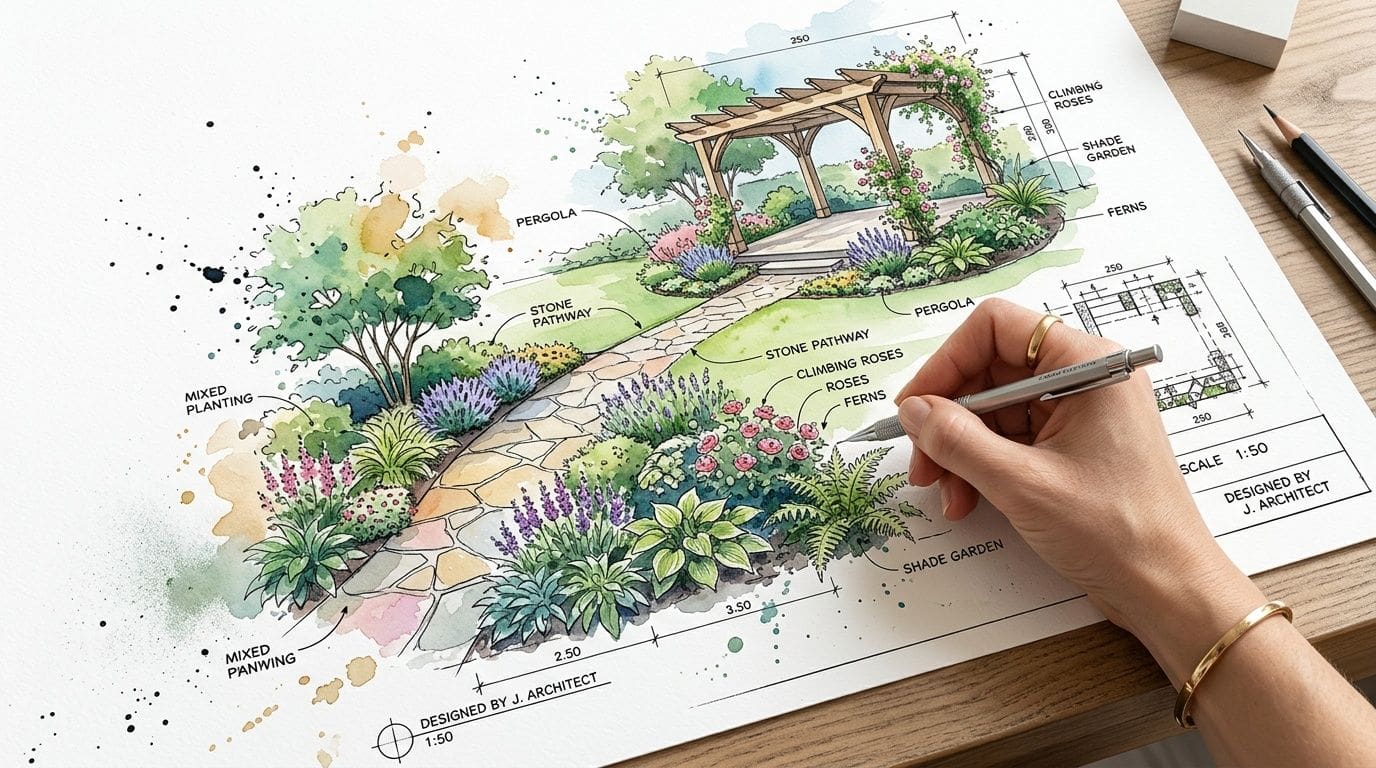
Virginia Tech research summarized by Pennsylvania Realtors found that homes with excellent landscaping command a 10-12% premium over homes with average conditions, and that the increase is driven largely by design sophistication and mature plant size in the Pennsylvania Realtors analysis of landscaping value.
Design choices that hold up
The phrase design sophistication sounds academic, but the idea is practical. Buyers notice proportion, balance, and maturity even if they can’t name those things directly.
That usually comes down to choices like these:
- Scale: The patio fits the home instead of looking undersized or oversized.
- Flow: Walkways lead somewhere logical and don't create awkward turns.
- Layering: Planting has foreground, middle, and backdrop rather than a flat row around the foundation.
- Focal points: The eye lands on a deliberate element, not visual clutter.
A design-first process also reduces expensive corrections later. Wrong grades create drainage issues. Poor spacing makes plant material look sparse at install or overcrowded a few seasons later. Misplaced structures block views or make furniture layout frustrating.
Visualization helps, but planning matters more
Homeowners often want to see the space before committing, and that makes sense. Tools that improve rendering quality can help you compare options and understand scale. If you’re interested in how visual mockups are evolving, Enhance landscape visual realism with AI offers a useful look at that side of the process.
Still, rendering isn’t the investment. The plan is. A strong concept has to survive grading, drainage, material transitions, and construction reality. A finished project like this complete exterior makeover in Breinigsville works because every element supports the others rather than competing for attention.
Good design protects resale value before the first shovel hits the ground. It prevents mismatched materials, awkward layouts, and features that look added on.
Long-Term Value and Lifecycle Considerations
The return on an outdoor project depends partly on how well it ages. Some choices look impressive on installation day and become a burden later. Others settle in, wear well, and continue to support the property for years.
For long-term value, durable materials usually beat trendy ones. Natural stone, quality pavers, properly built retaining walls, and well-selected plant material tend to hold their appearance better than quick cosmetic fixes. The goal isn’t to eliminate maintenance. It’s to avoid building a space that constantly asks for repair.
Build for lower upkeep from the start
A smart design can reduce future work without making the property feel bare.
- Choose lasting materials: Surfaces that age well usually protect appearance longer.
- Respect the site: Drainage, slope, and sun exposure should guide the layout.
- Avoid overplanting: Dense installs may look full quickly but can create pruning headaches later.
- Use lighting with purpose: Fixtures should support safety and evening use, not just decoration.
Strategic front-end planning matters for busy homeowners in places like Center Valley and Coopersburg. If the space is difficult to maintain, people use it less. If they use it less, its practical value drops with them.
Think beyond the build date
A good project should still make sense several years from now. Furniture should have room to move. Trees should have room to mature. Access for future repairs to the house, pool, or utilities should still exist.
For the homeowner’s side of property care, a broader annual home maintenance checklist can be helpful because outdoor improvements work best when they’re part of an overall habit of looking after the home. If you're considering a new entertaining area, the strongest results usually come from planning patios and decks as part of a larger outdoor living layout instead of as isolated add-ons.
Frequently Asked Questions About Landscaping and Home Value
Does front yard landscaping matter more than the backyard?
The front yard usually has the biggest effect on first impression because buyers see it first. The backyard often carries more lifestyle value because that’s where patios, kitchens, fire features, and gathering areas live. The strongest properties do both well, but if you have to prioritize, start with whatever is most visibly unfinished.
Is a patio a better investment than basic planting?
In many cases, yes. Planting helps soften the property and frame the home, but a patio adds usable living space. Buyers usually understand the value of a finished surface for dining, seating, and entertaining much faster than they understand the value of decorative planting alone.
Do pools always increase home value?
Not always. A pool can be a strong asset for the right property and buyer, but it needs to fit the home, lot, and neighborhood. The poolscape matters as much as the pool itself, and poor placement or a disconnected layout can weaken the return.
Should I do landscaping before selling my house?
If the exterior feels neglected or incomplete, doing some work before listing often makes sense. The right approach depends on whether the property needs cleanup, stronger curb appeal, or a more substantial outdoor feature to compete in the market. A design-build project is a bigger decision than a listing touch-up, so the timing should match your goals.
How do I know whether a project is too custom for resale?
A project becomes risky when it reflects one owner’s taste more than the property itself. Materials, layout, and features should relate to the architecture of the house and the way most buyers would use the yard. Custom doesn’t hurt value when it still feels broadly livable.
Is landscaping or hardscaping better if I want long-term value?
Usually, the best answer is a mix. Hardscaping gives structure, usability, and permanence. Landscaping adds softness, privacy, and maturity over time. A property with only hard surfaces can feel severe, while a yard with only planting may lack function.
Begin Your Landscape Transformation
If you’re still asking does landscaping increase home value, the practical answer is yes, when the work is intentional and built to last. If you want to explore what would make sense for your property, start with a design conversation through the Kennedy contact page.
If you’re planning a custom patio, pool, outdoor kitchen, lighting plan, or a full outdoor living project in the Lehigh Valley, Kennedy Outdoor Living is available for a low-pressure conversation about your property, your priorities, and what a well-designed investment could look like. You can also call (610) 854-9993 or visit them in Center Valley, PA 18036.