Inground Pool vs Above Ground Pool in the Lehigh Valley
Quick Answer
For most Lehigh Valley homeowners planning a long-term outdoor living space, an inground pool makes more sense because it becomes part of the property, works with patios and hardscapes, and can support stronger resale value. An above-ground pool fits better when speed, lower upfront commitment, and temporary use matter more than design flexibility.
If you're standing in your backyard trying to decide what kind of pool belongs there, you're probably not just choosing a place to swim. You're deciding what you want the whole property to become.
That matters in the Lehigh Valley, where a pool often sits at the center of a larger plan that may include a patio, dining area, shade structure, lighting, planting, and space for family gatherings. In an inground pool vs above ground pool decision, the right answer depends less on the pool itself and more on how you want to live outside for years to come.
The Fundamental Choice Permanence vs Portability
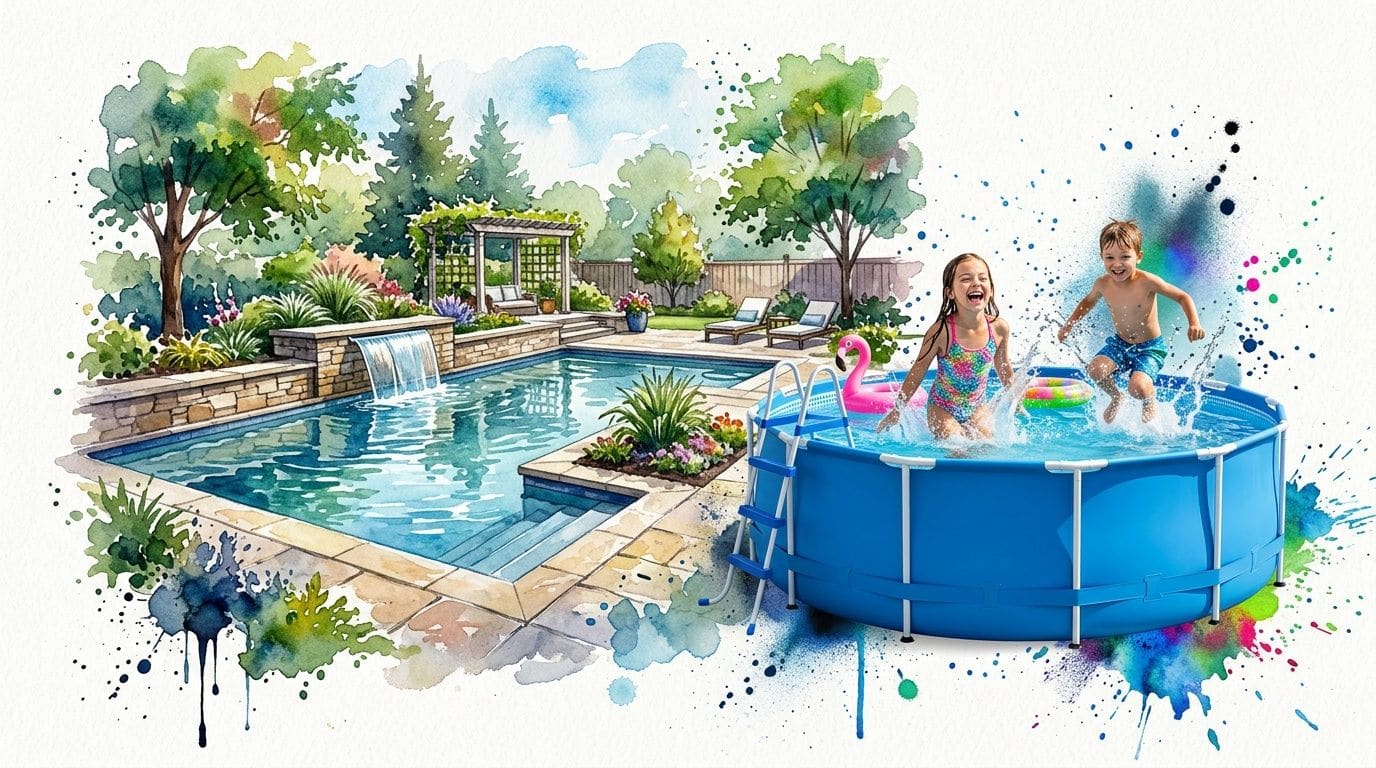
The cleanest way to think about this choice is simple. An inground pool is a permanent part of the property. An above-ground pool is a backyard addition that can work well, but it usually remains separate from the architecture of the home and its property features.
That difference affects everything around it. A permanent pool can anchor the layout of a terrace, define where retaining walls belong, shape how people move through the yard, and determine where an outdoor kitchen or pavilion should sit. A portable pool usually asks the rest of the yard to adapt around it.
Side-by-side comparison
| Decision area | Inground pool | Above-ground pool |
|---|---|---|
| Role on the property | Permanent built feature tied to the site design | More temporary and freestanding |
| Visual fit | Can blend with patios, walls, steps, and planting | Usually remains visually distinct |
| Shape and depth | Custom shapes, variable depths, integrated features | More limited forms and uniform depth |
| Long-term outlook | Better fit for homeowners planning to stay and invest in the property | Better fit for shorter-term use or lower commitment |
| Outdoor living potential | Works naturally with a full poolscape | Can support recreation, but has design limits |
What works in a high-end landscape
When a homeowner wants the backyard to feel like an extension of the house, inground almost always gives the design more room to succeed. Materials can carry from the home to the pool deck. Grade changes can be handled intentionally. Seating areas can face water instead of turning their back to it.
An above-ground pool can still be useful. It can be the right move for a family that wants summer use now without turning the whole yard into a construction project. But it rarely becomes the unifying element of the outdoor space.
Practical rule: If the pool is supposed to support the architecture of the house and the flow of the yard, inground is usually the stronger choice.
Where above-ground makes sense
There are cases where above-ground is the honest answer. Some homeowners want a pool for a limited season of life. Some don't want major excavation. Some want to preserve flexibility because they may rework the property later.
That's a reasonable choice. The problem comes when homeowners expect an above-ground pool to deliver the same design result as an inground installation. It usually won't. Even with surrounding decking, it tends to read as an added object rather than a built-in outdoor room.
Comparing Inground vs Above Ground Pools Key Decision Factors
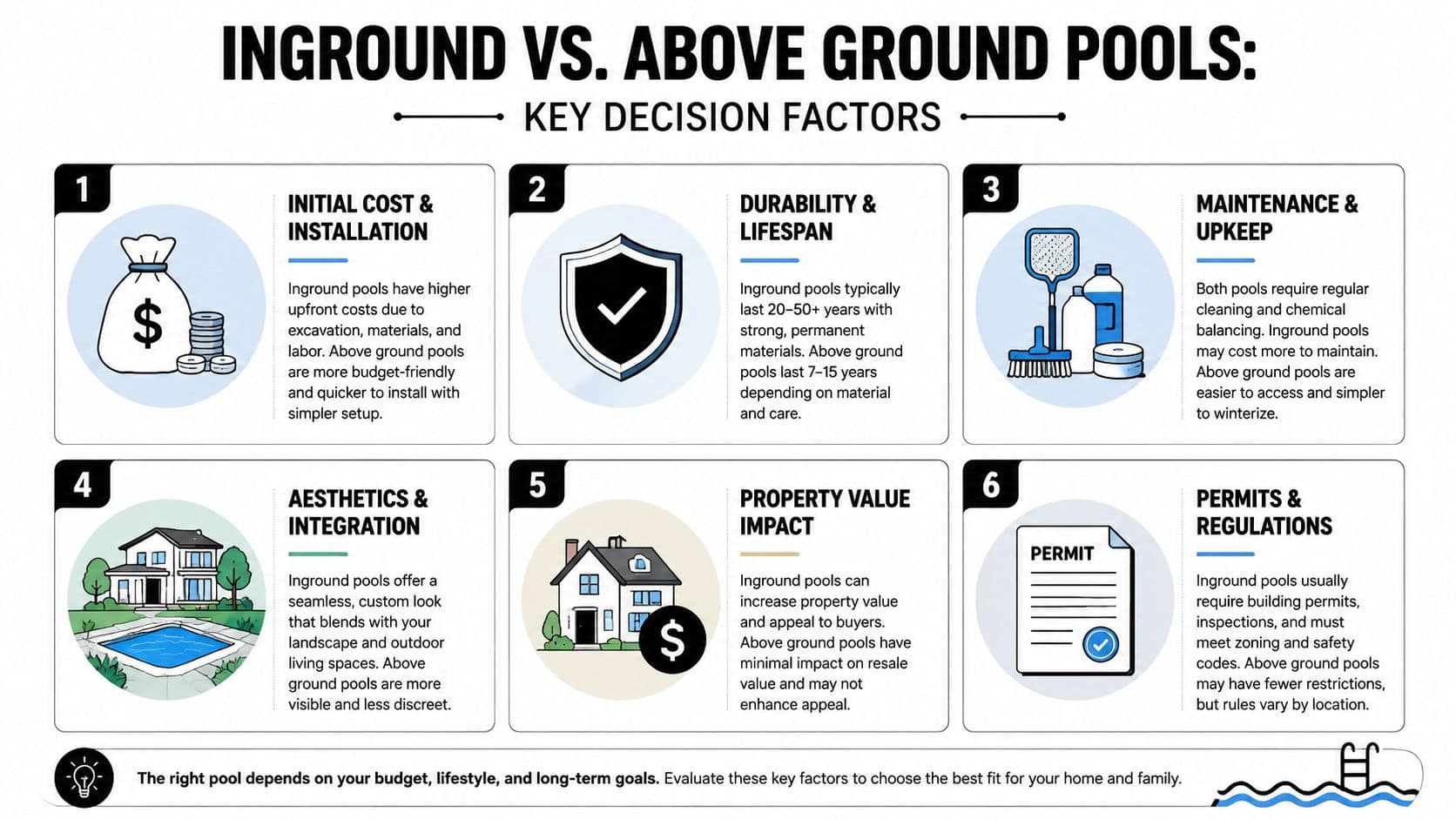
The practical differences show up quickly once you move past the initial question of cost. In an inground pool vs above ground pool comparison, the bigger issues are how the pool fits the site, how long it lasts, and what it allows you to build around it.
Aesthetics and landscape integration
An inground pool gives a designer a true site element to work with. It can align with a rear facade, connect directly to a custom patio, step down from a deck, or frame a view from inside the house. Planting beds, seat walls, fire features, and outdoor kitchens can all be arranged around it with intention.
An above-ground pool can be improved with thoughtful decking and screening, but it still has a visual edge and height that are hard to hide. On a property where clean lines, grading, and material transitions matter, that difference is noticeable.
If safety planning is part of your evaluation, FenceScape's guide to pool fences is a useful overview of fencing considerations for pool areas. Local requirements vary, so homeowners should still confirm details with their municipality and building department.
Customization and features
Inground pools quickly gain an advantage. According to Anthony & Sylvan's comparison of inground and above-ground pools, inground pools can last 50 to 100 years, support variable depths, custom shapes, and integrated features like waterfalls. The same source notes that above-ground pools typically last 7 to 15 years, are limited to uniform depths of 4 to 5 feet, and often need liner replacement every 5 to 9 years.
Those aren't minor differences. They affect how the pool feels in use and what the yard can become around it. Tanning ledges, steps that make sense, diving areas, shallow lounging zones, and transitions to surrounding hardscape all depend on design freedom.
A pool shape isn't just a visual decision. It changes circulation, furniture placement, and how guests use the space.
Durability in a Pennsylvania setting
Lehigh Valley properties deal with seasonal change, winter shutdowns, and freeze-thaw movement. That doesn't automatically rule out one pool type, but it does make durability and construction quality more important.
For homeowners building a long-term residence, inground is usually the better structural match. Its materials, placement, and surrounding hardscape can be planned as one system. Above-ground pools are more exposed by nature, and because they're often treated as temporary, the surrounding site work is usually lighter and less integrated.
Installation and daily use
An above-ground pool has a clear advantage in simplicity. It can be set up quickly, often with much less disruption to the yard. If your goal is straightforward summer recreation, that's a real benefit.
But daily use isn't only about swimming. It's about entering the pool, walking the deck barefoot, supervising kids, carrying food and towels, hosting guests, and moving between sun and shade. Inground pools usually perform better because the entire environment can be planned around those movements instead of added afterward.
The True Cost of Ownership and Property Value
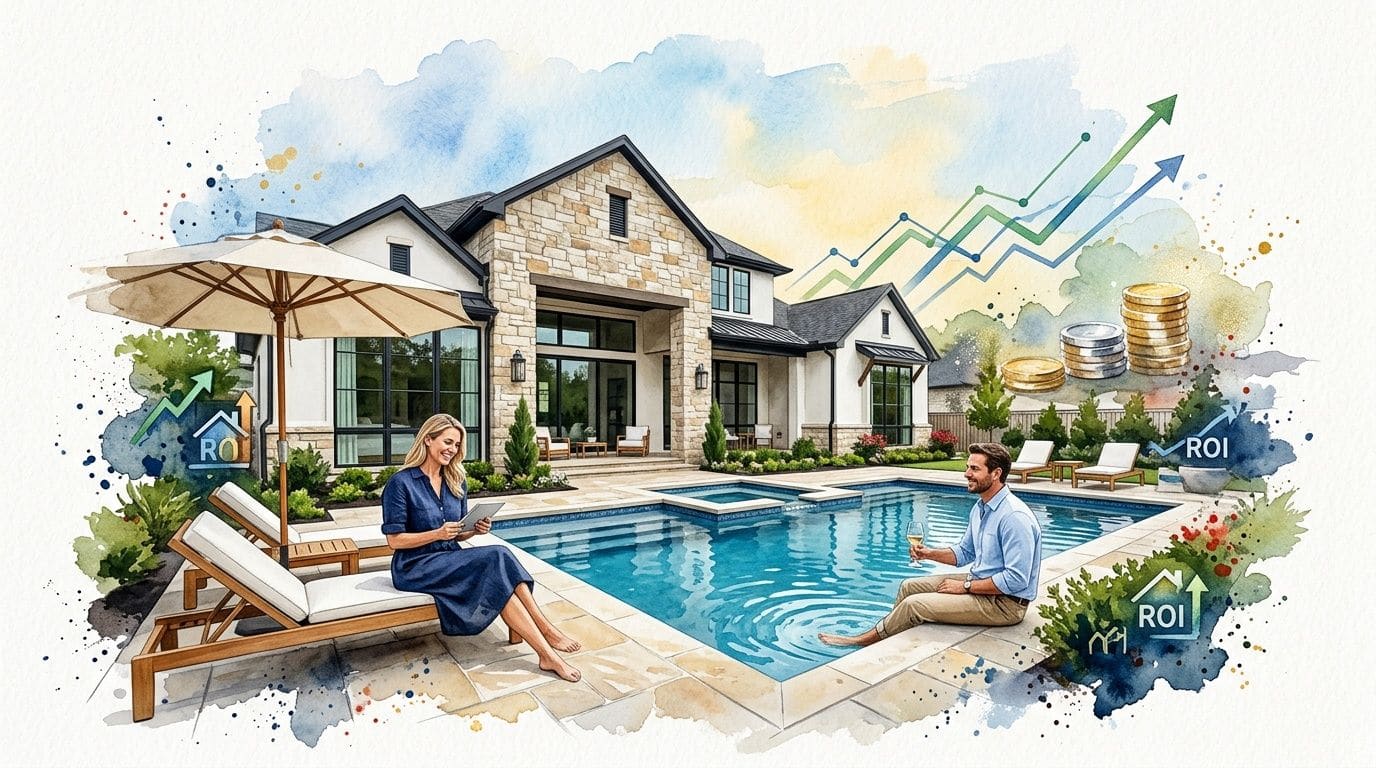
A Lehigh Valley homeowner might save a substantial amount on day one with an above-ground pool, then spend years trying to make the rest of the yard feel finished around it. That is the core cost question. The pool changes how the property functions, how much site work follows, and how the backyard is judged by future buyers.
Upfront price is only part of the investment
An inground pool usually requires a larger initial commitment because it pulls in excavation, grading, drainage planning, utilities, decking, and finish materials. In a well-designed project, those costs are tied to a bigger goal. Building an outdoor space that feels permanent and works as one environment.
An above-ground pool keeps the entry price lower. For some families, that makes perfect sense. But the lower pool cost often shifts spending into later add-ons such as stairs, decking, privacy screening, retaining work, and visual cleanup around the perimeter. Homeowners should compare the total backyard plan, not just the vessel that holds the water.
Ownership costs are tied to how complete the space becomes
I tell clients to look at ownership in layers. The pool is one layer. The hardscape around it, the drainage it affects, the fencing it requires, and the way people move between the house and the water are the others.
That distinction matters on larger and higher-end properties. An inground pool is easier to integrate into terraces, outdoor kitchens, fire features, and dining areas, so the money spent around it usually strengthens the whole setting. An above-ground pool can still be enjoyable, but it more often triggers separate fixes instead of one coordinated plan.
Finish details also affect long-term performance and maintenance. For homeowners comparing edge materials and waterline transitions, expert advice on pool coping is a useful reference.
Resale value depends on whether buyers see a backyard amenity or a temporary addition
Renosys' swimming pool statistics and industry insights reports that an inground pool can improve home value and produce some return, while above-ground pools tend to offer little return because buyers view them as temporary.
That tracks with what happens in the field. A well-positioned inground pool reads as part of the property architecture. It supports the patio layout, the sightlines from the house, and the way the backyard is used for entertaining. Buyers tend to value that kind of cohesion. Above-ground pools are more often seen as removable personal-use items unless the surrounding deck and site work are unusually well executed.
The strongest value comes from the full outdoor living plan
The pool itself rarely carries the whole value story. Property perception is shaped by whether the backyard feels resolved. Shade, storage, changing space, covered seating, and visual balance all matter once the pool becomes a social center.
That is why features such as custom shade structures and pool houses often have more impact than homeowners expect. They improve daily use, strengthen the layout, and make the pool area feel intentional instead of incomplete.
A buyer does not price a pool in isolation. They react to the experience of the entire yard.
The Design and Installation Process Explained
Above-ground and inground pools ask for very different levels of planning. One is mostly a product installation. The other is closer to a site construction project.
If you choose above-ground
The process is usually direct. The site still needs to be considered carefully, especially grade, access, drainage, and safe entry, but the work tends to be faster and less invasive. Homeowners who want quick use and minimal disruption often prefer this route for that reason alone.
The trade-off is that the surrounding yard can remain unresolved unless you intentionally invest in decks, screening, steps, and circulation. Without that added work, the pool may function fine but still feel detached from the rest of the backyard.
If you choose inground
An inground project begins with the property, not the pool shape. Slope, drainage, house elevation, views, setbacks, and usable gathering areas all need to be studied together. In towns across the Lehigh Valley, including Allentown and Coopersburg, permit and code requirements can vary by municipality, so it's smart to verify project requirements with the local building department before construction starts.
Material choices matter too. If you're comparing finish details, expert advice on pool coping gives a helpful overview of coping types and installation considerations. Coping isn't a decorative extra. It affects edge comfort, visual finish, and how the pool meets the surrounding deck.
Two common homeowner paths
One homeowner wants a polished backyard for entertaining and knows the pool will connect to a terrace, grill station, lighting, and planting. That homeowner usually benefits from a full design-build process because every piece depends on the others.
Another homeowner mainly wants a place for the kids to cool off this summer and isn't ready to rework the property. That homeowner may be happier with an above-ground pool and a simple access solution.
For a local example of how a built-in pool can shape the entire yard, this Upper Gwynedd poolscape project shows what happens when pool, patio, and surrounding spaces are planned as one composition.
Pool Scenarios Which Homeowner Are You
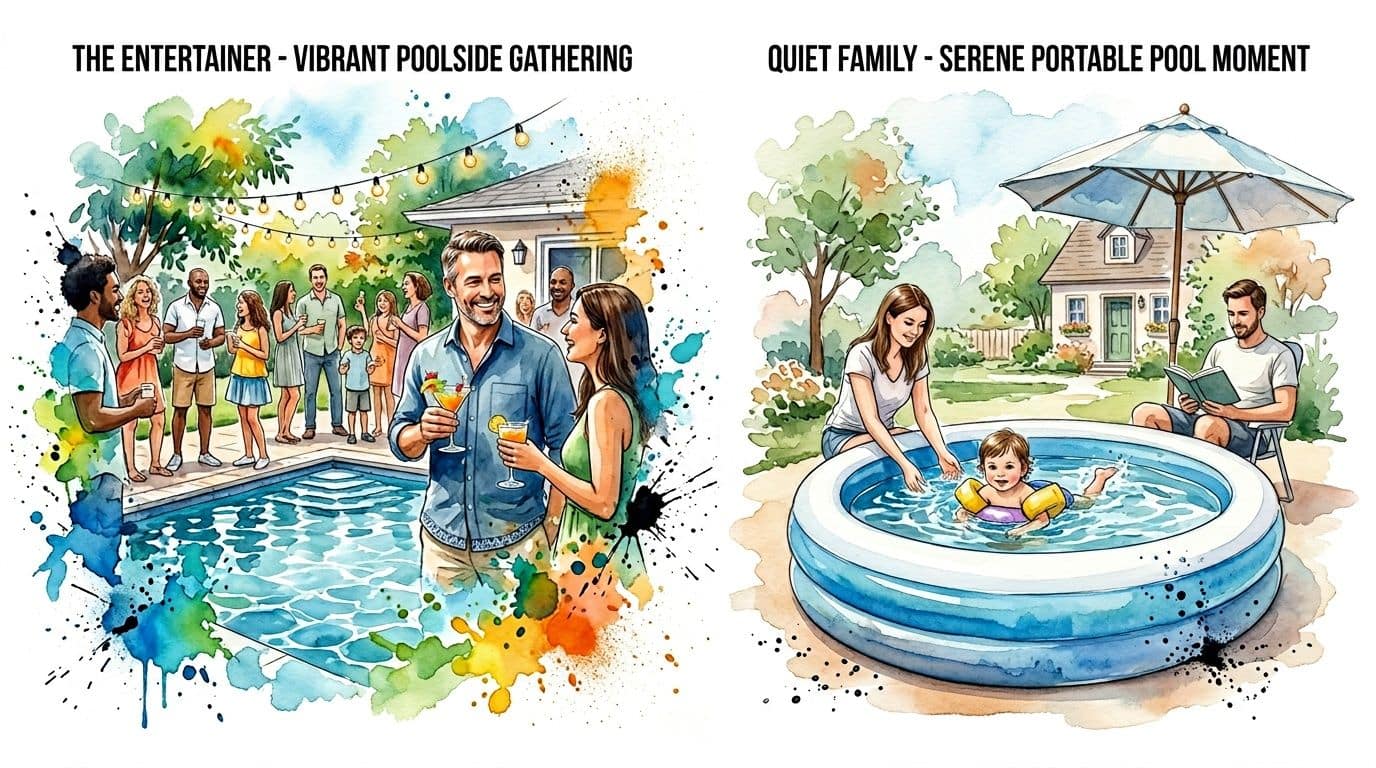
Real decisions get clearer when you stop thinking in categories and start thinking in lives. Two homeowners can stand in similar backyards and still need different answers.
The entertainer in Center Valley
This homeowner uses the backyard constantly. Friends come over for dinner. Family stays late around the fire feature. The goal isn't just swimming. The goal is a complete outdoor setting that feels intentional from the back door to the far edge of the property.
An inground pool fits because it lets the layout breathe. The patio can widen where lounge seating belongs. A dining terrace can sit off one side. Planting can soften edges instead of trying to hide them. The pool becomes one part of a finished environment.
A project like this Emmaus poolside resort reflects that kind of thinking, where the water, hardscape, and living areas work together instead of competing for space.
The family in a developing neighborhood
This homeowner has young kids, a busy schedule, and a yard that may still change over the next few years. They want summer use, but they may not want major excavation, a large construction window, or a complete backyard overhaul yet.
An above-ground pool can be the practical call here. It creates fun and relief during hot months, and it keeps future options open. If the long-term plan is still taking shape, a temporary solution can be smarter than forcing a permanent one too soon.
Questions that usually point you in the right direction
- Are you building a backyard experience or adding a place to swim? The first usually favors inground. The second may not.
- Do you expect the property to feel more finished after the pool goes in? If yes, the surrounding design matters as much as the vessel.
- Will you likely stay in the home long enough to value permanence? Long-term ownership generally strengthens the case for inground.
- Do you want flexibility to change the yard later? If that's important, above-ground may fit better right now.
The wrong pool is usually the one that doesn't match the rest of the property plan.
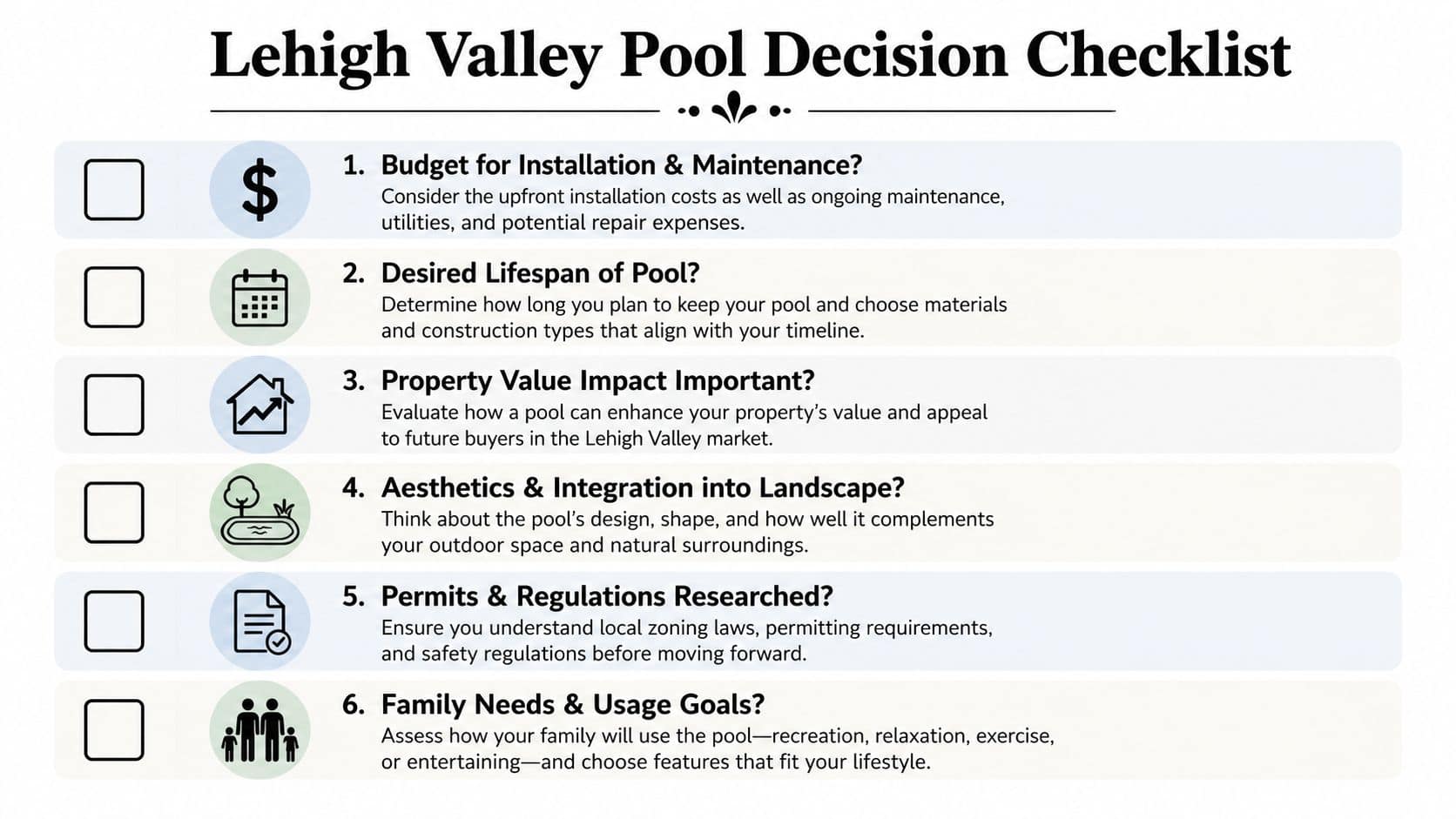
A Decision Checklist for Lehigh Valley Homeowners
 pool installation.” />
A homeowner in Lehigh Valley usually reaches the right decision once the pool stops being the only thing under review. The better question is how that pool will shape the rest of the yard for the next several years. On a high-end property, the pool affects circulation, patio layout, grading, planting, privacy, and how the home opens to the outdoors.
Use this checklist to test the decision against the full property, not just the swim season.
Ask yourself these six questions
- How long do I expect this pool to serve the property? A permanent backyard plan usually supports an inground pool. A shorter timeline or an uncertain site plan often supports above-ground.
- Will the pool anchor the outdoor living space, or sit beside it? If the goal is a finished composition with terraces, dining, lounge areas, and strong visual flow, inground usually gives you more control.
- How important is resale and overall property positioning? Buyers tend to read an inground pool as part of the property itself. An above-ground pool usually reads as an accessory, even when it is well maintained.
- Do I want freedom with shape, depth, entry, and features? Custom steps, tanning ledges, spa integration, and cleaner sightlines point toward inground.
- How will the yard function after dark? Evening use depends on more than the pool itself. It depends on paths, seating, visibility, and outdoor lighting and audio planning that supports the way the space will be used.
- Am I ready for a full site project? Excavation, drainage, retaining, utilities, and finish work are part of the decision. Some homeowners want that investment now. Others want a simpler setup while the larger property plan is still taking shape.
A checklist homeowners often miss
The pool changes the yard's structure. It influences where guests enter, where furniture belongs, how people move from the house to the water, and whether the property feels finished or pieced together.
That is why I advise clients to review the pool choice against three practical tests. Does it fit the long-term plan for the home? Does it improve the flow of the backyard instead of interrupting it? Does it justify the amount of space, construction, and upkeep it will require?
Decision shortcut: Choose the pool that supports the property you want to own in five to ten years, not just the summer you want to get through now.
Frequently Asked Questions About Choosing a Pool
Can an above-ground pool still look high-end?
It can look better with strong decking, clean steps, privacy screening, and thoughtful planting. But there are limits. In most finished outdoor settings, it still reads as a freestanding structure rather than a built-in part of the property.
Is an inground pool always the right choice for a luxury home?
Not always. If a homeowner wants short-term flexibility or isn't ready for a full site project, an above-ground pool can still be the sensible answer. The better question is whether the pool is meant to be a lasting property feature or a temporary recreation setup.
How much space do I need for an inground pool?
That depends on the lot, grade, access, setbacks, and what else needs to fit around the pool. The pool itself is only part of the footprint. You also need to account for decking, circulation, seating, and safety features.
Can either type of pool use a saltwater system?
Saltwater options are available in many pool setups, but the right system depends on the specific pool type, materials, and equipment plan. This should be decided early, because water treatment affects equipment choices and some finish decisions.
Which type of pool is better for entertaining?
For most entertaining-focused properties, inground works better because the whole space can be arranged around it. Entry points, lounge areas, dining zones, and visual flow are easier to resolve. Above-ground pools can still support family fun, but they usually don't organize the yard the same way.
What safety features should I think about from the start?
Start with fencing, gates, access control, and clear circulation. Then think about lighting, steps, surface traction, and how adults will supervise children from patios or seating areas. Local safety requirements vary, so confirm them with your municipality before finalizing the design.
Start the Conversation About Your Lehigh Valley Pool
The inground pool vs above ground pool decision comes down to what you're building in the backyard. If you want a temporary place to cool off, above-ground may be enough. If you want a permanent outdoor living environment that supports the property for years, inground usually gives you far more to work with.
If you're in Center Valley, Allentown, Coopersburg, or elsewhere in the Lehigh Valley, it helps to talk through the site before choosing a direction. A good plan starts with how the yard should function, how the pool should relate to the house, and what kind of everyday use you want from the space. To explore options for a built-in backyard project, take a look at custom swimming pool design and installation.
If you're considering a pool as part of a larger outdoor living plan, Kennedy Outdoor Living can help you think through the property as a whole. For a design conversation, contact Kennedy Design+Build at (610) 854-9993, Center Valley, PA 18036, or visit kennedydb.com.