When Can You Mow New Sod? A Guide to the First Cut
Quick Answer
You can usually mow new sod about 2 to 3 weeks after installation, but the calendar alone isn't enough. Wait until the sod resists a gentle tug, the grass has grown to 3 to 4 inches, and the soil has had time to firm up so the mower won't pull, rut, or shift the new lawn.
You're probably looking at a fresh lawn that makes the whole project feel finished, and you don't want to be the person who damages it with the first cut. That concern is justified. When can you mow new sod is one of the most important questions after installation, especially when the lawn is part of a larger patio, pool, or outdoor living project.
The first mow isn't routine upkeep. It's part of protecting the work that was just installed and giving the sod the best chance to knit into the soil cleanly.
The Tug Test How to Know Your Sod Is Ready
A new lawn can look finished several days before it is ready for a mower. From our side of the project, this is the point where a good installation can still get damaged by one rushed pass across the turf.
The field check I want homeowners to use is the tug test. Go to a corner, edge, or seam and lift gently with your fingers. If the sod shifts, peels, or lifts without much resistance, the roots have not tied into the soil well enough for mowing. University of Maryland Extension advises waiting to mow until new sod is rooted in and the mower will not disturb it, which matches what we look for on installed projects in the handoff period, as noted in their new sod care guidance.

What a failed tug test feels like
You will feel it right away.
The edge lifts like a loose mat, or the piece slides enough that you notice movement between the sod and the soil below. That lawn may still look green and even from the patio, but appearance is not the standard. What matters is whether the roots can hold the sod in place under wheel weight, turns, and blade suction.
On a recent project, the biggest risk at this stage usually is not grass color. It is movement along seams, borders, and corners where the lawn meets finished work. Around clean edges like those in this private Macungie backyard makeover, even slight shifting shows up fast.
Practical rule: If the sod moves under a gentle lift, do not mow it yet.
What a passed tug test feels like
A section that is ready will stay put. You should feel the turf resisting your pull, with the corner holding tight enough that it does not separate from the soil unless you apply more deliberate force.
That resistance matters because the first mow puts stress on more than the grass blade. The mower adds wheel pressure, traction, and turning force. If the sod is anchored, it can handle that traffic without wrinkling, sliding, or opening a seam.
Use the tug test with height and footing
Do not rely on the tug test alone. A lawn can be attached and still be a poor candidate for mowing if the grass is too short or the surface is still soft from irrigation.
Use this three-part check before the first cut:
- Corner holds firm: A gentle lift gets resistance instead of movement.
- Grass has enough height: The blade is tall enough for a light trim.
- Ground feels stable: Your steps do not leave the surface soft, spongy, or muddy.
If one of those conditions is missing, wait a few more days. That delay is cheaper than repairing shifted sod, scalped edges, or tire ruts in a lawn we just installed.
Your First Mow Mower Settings and Best Practices
The first mow is where a good installation can stay clean and uniform, or pick up damage that takes weeks to grow out. We have already put time and money into getting this lawn laid tight against edges, grades, and finished surfaces. Now the job is to protect that investment with a careful first cut.
Set the deck high and keep the first cut light
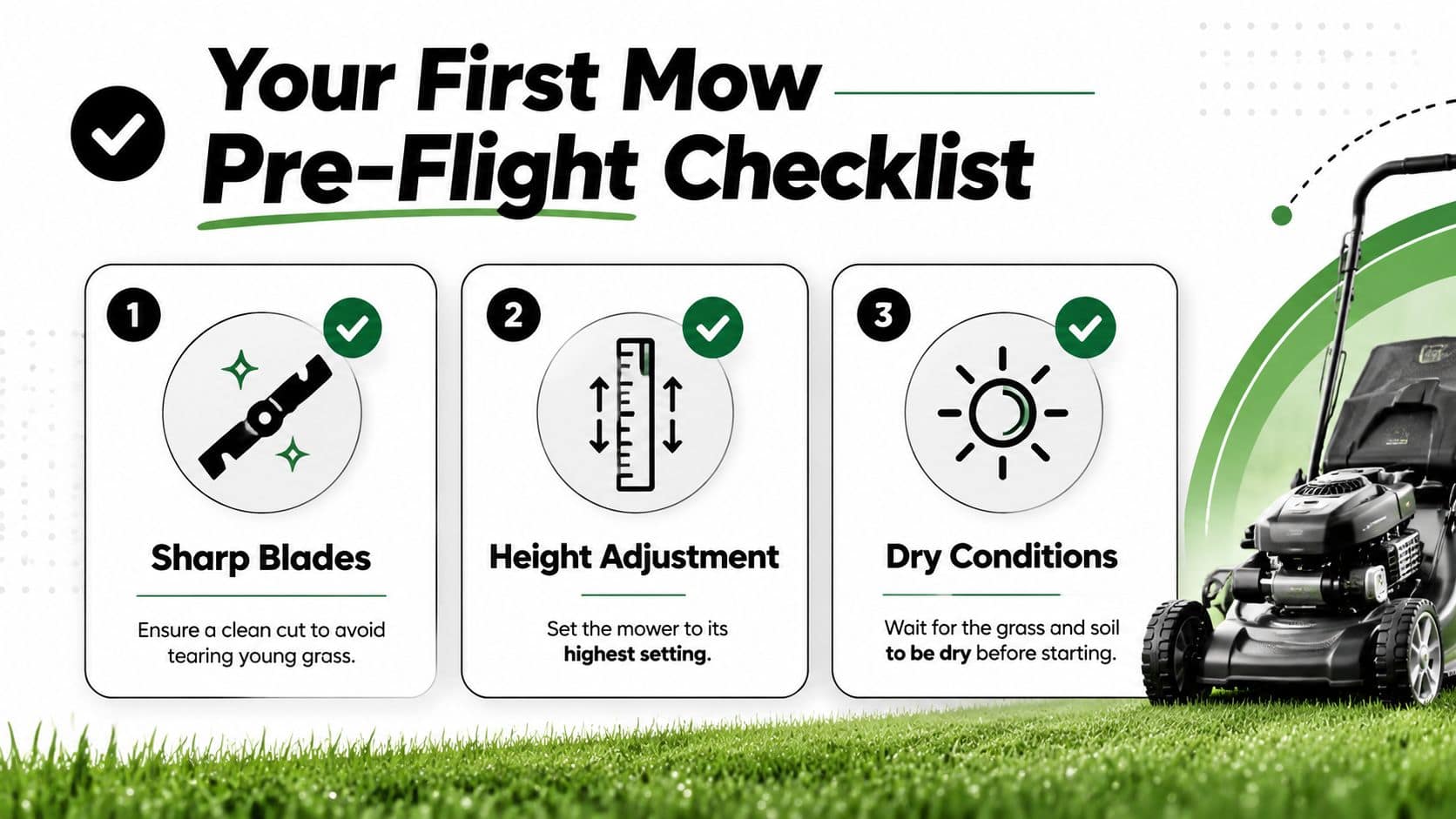
Start with the mower deck at its highest setting. For many homeowner mowers, that means roughly 3 to 3.5 inches. The goal is to remove only the top portion of the blade and stay within the one-third rule, as outlined by the University of Maryland Extension in its guidance on mowing turfgrass at the proper height.
A light first cut protects the lawn in two ways. It leaves enough leaf surface for the sod to keep feeding new root growth, and it reduces the chance of scalping high spots that were invisible during installation. On a new lawn, a conservative cut is the right cut.
Keep the first mow boring. Clean, light, and controlled wins here.
Use a sharp blade and steady machine control
Blade condition matters right away. A sharp blade gives you a clean cut. A dull blade shreds the grass tip, and that frayed look shows up fast on new sod because the lawn has not had time to recover from installation stress.
Before you mow, check three things:
- Blade sharpness: Use a freshly sharpened blade if possible.
- Deck setting: Keep it higher than your usual weekly mowing height.
- Turning style: Make slow, wide turns and avoid pivoting in place.
That last point gets overlooked. Sudden turns put side pressure on sod seams and corners, especially near borders, curves, and tight areas around patios or walkways. If you need more post-installation guidance, the Kennedy Design + Build blog archive on outdoor project care and planning covers other parts of the handoff process.
Mow with the layout, not across it
For the first pass, follow the direction the sod was laid. That keeps the wheels and blade moving with the seams instead of catching against them. It is a small choice, but on a lawn that is still settling in, small choices prevent edge lift and seam movement.
You can change mowing patterns later after the lawn is fully established. On the first cut, the safest approach is the one that puts the least stress on the installation.
Watering and Mowing Getting the Timing Right
The first mow can leave wheel marks and shifted seams before the blade does any cutting. That usually happens because the lawn is still too wet.
New sod needs steady moisture while it roots into the soil below. At the same time, saturated ground cannot support the weight of a mower well, especially along clean borders next to patios, walks, and pool decking where every rut shows. On projects like these, protecting the finish matters just as much as keeping the grass alive.
Let the ground firm up before the first cut
Hold irrigation about 24 hours before the first mow, as long as weather conditions allow. The goal is simple. Let the surface dry enough that mower tires ride on top of the lawn instead of pressing into it.
That does not mean letting the sod get stressed. It means avoiding a spongy surface on mowing day. If you step on the lawn and your footprint lingers, wait. If the mower leaves tracks during the first few passes, stop and give the lawn more time.
This timing matters on higher-end installs where turf is part of a larger outdoor investment. A lawn that was installed to frame new planting beds, hardscape, drainage work, and gathering space needs coordinated aftercare, which is part of how we approach outdoor living design-build services.
A practical watering and mowing sequence
Use a simple sequence that protects the root zone and the finished surface:
- The day before mowing: Skip or reduce irrigation so the soil can firm up.
- The morning of mowing: Check the lawn by walking it, not just by looking at it from the patio.
- During mowing: Watch for rutting, slipping, or sod movement. Stop if the machine is marking the surface.
- After mowing: Return to the watering schedule that supports establishment.
That balance is the trade-off. Too much water before mowing softens the base. Too little water over several days slows rooting and puts the sod under avoidable stress.
For a broader comparison of how natural grass establishment differs from synthetic surfaces, see Modern Yard Landscapes turf installation expert advice.
Common Mistakes When You Mow New Sod
The first mowing mistake usually happens right after a project starts to look finished. The patio is clean, the planting beds are set, the lawn has greened up, and a homeowner wants that final striped look. That is often the moment new sod gets scuffed, torn at the seams, or flattened before it has settled in well enough to handle traffic.
Mowing before the lawn can hold together
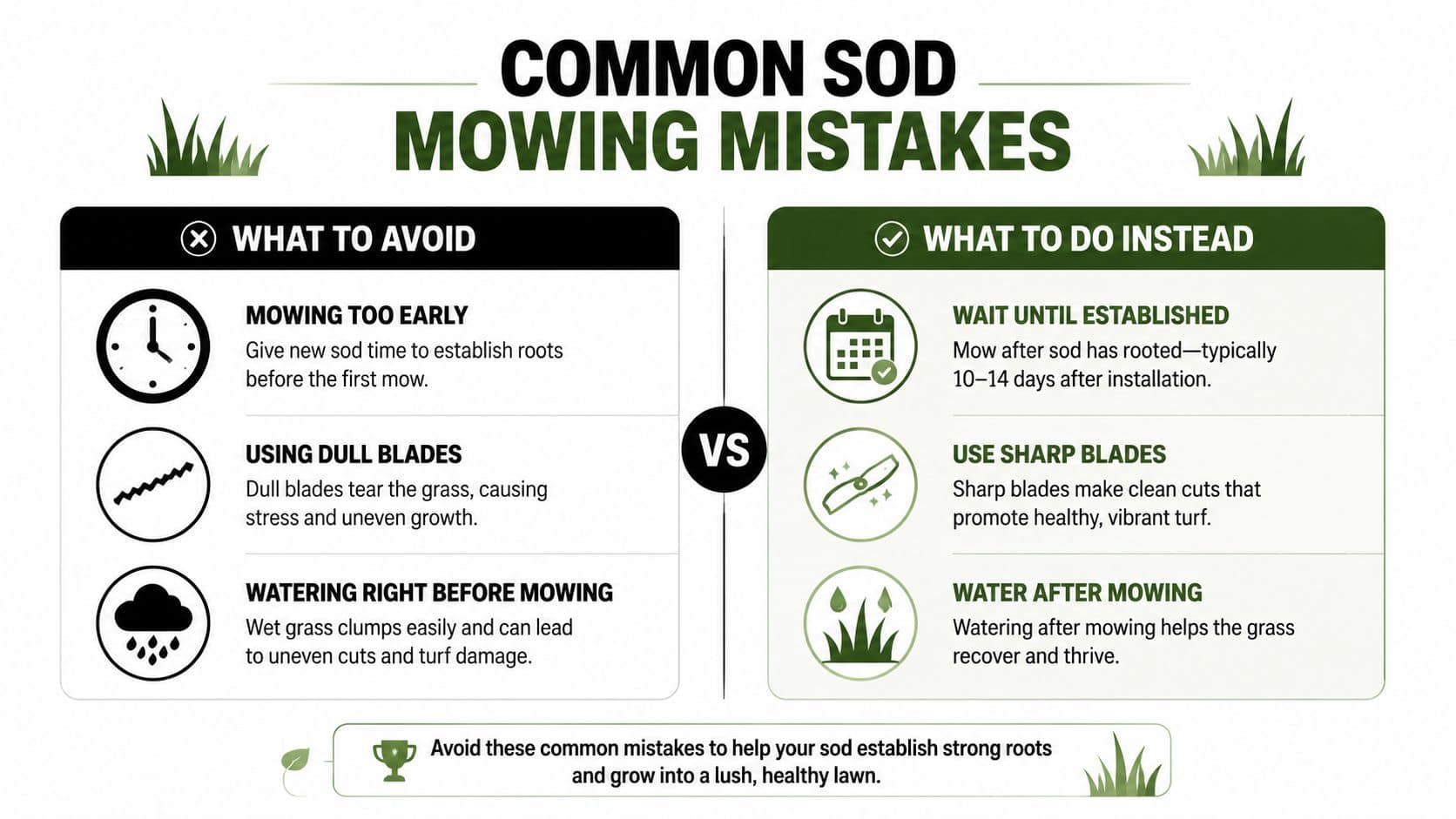
The biggest error is forcing the first cut because the grass looks tall from the street. Height alone does not mean the lawn is ready. If the sod still shifts underfoot or lifts at the edge, the mower can pull pieces out of position and open visible seams.
That kind of damage is frustrating because it is avoidable. On a new installation, the first mow protects the finish work we just put in place. A lawn that frames stonework, planting, lighting, and gathering space needs a clean surface, not wheel marks and torn corners. For a good example of how turf completes the larger composition, look at this Lower Saucon outdoor oasis project.
Cutting too low on the first pass
A low first cut is another common setback. Homeowners see top growth and assume the mower should be dropped to tidy everything up in one shot.
Leave more blade on the plant. New sod is still trying to root and recover from harvest, transport, and installation. Scalping it slows that process and can leave the lawn thin or pale for weeks. If the grass looks shaggy, that is usually safer than taking too much off at once.
One rule holds up well here. Never try to make new sod look mature before it is established.
Using the wrong equipment, or the right equipment the wrong way
A dull blade shreds grass instead of cutting it cleanly. A heavy mower on soft ground can leave ruts. Tight turns twist the sod at seams and edges, especially near curves, borders, and narrow side yards.
These are the mistakes I see most often on handoff visits:
| What goes wrong | What it causes |
|---|---|
| Dull blade | Torn leaf tips, browning, and a rough finish |
| Wet or soft soil | Tire marks, rutting, and shifted sod |
| Fast turns or pivoting in place | Open seams and torn edges |
Homeowners who want a broader post-installation checklist can also review this homeowner's sod care guide.
The trade-off is simple. Waiting a little longer and mowing more carefully may leave the lawn slightly taller for a few extra days, but that is far better than repairing visible damage in a brand-new outdoor space.
Does Grass Type or Season Affect Mowing Time?
Yes. Grass type and season can speed up or slow down the first mow, but neither one overrides what matters on your property after installation. At handoff, I tell homeowners to treat the calendar as a rough guide and the lawn itself as the final check.
In our area, most new sod is a cool-season mix such as tall fescue or Kentucky bluegrass. Those lawns often establish well in moderate weather, but they do not all root at the same pace. A shaded backyard, a south-facing front yard, and a lawn bordered by hot patio surfaces can behave very differently, even when the sod went down on the same day.
Spring and fall usually give you the safest first mowing window
Mild temperatures reduce stress while the sod is knitting into the soil below. That usually makes the handoff period smoother and gives you a little more margin for error on timing.
Summer is less forgiving. The sod may grow fast on top while still dealing with heat, higher evaporation, and softer ground from more frequent irrigation. In that situation, I would rather see a lawn stay slightly tall for a few extra days than see tire marks, shifted seams, or a first cut that sets the lawn back.
Variety matters, but site conditions matter just as much
Some grasses naturally push top growth faster, while others spend more time establishing below the surface. The mowing decision still depends on rooting, firmness, and how the yard is performing after install. Slope, shade, irrigation coverage, and reflected heat from driveways, pool decks, and walkways all affect timing.
Homeowners comparing real-grass performance with other yard surface options can review this Modern Yard Landscapes turf installation expert advice. It gives useful context for how lawn performance fits into the bigger picture of the outdoor space.
That project-level thinking is part of how our design-build team approaches completed outdoor living spaces. The first mow is not just routine upkeep. It is one of the early decisions that helps protect the lawn we just installed and the investment around it.
Frequently Asked Questions About New Sod Care
Can I walk on new sod before the first mow?
Light, necessary foot traffic is one thing. Repeated walking, kids playing on it, or moving furniture across it is another. Until the sod has anchored well, extra traffic can shift seams and compress soft soil.
What if I see small gaps between sod pieces?
Small gaps can happen as the lawn settles. Keep the area properly watered during establishment and watch whether the seams tighten as the turf roots in. If a gap starts widening or sections pull apart, contact your installer rather than trying to force pieces together after they've started setting.
Should I bag the clippings on the first mow?
If the first cut is light and the grass is dry, a small amount of clippings usually isn't a problem. If the mower leaves clumps, remove them so they don't sit heavy on tender new growth. The key is keeping the first cut clean and gentle.
Do I need fertilizer before I mow new sod the first time?
Follow the installation guidance you were given for that specific lawn. Fertilizer timing depends on the sod variety, soil conditions, and what was done during installation. If you want a practical outside reference for the early post-install period, this homeowner's sod care guide gives a solid overview.
What should I do if the sod starts lifting while I'm mowing?
Stop immediately. Don't try to finish the pass and hope it settles back down. If pieces are moving, the lawn wasn't ready yet, the deck is set too low, or the surface is too soft.
How short should I keep the grass after the first few mows?
Don't chase a very short cut right away. Keep mowing conservative until the lawn is clearly established and growing evenly across the full area. A gradual transition is easier on the turf and keeps the lawn looking more consistent next to finished hardscape.
Is it normal for the lawn to look uneven after the first cut?
Some slight variation can happen because a new lawn is still settling and not every section roots at exactly the same pace. What you don't want to see is widespread scalping, torn seams, or wheel marks. Minor unevenness often improves as the lawn establishes and mowing becomes more regular.
If you're planning a new patio, pool area, outdoor kitchen, or full backyard renovation and want the finished outdoor space to look right from day one, Kennedy Outdoor Living is available for a design conversation. Call (610) 854-9993 or visit Center Valley, PA 18036 to talk through your project.