Mulch vs Rock Landscaping: Which Is Best?
Quick Answer
For mulch vs rock landscaping, mulch is usually the better choice in planting beds where soil health and plant growth matter most. Rock makes more sense in areas built for durability and low upkeep, especially around patios, pools, walkways, and other hardscape features. In most well-designed outdoor spaces, the right answer is a planned combination of both.
You’re probably making this choice while looking at a much bigger project. Maybe it’s a new patio, a pool area, an outdoor kitchen, or a full backyard redesign, and the ground cover decision suddenly feels more important than it seemed at first.
That’s because mulch vs rock landscaping affects more than appearance. It changes how planting beds perform, how clean the finished project looks around hardscape edges, and how much intervention the space will need to keep looking intentional over time. If you’re comparing materials, it also helps to see the broader range of landscaping supplies that influence edging, drainage, and bed construction, because these pieces work together.
A Side-by-Side Look at Mulch and Rock
A simple side-by-side view helps before getting into plant performance and long-term ownership. These materials don’t just look different. They behave differently in the outdoor setting and ask different things from the installation underneath them.
| Category | Organic mulch | Decorative rock |
|---|---|---|
| Overall look | Softer, more natural, more garden-oriented | Cleaner, sharper, more architectural |
| Best visual use | Planting beds, tree rings, layered gardens | Borders, drainage zones, modern beds, hardscape-adjacent areas |
| Installation feel | Easier to spread and reshape | Heavier, more labor-intensive to place |
| Soil contribution | Breaks down and improves soil | Stays inert and does not feed soil |
| Weed control | Stronger suppression in planted beds | Works best with proper fabric and edging |
| Mobility later | Easier to change as plantings mature | Harder to move if the layout changes |
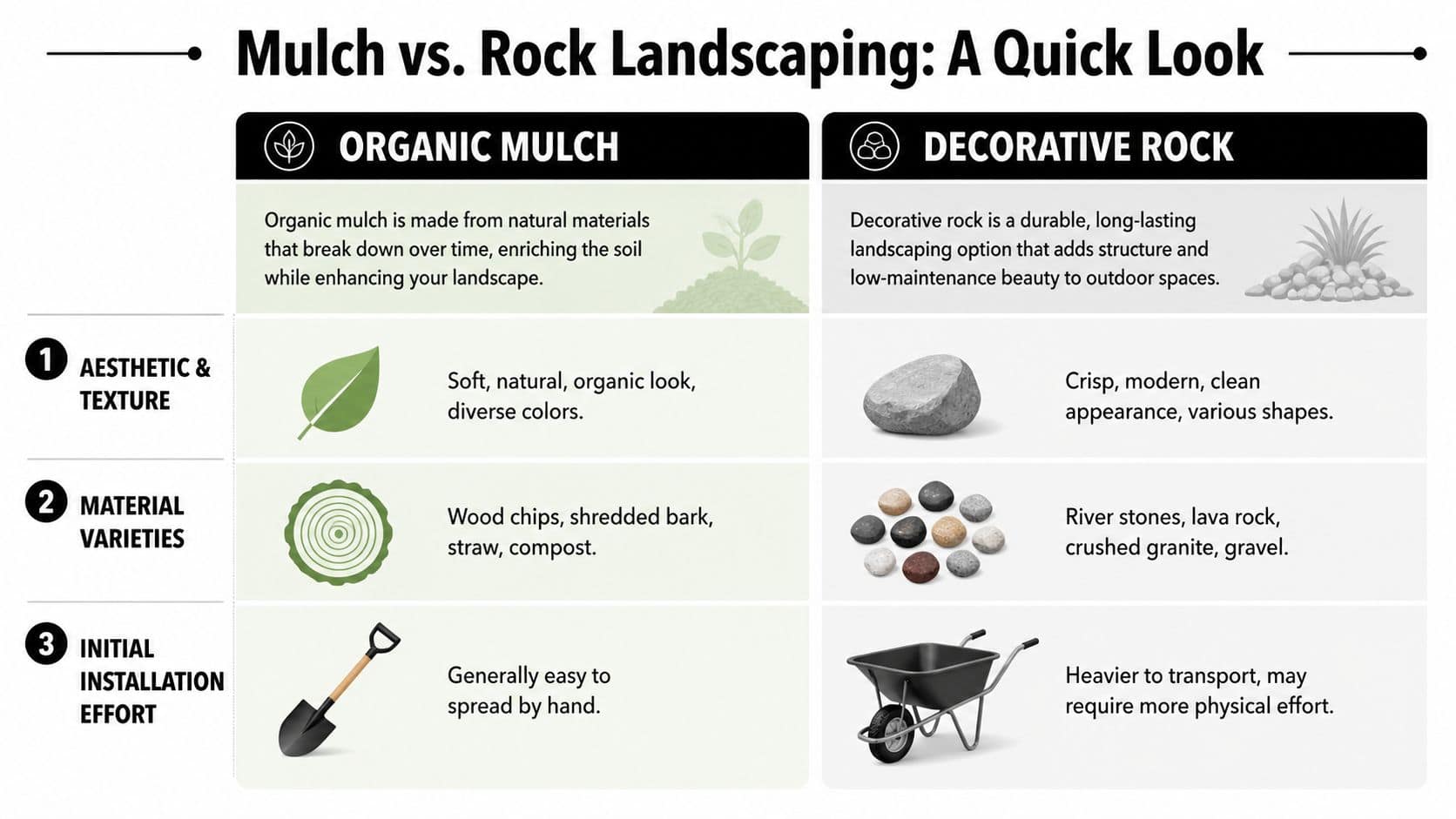
Appearance and texture
Mulch gives a bed a softer edge. It visually ties shrubs, perennials, and trees together and tends to make a planted area feel established faster, especially when the design relies on foliage, blooms, and seasonal change.
Rock reads differently. It brings contrast, definition, and a more permanent look. Around a bluestone patio, porcelain pool deck, or clean-lined walkway, that can be exactly what the design needs.
Material range and design flexibility
Mulch still offers variety. Shredded bark, wood chips, composted organic blends, and color tone all change the feel of a bed. Dark mulch often makes green plant material stand out, while a lighter bark can feel more relaxed and natural.
Rock opens a different palette. River rock, gravel, crushed stone, and lava rock each create a different mood. Shape matters as much as color. Rounded material feels softer. Angular stone looks more structured and usually stays put better along edges and slopes.
Practical rule: If the space is supposed to feel lush and planted, mulch usually supports that goal better. If the space is supposed to feel crisp and architectural, rock often fits better.
Weed control and erosion behavior
Weed pressure is one of the first practical questions homeowners ask, and the answer isn’t the same for both materials. According to Bell Mulch’s comparison of mulch and rock, organic mulch blocks 70-90% of seed germination, while rock alone stops 40-60% and needs a quality fabric underlayment to be effective. The same source notes that rocks are better for erosion control, with minimal soil loss of 0.1-0.5 tons per acre per year, which is why they work well on non-planted slopes and drainage areas.
That distinction matters in design-build work. A decorative bed near a front walk has different demands than a planted hillside or a border tucked against a pool coping detail.
Installation effort and what homeowners notice later
Mulch is simpler to install and easier to reshape as plants grow in. If you widen a bed, move a shrub, or add seasonal color later, mulch is forgiving.
Rock is heavier and less flexible once installed. That isn’t a flaw. It’s part of why it looks permanent. But it does mean layout decisions, edging, and drainage details need to be right the first time.
How Each Choice Impacts Plant Health and Soil
If a bed contains trees, shrubs, hydrangeas, ornamental grasses, or perennials that need to establish well, the material over the soil matters. This isn’t just a finish layer. It changes how roots experience moisture, temperature, and air movement.
Why mulch performs better around living plant material
Organic mulch does work below the surface, not just above it. Research summarized by The Davey Tree Expert Company indicates that organic mulch can nearly double the growth rate of young trees. The same source notes that mulch helps by reducing water evaporation from soil, improving rainwater infiltration, and maintaining more stable soil temperatures.
That combination is hard to ignore in a newly built outdoor space. When a project includes fresh planting around patios, seat walls, or an outdoor kitchen, the establishment period matters. Plants need a better root environment than bare soil or decorative stone can provide.
Mulch also improves the soil as it breaks down. That’s especially useful in renovated yards where construction has disturbed the grade or compacted the bed areas. In those conditions, a material that supports recovery is usually the smart call.
Where rock can work without fighting the planting plan
Rock has a place, but it shouldn’t be treated as a plant-health upgrade. It doesn’t feed the soil, and it doesn’t give roots the same biological benefit as organic mulch.
That doesn’t mean rock is wrong near plants. It means placement has to be intentional. Rock works better where the visual goal is structure, where the bed is lightly planted, or where the area functions more as a transition zone around hardscape than as a full garden bed. A project like this Bethlehem outdoor living space shows how important it is to think about planting and hardscape as one system rather than separate layers.
Rock is usually strongest when it supports the architecture of the yard. Mulch is strongest when it supports the biology of the landscape.
A detail that gets missed often
Mulch depth matters. The same Davey guidance notes that 2-3 inches is the right range, and going heavier than that can interfere with water movement and create problems at the base of plants. Good material used the wrong way still creates issues.
That’s one reason this decision shouldn’t be reduced to “what looks nicer.” In built environments, the surface layer either supports the design or undermines it.
Cost and Maintenance A Long-Term Financial Analysis
The first number homeowners usually see is the installed price difference. That matters, but it doesn’t tell the whole story, especially when the project includes masonry, lighting, drainage, and detailed planting.
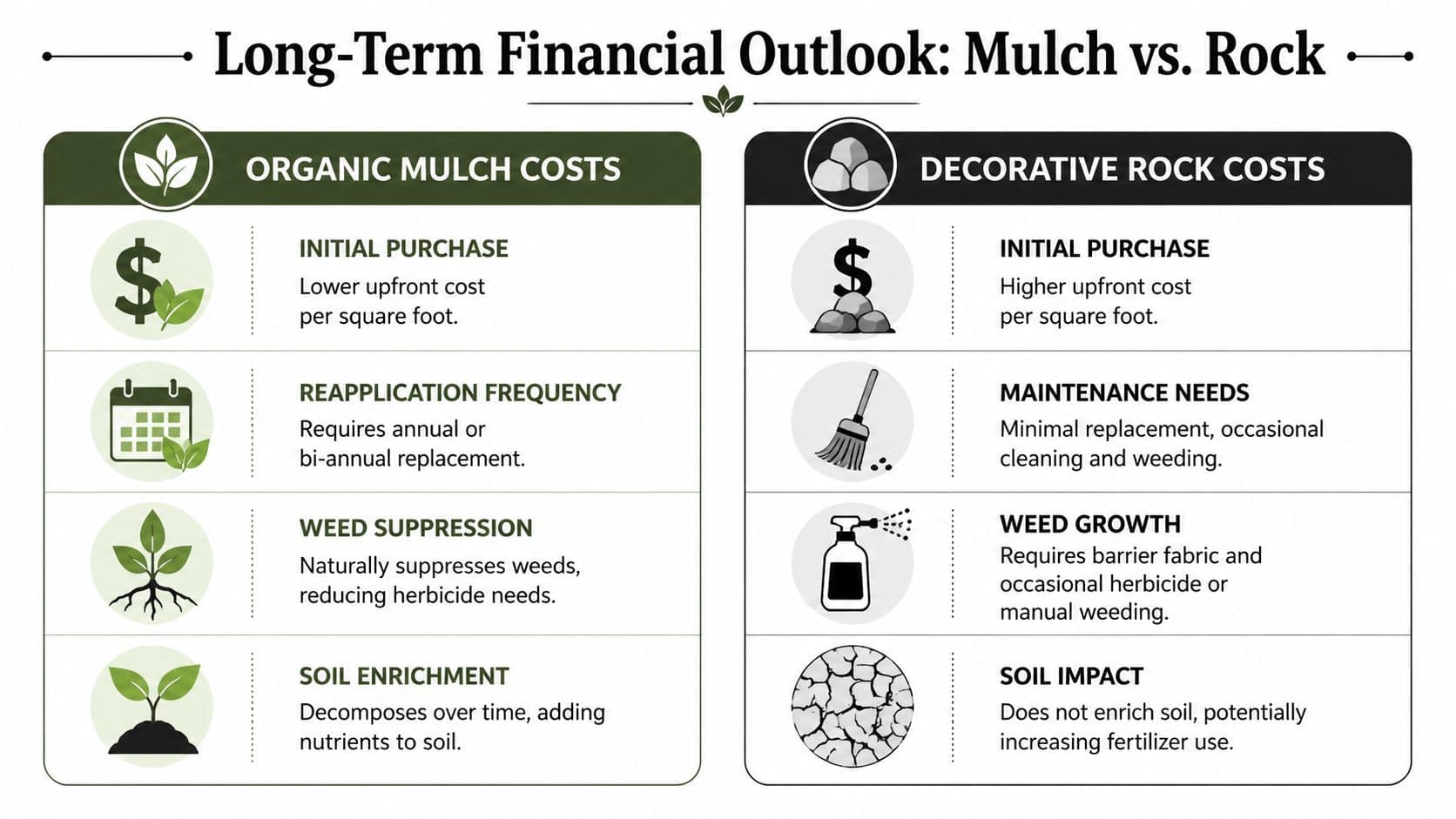
The upfront cost is only the first layer
According to Angi’s mulch vs. rock cost analysis, rock installation can cost over $120 per cubic yard, compared with about $35 for mulch in some markets. On day one, mulch looks like the cheaper choice by a wide margin.
But that same analysis points out the part many homeowners miss. Mulch usually needs replacement every one to two years, and by the third year of ownership the total spent on mulch can equal or surpass the initial rock investment.
That crossover matters most when the outdoor space is part of a larger outdoor living build. Once there’s a finished patio, built-in grill island, fire feature, lighting plan, and refined planting, annual material refreshes around those elements become less convenient and more disruptive.
Long-term ownership feels different around hardscapes
The better question isn’t “Which material costs less today?” It’s “Which material fits the way I want to own this space?”
For a low-maintenance border around a patio or pool, rock often makes more financial sense over time because it stays put and doesn’t need routine replenishment. For planted garden beds, mulch can still be the right value because it supports the growing environment itself, even if it needs periodic renewal.
A design-build plan should treat those choices differently. A broad overview of outdoor living and landscape construction services makes that clear. Different areas of the same property have different performance goals.
Costs that don’t show up in a quick estimate
The true cost of mulch includes more than replacement material. Old mulch may need to be removed. Edges may need to be redefined. Access around finished masonry can slow the work. If a bed settles or shifts after repeated replenishment cycles, the appearance near steps, walls, and paving can get sloppy.
Rock carries its own installation demands. Proper base prep, fabric in the right applications, and clean transitions take more effort up front. But if the design is stable and the layout is right, that effort usually buys a calmer ownership experience.
Long-view decision: If the area is meant to stay largely unchanged for years, rock often rewards that decision. If the area will grow, evolve, and stay plant-driven, mulch usually earns its place.
Design Use Cases for Lehigh Valley Landscapes
Most well-built properties in the Lehigh Valley shouldn’t be all mulch or all rock. The strongest projects use each where it performs best.
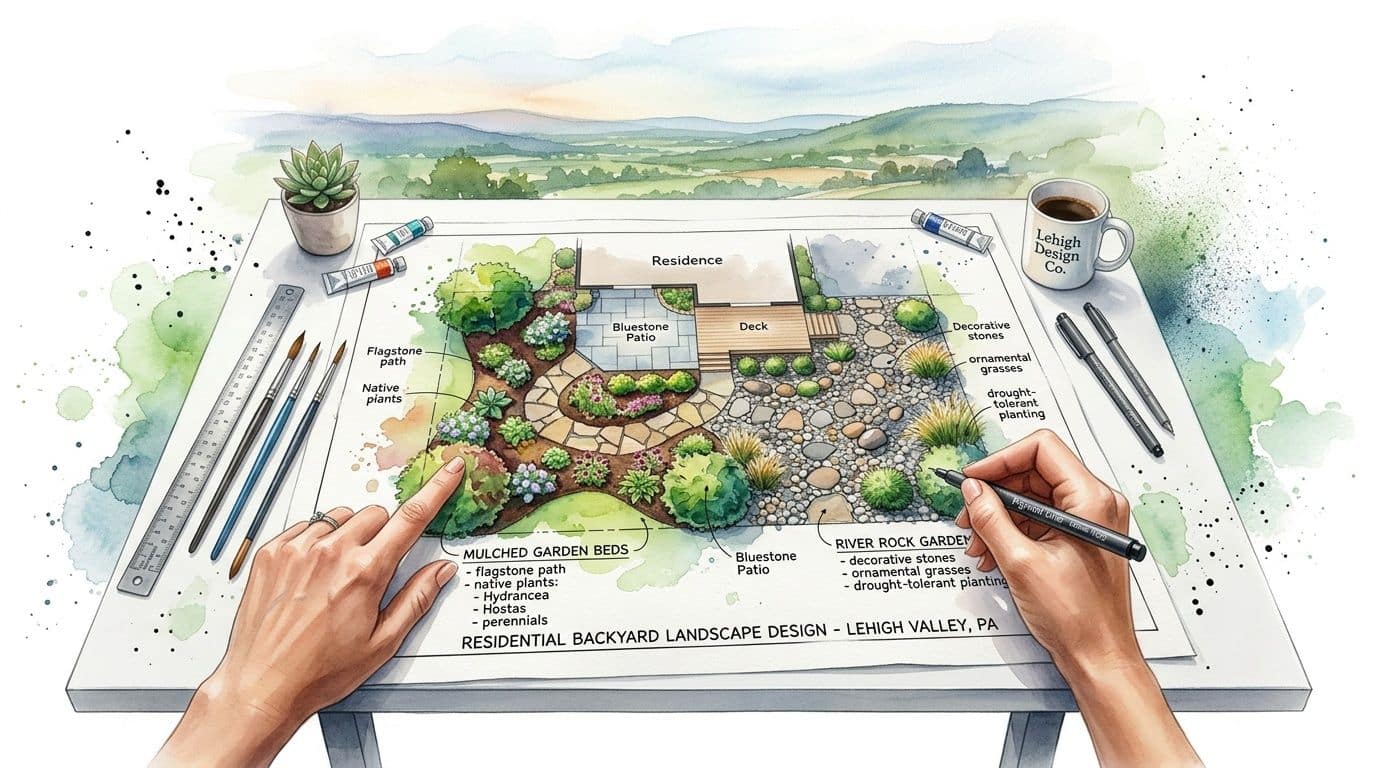
Where rock belongs in an integrated outdoor living plan
Rock is especially useful in places that behave more like extensions of the hardscape than true garden beds.
Some common examples include:
- Patio and walkway borders where a crisp line helps the paving look finished and intentional.
- Pool surroundings where splash, foot traffic, and regular cleanup call for a surface that won’t decompose.
- Drainage swales and downspout outlets where water movement is part of the design.
- Noncombustible zones near fire features where a mineral surface is often more appropriate than wood-based material.
In these areas, rock supports the architecture of the space. It also tends to hold its shape better in places that see frequent use.
For homeowners collecting ideas, it can help to explore inspiring rock gardens and notice which examples feel decorative versus functional. In a high-end backyard, the good versions usually do both.
Where mulch still does the heavy lifting
Mulch is often the right call in the parts of the project that are meant to feel alive. Foundation beds, tree groupings, privacy planting, and layered ornamental beds all benefit from a softer, organic finish.
This is especially true when the success of the project depends on planting maturity over time. The patio may look complete on day one, but the outdoor space needs a few seasons to settle in and gain presence. Mulch supports that process better.
That’s why many premium installations place mulch around the living plant material and reserve rock for edges, drainage corridors, and select visual accents.
Climate and exposure matter in Pennsylvania
Sun, shade, wind, and water flow all change the answer. A full-sun bed beside a reflective patio surface has different stress points than a shaded planting area near the back property line.
In practice, design choices often follow site conditions like these:
- Hot, exposed zones may be better candidates for limited rock use where the space is more transitional than planted.
- Moisture-sensitive planting beds usually benefit from mulch because it helps moderate the root environment.
- Sloped, non-planted banks often perform better with stone where washout is the bigger concern.
- Showcase garden beds near entertaining areas usually look and function better with mulch framing the plant palette.
A finished project like this Lower Saucon outdoor oasis reflects that kind of material separation. The strongest layouts don’t force one surface across every condition.
When every bed gets the same material, the landscape usually starts fighting itself. Good design gives each area a job, then assigns the surface that helps it do that job.
The details that make mixed materials work
Hybrid plans only stay clean if the transitions are built properly. That means sharp edging, controlled grade changes, and drainage that keeps one material from migrating into the other.
Without those details, mulch drifts into stone, stone scatters into turf, and the whole project starts looking unfinished. The installation method matters just as much as the material choice.
Hybrid Solutions and Proper Installation
For most custom outdoor spaces, the optimal answer to mulch vs rock landscaping is a controlled mix. That’s usually the difference between a yard that feels designed and one that looks like a patchwork of separate decisions.
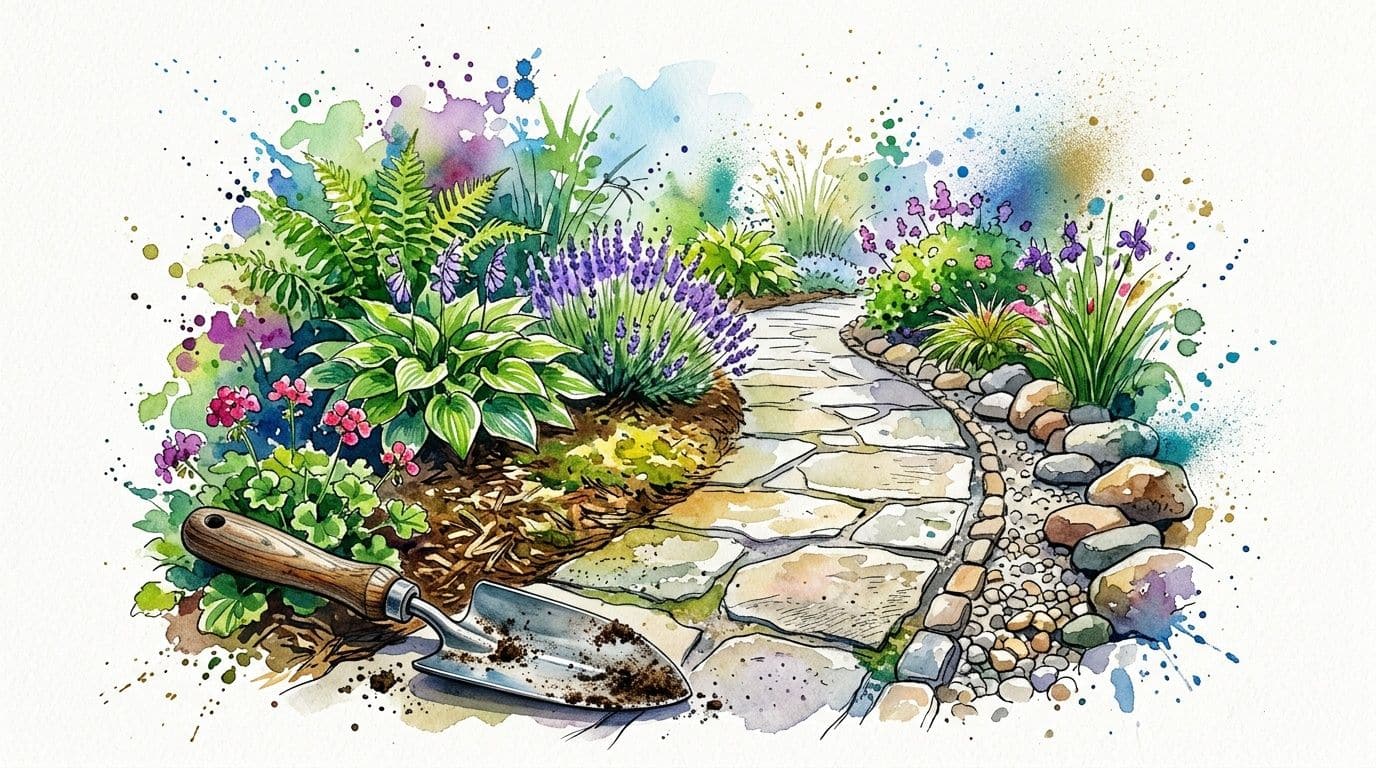
Separate materials with permanent edges
The first requirement is physical separation. Steel edging, stone curbing, or another durable restraint keeps mulch from washing into stone and keeps decorative rock from spreading into planted beds.
That edge also helps the design read clearly. Around a patio or deck project, clean transitions matter as much as the main feature itself. These are the kinds of assemblies that need to be considered together in spaces built for patios and decks.
Use fabric carefully and only where it helps
Weed barrier fabric under rock can be useful in the right zone, especially where the bed is mostly mineral and not expected to be replanted often. It is less helpful in active garden beds where plants need room to spread and the soil needs to stay biologically healthy.
That distinction gets blurred all the time. Fabric is not a cure-all. In the wrong place, it makes future planting awkward and can create a messy maintenance layer once organic debris starts building up on top.
Grade and drainage decide whether the finish lasts
Ground cover always follows the grading underneath it. If the pitch is wrong, the nicest stone in the world won’t stay where you want it. If water dumps into a mulched bed from a roofline or hardscape edge, that bed will move.
A durable installation usually includes these basics:
- Defined water paths so runoff doesn’t scatter material across paving or lawn.
- Bed depths that fit the material so the surface sits where it should relative to edging and adjacent hardscape.
- Access planning so future touch-ups don’t require dragging material across finished surfaces.
- Realistic plant spacing because overcrowded beds make any surface layer harder to maintain cleanly.
Good installation hides the decision-making. You notice the finished space, not the systems keeping the materials in place.
Frequently Asked Questions About Mulch and Rock
Can I use both mulch and rock in the same yard
Yes, and that’s often the best approach. Mulch works well in planting beds where root health matters, while rock fits areas that need cleaner lines, better durability, or a stronger connection to patios, pools, and drainage features.
Is rock always lower maintenance than mulch
Usually in the right location, yes. Rock doesn’t need routine replenishment the way mulch does, but it still needs occasional cleanup, edge control, and some weeding. The benefit shows up most in stable, non-plant-heavy areas.
Can you put rock over old mulch
It’s usually not a good idea. Old mulch breaks down, settles unevenly, and can make the rock bed look patchy over time. If a bed is being converted, the cleaner solution is to remove the organic layer and rebuild the area properly.
Which is better for a sloped yard
It depends on whether the slope is planted or mostly structural. Rock is often the stronger choice for stabilizing non-planted slopes, and if you’re comparing compacted base materials for structures, this expert guide to gravel shed foundations is a useful example of how drainage and load support start below the surface. For planted slopes, a mixed approach usually performs better than treating the whole area as one material zone.
Will rock make the area around my house or patio feel hotter
It can, depending on the stone color, exposure, and surrounding surfaces. In open sun, any hardscape-adjacent material should be chosen with the full microclimate in mind, not just the bed itself. That’s one reason material selection needs to happen alongside the patio, pool, and planting plan.
What’s the better choice around trees and shrubs
In most cases, mulch. Trees and shrubs generally benefit from the moisture retention and soil-supporting qualities of organic mulch, especially while they’re getting established. The exception is when a specific design or drainage condition calls for limited stone use in a carefully defined area.
Start Your Lehigh Valley Landscape Design Conversation
If you’re planning a substantial backyard project, mulch vs rock landscaping shouldn’t be treated as a last-step decorating choice. It affects planting performance, hardscape transitions, long-term upkeep, and the way the whole space ages. If you want to talk through what fits your property, your layout, and your priorities, you can start that conversation through the contact page for Kennedy Design + Build.
Kennedy Design+Build
Center Valley, PA 18036
(610) 854-9993
kennedydb.com
If you’re planning a patio, pool, outdoor kitchen, or full-property renovation in the Lehigh Valley, Kennedy Outdoor Living can help you think through the material choices as part of a complete design, not as isolated pieces. A design conversation is a good place to sort out what should be mulch, what should be rock, and how the whole project should come together.